ARLINGTON, Va. _ Jess Wetterau, a registered Republican, was leaning to Hillary Clinton. Then she watched Mike Pence in Tuesday's vice presidential debate.
"I'm really impressed by Pence," said the 24-year-old finance analyst from Arlington. She's not going to vote for Donald Trump. But as many others did Tuesday, Wetterau found that Pence instantly became the latest Republican star of the future.
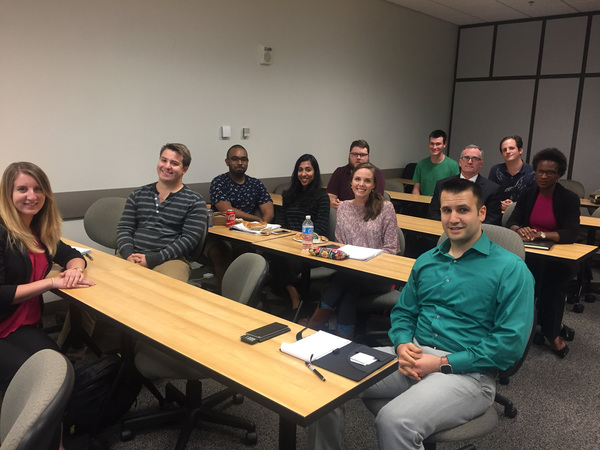
Four of the 11 voters at a debate focus group in Virginia, one of the nation's dozen swing states, said they'd consider supporting the governor of Indiana if he sought the White House in the future.
The group was organized by McClatchy and the Schar School of Policy and Government at George Mason University. It comprised four Democrats, four independents and three Republicans.
The voters were all from the Washington area, all but one from the Virginia suburbs where Democrats and centrist Republicans dominate. They had little taste for Trump, regarding him as too brash and often offensive.
But some preferred the conservative economics Republicans have preached for years, and they saw Pence as a steady, thoughtful force.
"Oh, yeah," said Douglas Cheeseman, 27, a Republican, when asked whether he could back Pence for president. Cheeseman, a consultant from Oakton, Va., supported the GOP's Mitt Romney in 2012 and John McCain in 2008.
"What he did was give me peace of mind if Trump wins," Cheeseman said, "but he doesn't move me to Trump." He's behind Libertarian Gary Johnson this year.
Zach Feidner, 22, a Democrat and Arlington graduate student, said he'd consider Pence after finding Kaine "kind of cartoonish."
Wetterau warmed to Pence because "he's genuine." The fourth potential Pence supporter did not comment.
Pence, 57, has long been mentioned as a possible Republican presidential contender.
After serving six terms in the House of Representatives, including holding a spot in the GOP leadership, he has been governor of Indiana since 2013. But his star was tarnished last year thanks to a blowup over an Indiana religious freedom law.
In 2015, Pence signed legislation that critics charged could permit discrimination, notably against gays and lesbians. Businesses protested, and conventions and others threatened to boycott the state.
Pence quickly agreed to a softer version of the law. But the political damage was done, and he didn't launch a White House bid. He was in a struggle for re-election to a second term as governor this year, facing a possible defeat that would have derailed any 2020 presidential effort.
Trump's decision to make Pence his running mate saved the governor from any embarrassment, and Pence has since resumed his role as a reliable, respected conservative stalwart. That reputation helped calm a Republican convention in July rocked by disputes between Trump forces and die-hard conservatives.
If Trump wins the presidency, Pence instantly vaults to the top of potential successors. A Trump loss would also put Pence in the top tier of GOP contenders, along with Sens. Ted Cruz of Texas and Marco Rubio of Florida. Rubio has to win his re-election bid this year, and Cruz is up in 2018.
Focus group members Tuesday found that Pence seemed comfortable with his responses, a contrast to Kaine.
"He seemed even-tempered, knowledgeable," said Joshua Lee, 29, an Arlington research assistant and independent. "Kaine's tone was too aggressive."
Sara Leming, 23, a graduate student and a Democrat from Arlington who backs Clinton, found Pence too often didn't answer questions but Kaine was "somewhat annoying to watch."
Lee Roberts, 31, a military officer from Fairfax, figured that voters who remember tone over substance would probably see Pence as "classy" while Kaine was "rowdy." But those valuing substance would tilt to Kaine, said Roberts, an independent, as his claims about Trump were accurate.
The one rap against Pence was that he didn't respond much to Kaine's barrage of charges about Trump. Kaine recited now-familiar Trump insults of Mexicans, women and immigrants, among other things, and some voters thought Pence didn't directly address the charges boldly enough. Nor did he offer much substance, some said.
"Show me how Donald Trump would be misrepresented so his statements weren't as outrageous. He didn't do that," said Carol Davis, 50, a homemaker and Ph.D. candidate from McLean, Va., who's an independent.
Nor did Pence offer much detail on policy, said others. "Donald Trump doesn't have a lot of policies he could work with," chuckled Joel Vaughn, 28, a copy editor from Fairfax who's a Democrat.
Other than Wetterau, no one who saw the debate was changing their thinking much _ no surprise, since people rarely vote for vice presidential candidates. "I don't think either candidate won," said Xavier Clark, 22, a Democrat and intern from Arlington.
Sure enough, while Wetterau listed herself as moving toward undecided after watching Pence, Trump still gives her pause. "He's the candidate, not Mike Pence," she said.