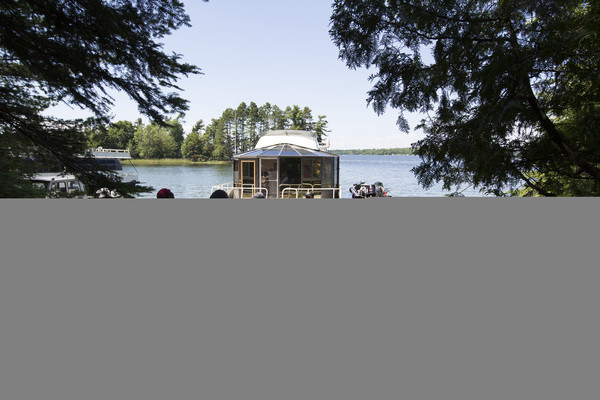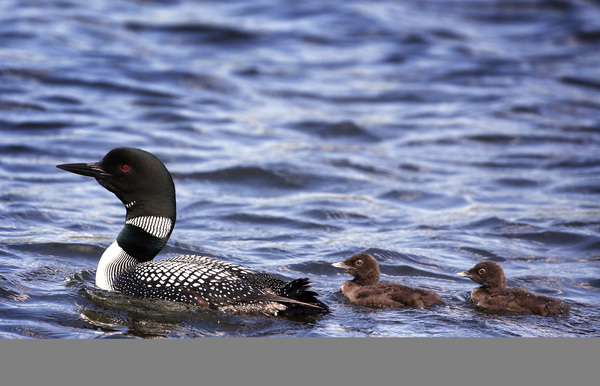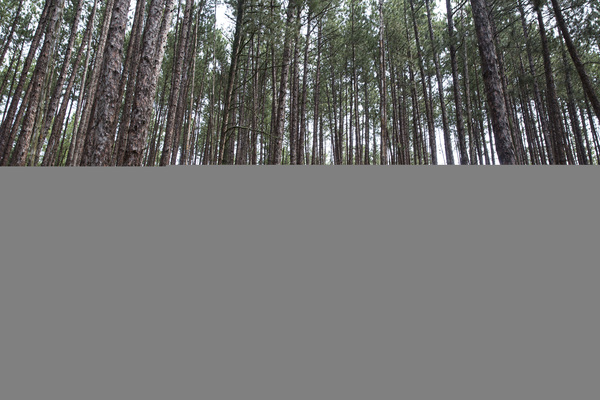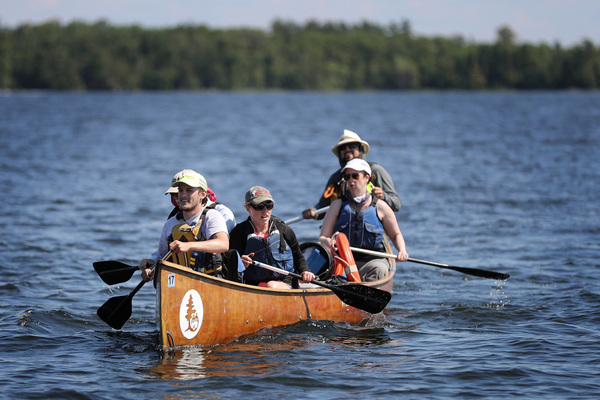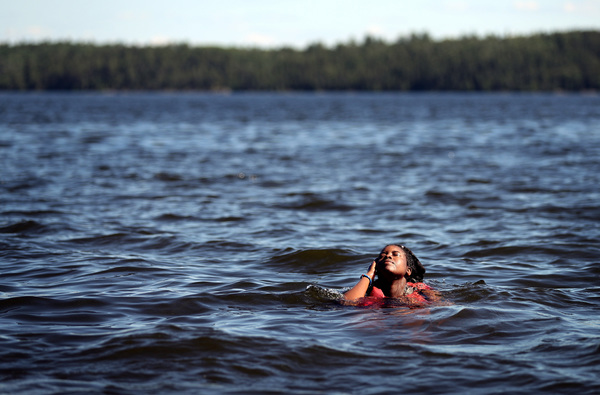
Our houseboat threaded the narrows of Ash River, turned to port at Kabetogama Lake and encountered a dazzling vista. An enormous canvas of blue _ of sparkling water and clear sky _ was cut through with a spiky line of green formed by distant tall pines. Islands eased past, bearing such names as Wolf, Deer Point and Pine, while loons bobbed on the waves.
The North Woods seemed to go on forever.
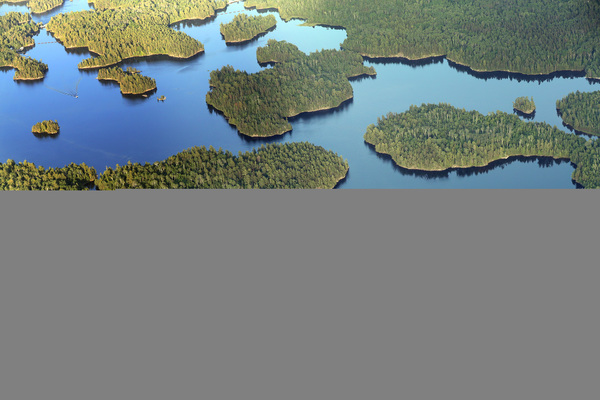
We were motoring into Minnesota's Voyageurs National Park, exploring just a speck of its 134,000 acres of woodlands, 84,000 acres of water, 500 islands and 655 miles of wild shoreline. That protected expanse, much of it hugging the Canadian border, includes four major lakes _ Kabetogama, Namakan, Sand Point and Rainy, the farthest north and largest.
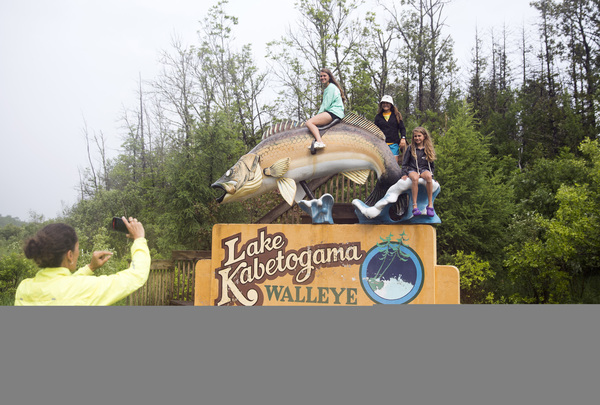
Together, this vast watery world holds surprising treasures of ancient geology, human history and natural splendor.
Everywhere, the landscape announced iconic, rugged, marvelous Minnesota, writ large.
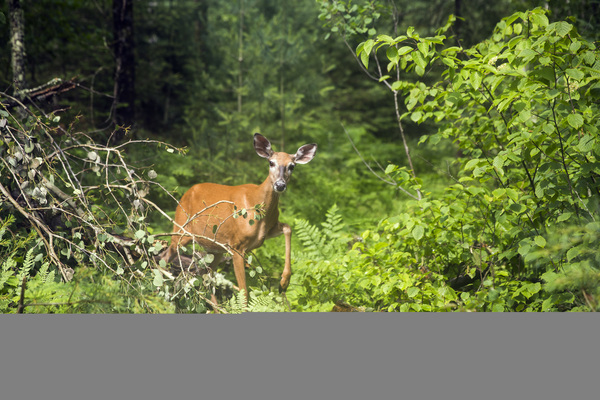
When Congress created Voyageurs as the 36th national park in 1971, prefacing its actual establishment four years later, it protected a wilderness of bears, moose and wolves, where French Canadian fur traders paddled two centuries ago, where boreal and hardwood forests meet amid lakes and land. Then the Park Service, which turns 100 this year, invited America to come explore.
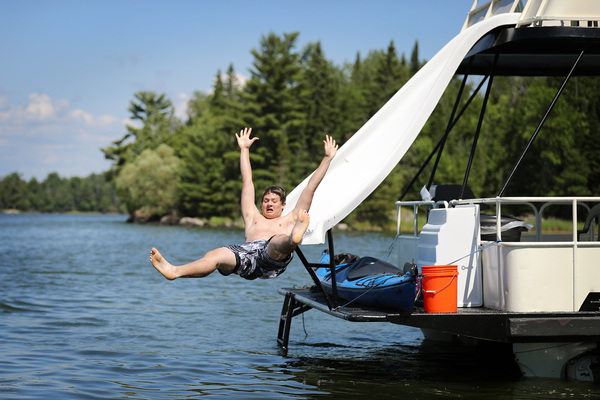
Still, Bill Carlson, the park's acting superintendent, who has worked in the park for 28 years, hears this a lot _ from Minnesotans: "A national park? In Minnesota?"
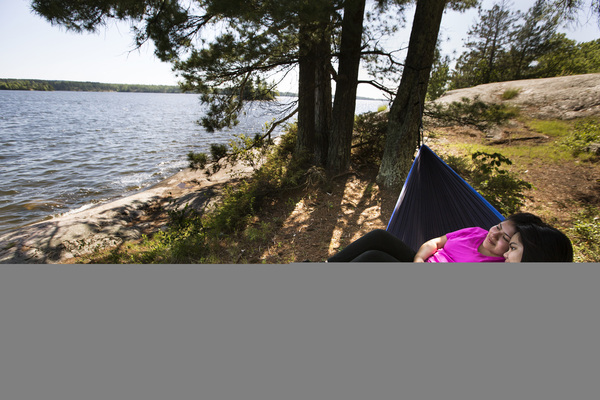
I was getting my own education in that fact as I sat in a plastic chair atop a houseboat puttering about 5 miles per hour across Kabetogama. I was filled with joy _ the kind that can overtake anyone given the narcotic trio of blue skies, calm waters and sunny skies. That distinct euphoria felt familiar, from trips to other national parks that are plane rides away. Somehow, I sensed it more keenly in my home state, on this national land set aside for the enjoyment of all citizens.
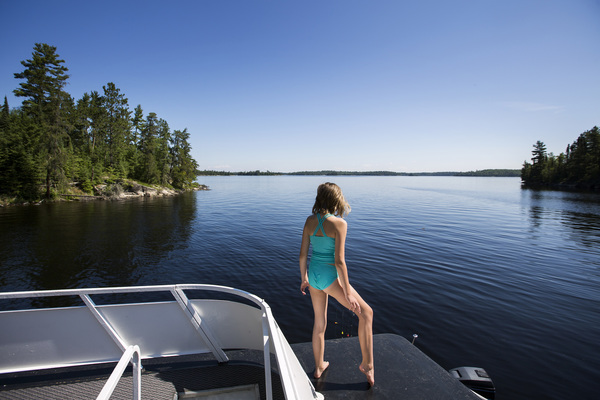
It helped that a boat-savvy friend had gamely agreed to take on captain duties; she was at the upper helm, steering the boat beside me. Our two teenage daughters lolled on the deck behind us. Their occasional laughter carried on the wind.
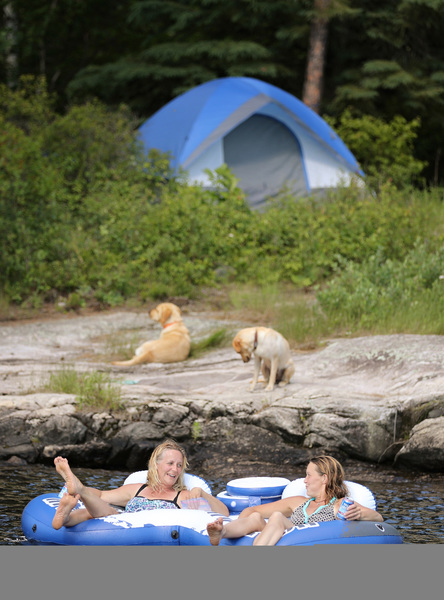
Our plan for the day _ moor at a sweet spot, swim, cook dinner in the full-fledged onboard kitchen _ carried us halfway down the lake.
We slipped into a designated houseboat site near the end of a thin peninsula at Blue Fin Bay with plenty of time to play. A short path from the beach led to a fire pit and just beyond that, another beach, where dragonflies divebombed among reeds. As we walked along the sandy shore to a rock outcropping, a common merganser glided past with ducklings perched on her back.
I returned to the houseboat to make dinner. A beaver bobbed his head above the water not 20 feet from the boat, floated for a moment to eye the massive intruder and descended below the mineral-rich waters. He came up again, closer, to stare us down.
We had chosen to land the houseboat at one of his favorite spots, it seemed. The forest just beyond our gangplank revealed signs of his work. Cone-shaped stumps of trees bore tooth marks. Fresh wood chips mounded in a pile near the beach.
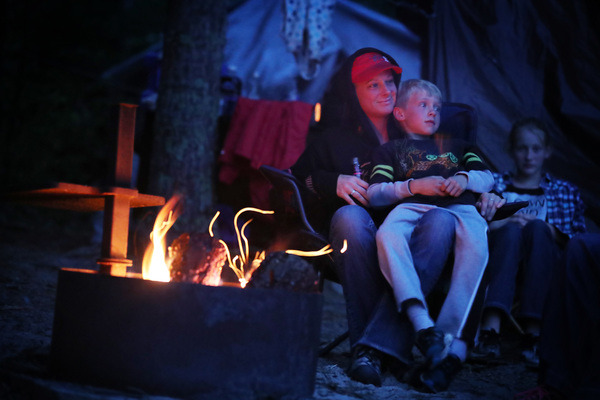
After dinner, we lit a campfire. At the fire ring, a worn branch lay on the ground; one end was charred, the other had been bit. Clearly at least two previous visitors _ a fire-stirring human and a tooth-whittling beaver _ had found the wooden stick a useful tool.
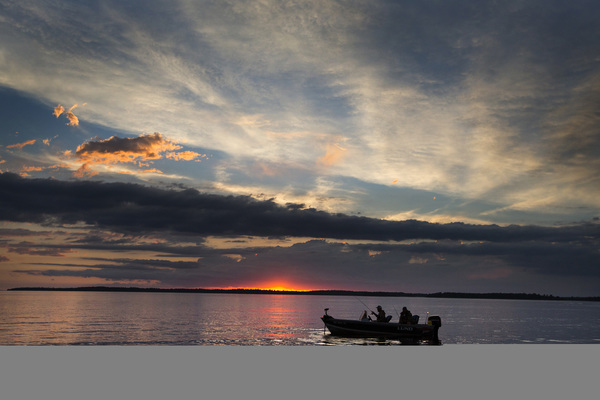
As the sun set, the lake turned from luminous white to pure blue topped with orange waves to gunmetal gray. Loons later cooed us to sleep.