For two decades and more, it has been a truism in British political campaigning that where spending the public’s hard-earned cash is concerned, there is mortal danger in allowing too much space to open up between you and the opposition.
Make too many spending pledges, or venture a modest tax rise or two, and you risk being tethered to a giant, Zeppelin-style “tax bombshell”, looming over anxious households (Labour, 1992). Pledge to make deeper cuts than your rivals, and they can paint you as a brutal, Thatcher-style job-snatcher, taunting you with questions about how many nurses, teachers and doctors you plan to sack to meet your spending targets (copyright G Brown).
Even during the 2010 campaign, in the shadow of the deepest recession in living memory, the political choreography was meticulous. The Conservatives may have been eager to write off Labour as feckless spendthrifts who had driven the country to the brink of a Greek-style debt crisis – but they also made key promises to maintain benefits for pensioners and protect spending on the NHS, overseas aid and education. Slash and burn it was not.
Yet today, with both leading parties buffeted on their fringes by unpredictable populists, from the Greens to Ukip, voters are being offered what Carl Emmerson, deputy director of the authoritative Institute for Fiscal Studies, says is a starker choice about the future direction of tax and spending than at any general election “since at least 1992”.
The language is still ultra-cautious; but for the first time in a political generation there is a wide expanse of clear blue (or red) water between Labour and the Tories.
Britain’s debate is taking place against the background of the intellectual battle raging across the west about how best to rebuild economies still bearing deep scars from the Great Recession. For some economists, such as former US treasury secretary Larry Summers, kickstarting sustainable growth and restoring the living standards of workers who have endured deep pay cuts since 2008 is more of a priority than slashing government debt.
With the cost of borrowing for many governments at historic lows, these anti-austerians argue that constructive public investment in infrastructure, for example, can boost growth rates, helping to bring down debt more effectively than brutal cuts.
For the austerity camp, perhaps most powerfully personified by German chancellor Angela Merkel, imposing swingeing public cuts to balance tax and spending must be the centrepiece of any recovery plan – or the financial markets are likely to take a swift and brutal revenge. At its most extreme, this clash has played out on the streets and in the homes of Greek voters.
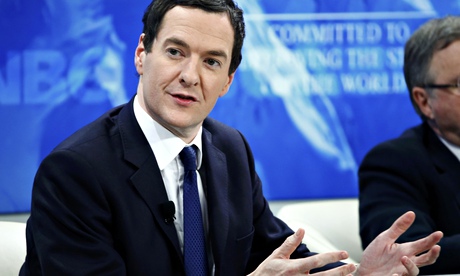
Back in the UK, with growth ticking along nicely, the immediate stakes do not appear so high, but the outlines of the argument are recognisably the same and the impact on British culture and society, and the relationship between citizens and the state, may be deep and long-lasting. The chancellor, George Osborne, is warning that unless he continues rapid public spending cuts over the next five years, Britain could find itself hostage to the whims of the world’s financial markets in the next global recession or major financial crisis. We cannot afford to waste time, he claims: “Mañana is not a credible economic policy.”
He has made clear that, while the coalition has missed its deficit targets by a wide margin (the deficit looks like being £90bn this year), over the next five years a Conservative government would not just eliminate the gap between tax and spending but aim to run up a handy surplus too.
That rules out even the “borrowing to invest” that chancellors have often argued for, on the basis that investment in the right kind of infrastructure for example – roads, railways, hospitals – will yield benefits for decades ahead, which will be enjoyed by the very future taxpayers whose earnings will be tapped to pay off the costs.
If the chancellor’s plans are not blown off course long before then, he will be likely to earmark the hoped-for surplus at the end of the parliament to pay for his promise to raise the higher-rate tax threshold to £50,000.
But according to the IFS’s analysis, in order to get there he will have to make cuts in departmental spending (the bit that governments can most easily control) of more than £50bn over the next five years: a size its director Paul Johnson described as “colossal” and considerably larger than those seen in this parliament.
In practice, the Tories plan to limit the pain for Whitehall with a fresh squeeze on welfare spending – and few Westminster-watchers would bet against an unpromised tax rise or two after 7 May is out of the way, depending on the complexion of any future coalition. But the scale of the challenge the Conservatives have set themselves is immense, particularly since many of the most straightforward cuts have been made in the last five years.
Labour, meanwhile, is promising to eliminate the current budget deficit – the gap between tax revenues and day-to-day spending – as soon as the health of the economy allows and certainly before the end of the next parliament.
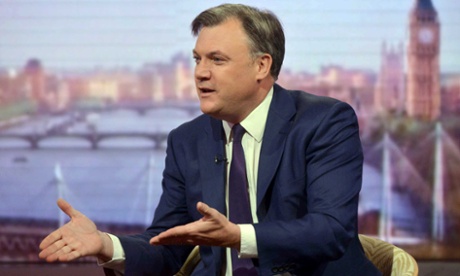
So whoever gets the keys to No 11 Downing Street in four months’ time, there will be cuts. But crucially, Labour’s Ed Balls, following the logic of Summers and others, is allowing himself the luxury of funding some key investments through borrowing. He hopes that will help the party to patch up an economy still suffering from the after-effects of 2008, and believes that with borrowing costs at a record low, such spending will eventually pay for itself in stronger growth.
Balls also sees no reason to aim – ideologically, as Labour sees it – for an overall surplus on the public finances. And the difference, rarely for a general election, is stark: the IFS says Labour will have to find less than £7bn of departmental cuts – a fraction of the level sketched out in the chancellor’s autumn statement in December.
Balls and Miliband believe that to do more would risk fatally undermining the quality of key public services; Osborne is more concerned about the risks to the public finances of their milder plan.
Osborne insists he is not on a rightwing crusade to shrink the state. As he put it in a recent lecture at the Bank of England, resurrecting a favourite word of Brown’s: “The decision to target a surplus is not a judgment based on ideological or party-political grounds; it is based on the evidence and a realistic assessment of what is prudent for the UK.”
Vince Cable, Osborne’s uneasy Lib Dem coalition partner, has questioned that claim, saying the Conservatives are “ideologically obsessed by cuts because they see it as a way of destroying public service and the welfare state, which they detest”. But whatever the chancellor’s motivations, cuts of the kind he envisages are likely to entail a fundamental rethink about the shape, size and the nature of the British state.