Support for Prime Minister Anutin Charnvirakul and the Bhumjaithai Party (BJT) has fallen sharply, raising questions about the government's ability to maintain public confidence.
Three months into its term, the administration is facing growing scrutiny over economic conditions, a series of controversies and the absence of major policy achievements.
The latest quarterly Nida Poll showed People's Party leader Nattapong Ruangpanyawut remaining the most preferred political figure with 26% support, ahead of Mr Anutin at 21.6%. However, both figures recorded declines from the previous quarter. Mr Nattapong's support fell by about 4.5 percentage points, while Mr Anutin's dropped by almost 8 points.
More worrying for Bhumjaithai was the party's decline in popularity from 26.6% to 17%, suggesting dissatisfaction extends beyond the prime minister's personal standing.
Vanishing base
Asst Prof Suvicha Pouaree, director of Nida Poll said the most significant losses occurred among voters aged 46 and above, senior citizens, conservatives, farmers, homemakers and labourers.
"What is interesting is the lost support has not mainly shifted to the People's Party," Asst Prof Suvicha said.
Instead, much of the support appears to have moved to other conservative parties or undecided voters, indicating Bhumjaithai is losing confidence among its traditional base rather than facing a direct challenge from the opposition.
The party has also suffered among lower-income groups, particularly those earning less than 10,000 baht per month.
Asst Prof Suvicha linked the decline to dissatisfaction over revised eligibility requirements for the state welfare card scheme, which resulted in many former recipients losing access to benefits.
He said that economic hardship and disappointment over delayed relief measures are more important to voters than many of the controversies dominating headlines.
By contrast, support for the coalition-leading Pheu Thai Party has edged higher despite limited policy achievements.
Asst Prof Suvicha said that Pheu Thai had benefited from avoiding major scandals while keeping up contact with local communities through regular field visits.

Scandals accumulate
Economic concerns may be the primary driver of declining support, but a series of controversies has dominated public attention during the government's opening months.
The local government recruitment examination corruption scandal has been damaging because it falls under the Interior Ministry, which Mr Anutin oversees.
Additional controversies have included organised crime concerns in Phuket, the Khao Kradong land dispute, the TH-AI Passport issue and allegations relating to Senate collusion.
Asst Prof Suvicha described these issues as contributing factors rather than the central cause of declining support.
Nevertheless, he says negative stories have become more prominent because voters struggle to identify major achievements capable of balancing the political narrative.
Stithorn Thananithichot of the Faculty of Political Science at Chulalongkorn University, said the government's overall performance appeared "plain" rather than disastrous.
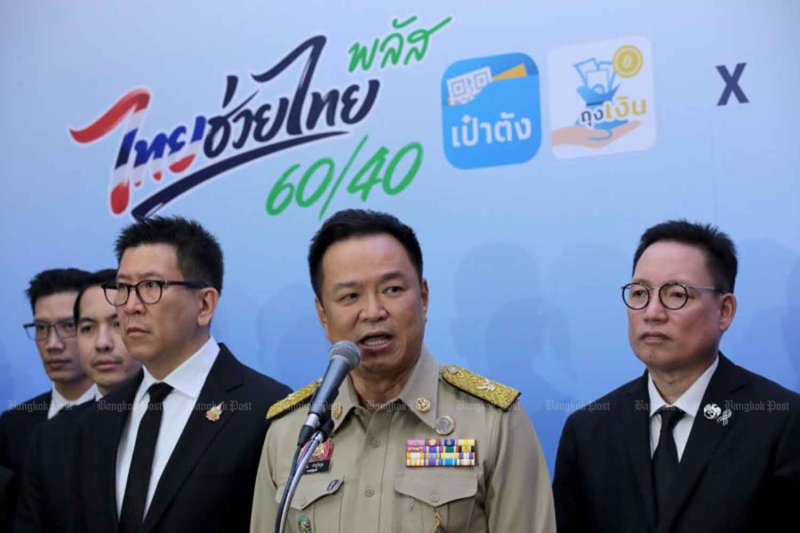
Economic initiatives such as Thai Chuay Thai Plus copayment scheme have lost some of their initial momentum, while longer-term projects such as semiconductor industry development remain too distant for many voters to feel any direct benefit.
"When there is no positive highlight, the spotlight naturally falls on negative issues," he said.
Under pressure
Despite falling popularity, the analysis does not expect the coalition government to face an immediate threat to its parliamentary majority.
The coalition remains numerically secure, while opposition parties including the People's Party, Klatham Party and Democrat Party remain divided and unable to mount a unified challenge.
However, declining ratings are increasing pressure within Bhumjaithai itself.
Mr Anutin recently warned underperforming ministers, whom he labelled "forgotten ministers" because of their low public profile, to produce results and communicate their work more effectively.
Mr Stithorn believes falling popularity has created an aftershock effect within government ranks, increasing calls for cabinet changes and raising scrutiny of ministers who have struggled to establish a public profile.
At the centre of the debate is whether technocrats who helped strengthen the administration's image can still provide political momentum.
Asst Prof Suvicha said Commerce Minister Suphajee Suthumpun continues to enjoy favourable public perceptions because she is seen as competent and free from scandal.
Yet Mr Stithorn argued that technocrats have limitations when it comes to generating political momentum.
He described Foreign Affairs Minister Sihasak Phuangketkeow as a capable diplomat whose visibility depends heavily on major international developments. Without issues such as the recent Thailand-Cambodia tensions, opportunities to build public recognition remain limited.
Finance Minister Ekniti Nitithanprapas, meanwhile, has been criticised for approaching policy challenges through a bureaucratic lens.
Proposals such as reducing personnel numbers to cut recurrent expenditure may appear rational from a bureaucratic perspective, but they are unlikely to win public support and have also drawn resistance from some civil servants.
Mr Stithorn also characterised Ms Suphajee as more of a marketing-oriented executive than a transformational policymaker capable of delivering large-scale initiatives that capture public imagination.
September test
Asst Prof Suvicha believes September could become a crucial political turning point.
The announcement of the new state welfare card beneficiary list will provide an indication of whether dissatisfaction among lower-income voters can be reversed.
He said attention should also focus on the relationship between Bhumjaithai and Pheu Thai.
So far, both parties have maintained a functional partnership within government.
However, if competition for similar voter groups intensifies, relations could become more strained.
Should either side begin viewing the other as a political threat rather than a coalition partner, tensions could emerge beneath the surface of an otherwise stable administration.
For now, he expects the coalition to remain intact because all parties understand the benefits of maintaining government stability.
Leadership question
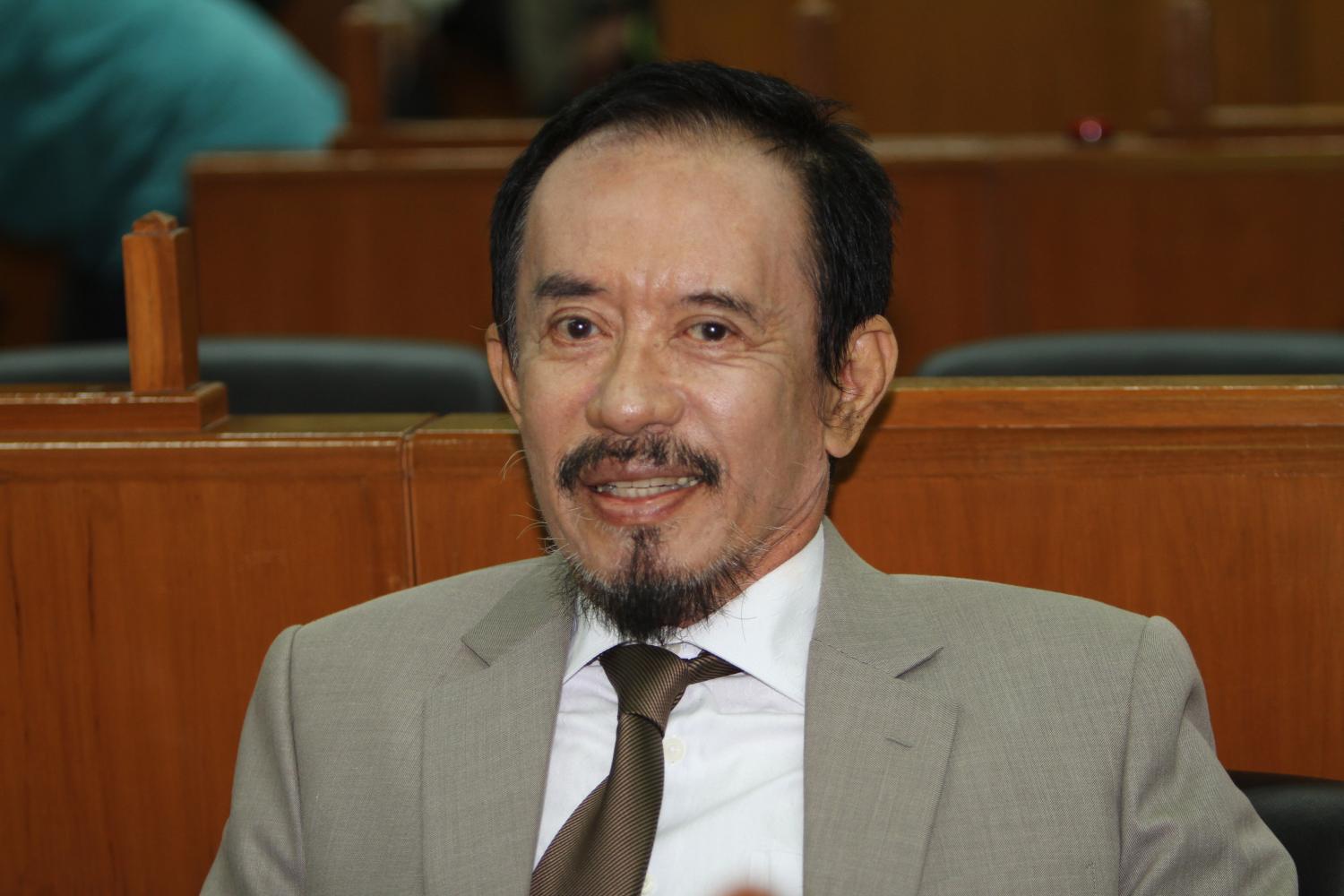
Assoc Prof Pornchai Theppanya, former dean of the Faculty of Political Science at Ramkhamhaeng University, said the government's early difficulties stem from two interconnected problems: the absence of major achievements so far and a growing list of controversies.
He pointed to issues including the Khao Kradong land dispute in Buri Ram, Senate-related allegations, the TH-AI Passport controversy, energy pricing concerns and the local government examination scandal.
Assoc Prof Pornchai said the government's technocrats are no longer capable of shielding it from public dissatisfaction.
"Even capable people eventually lose their effectiveness if the problems remain unresolved," he said.
He said many economic initiatives, including the Thai Chuay Thai Plus co-payment scheme, are viewed as short-term solutions rather than sustainable reforms.
His sharpest criticism, however, concerns leadership itself. He suggested Mr Anutin often projects confidence and decisiveness but struggles to turn rhetoric into action because decision-making is not entirely under his control.
He referred to the influence of individuals outside both the party and government structure who are perceived to play a role in shaping major decisions.
He said allegations of interference in independent organisations and claims of political influence over senators continue to damage public confidence.
For Bhumjaithai, therefore, the challenge extends beyond economics or communications strategy.
Restoring support will require visible progress on corruption investigations, greater accountability in state agencies and policies that produce tangible benefits for ordinary households, he said.
Ultimately, the party's political fortunes may depend on whether Mr Anutin can convince voters that he is not only the government's most prominent figure, but also a leader capable of delivering results as the administration moves beyond its opening months.