As European Union leaders converge on Brussels, the debate over how to pay for Ukraine’s defence is coming to a head. The proposals to use frozen Russian assets are exposing legal risks, political fault lines and testing the limits of European solidarity.
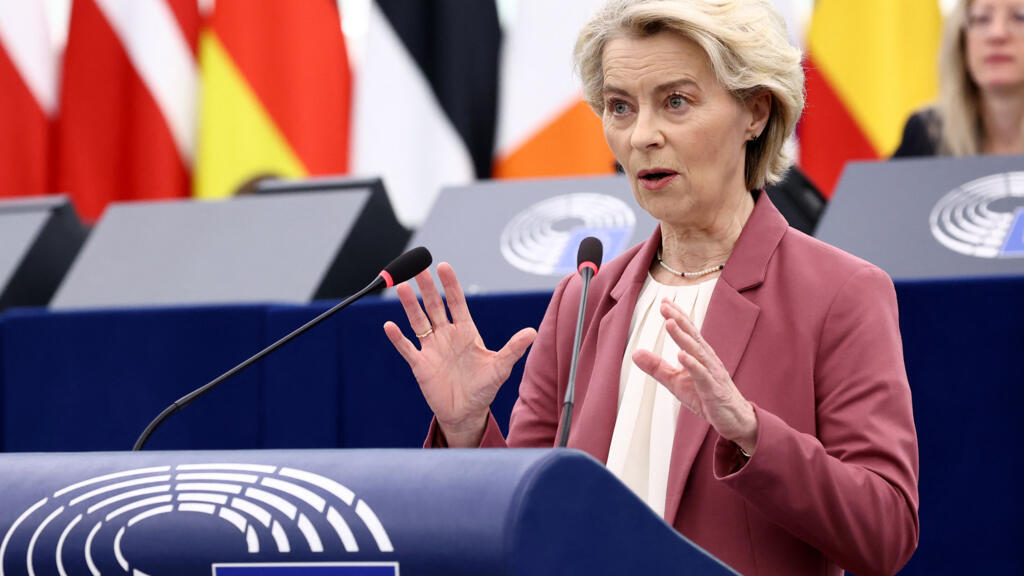
European Commission President Ursula von der Leyen delivered a clear and urgent message ahead of a key EU summit taking place in Brussels this Thursday: Europe must decide – and quickly – how it will keep Ukraine afloat financially as the fourth anniversary of the Russian invasion approaches.
Speaking to members of the European Parliament on Wednesday, von der Leyen laid out the choice in stark terms, framing financial support for Kyiv as a core pillar of Europe’s own security.
“There is no more important act of European defence than supporting Ukraine's defence,” she said. “The next days will be a crucial step for securing this. It is up to us to choose how we fund Ukraine's fight.”
€90 billion loan
Leaders will be under pressure at Thursday's summit to reach an agreement on a controversial plan to use frozen Russian state assets to bankroll Ukraine’s war effort over 2026 and 2027.
Around €210 billion of such assets are being held across the bloc, with €185 billion held in Belgium via the Brussels-based central securities depository Euroclear.
Smaller amounts sit in France, Luxembourg, Germany and Sweden.
Von der Leyen has been pushing a plan under which these assets would underpin a €90 billion loan to Ukraine over the next two years.
The idea is attractive to many capitals, because it avoids dipping into national budgets or fresh joint EU borrowing.
However, the scheme has exposed deep fault lines – above all with Belgium, which finds itself on the front line of potential legal and financial retaliation from Russia.
EU plan to tap Russian assets for Ukraine meets opposition from Belgium
Belgian misgivings
Belgium has made clear it will not sign off on the plan unless it receives firm guarantees that other EU states will share any legal or financial liabilities. It fears that by hosting most of the assets, it would bear the brunt of any lawsuits or countermeasures.
Attempts to reassure the Belgian government have so far failed to break the deadlock.
In theory, other EU countries could override Belgium using a weighted majority vote – but that is widely seen as a “nuclear option” which few are keen to deploy, given the political damage it could cause.
“There will be a decision on which route we want to take – but one thing is very, very clear: we have to take the decision to fund Ukraine,” said von der Leyen. “This is also about strengthening Ukraine's ability to secure a real peace – one that is just, one that is lasting, and one that protects Ukraine and Europe.”
Macron demands 'robust security guarantees' before any Ukraine territorial talks
Signs of progress
Concerns that only Belgium would be involved in the scheme have reportedly been resolved, with other countries that hold Russian assets agreeing to take part.
However, Belgium’s demand for solid guarantees remains the biggest hurdle. One EU diplomat described the country's Prime Minister Bart De Wever as wanting “a blank cheque for forever” from other governments to cover any financial fallout – a step some member states are reluctant to take.
Other issues include the fate of bilateral investment treaties that 18 EU countries still have with Russia.
The European Commission wants these rescinded, arguing that they allow Moscow to challenge EU sanctions through investor-state dispute settlement mechanisms.
Such treaties could also be used to contest the use of Russian sovereign assets for Ukraine.
France, meanwhile, is pushing for conditions that would require Ukraine to spend any EU loan money on defence equipment made in Europe rather than from suppliers such as the United States.
Zelensky in Berlin as Ukraine weighs NATO compromise and EU funding fight
Moscow’s counteroffensive
Moscow has repeatedly warned that using its sovereign reserves amounts to theft and has threatened harsh retaliation, including the seizure of European private investments in Russia.
Earlier this week, Russia’s central bank filed a lawsuit in Moscow seeking approximately €210 billion in damages from Euroclear – a case that many see as the opening salvo in a broader legal campaign.
A preliminary hearing is scheduled for 16 January, according to the Moscow court’s press service.
The lawsuit has rattled nerves in Europe, with ratings agency Fitch placing Euroclear Bank on “rating watch negative”, citing potential legal and liquidity risks.
Euroclear said the move underlined the need for greater clarity around the EU’s loan plans.
Although Euroclear itself has no assets in Russia that could be directly seized, lawyers warn that a Russian court ruling in favour of the central bank could be enforced in jurisdictions Moscow considers friendly.
Ukraine's President Volodymyr Zelensky has called for European unity on the issue, warning that without continued support Kyiv’s ability to resist would be severely weakened.
Speaking in The Hague earlier this week, he said: “I do not see an opportunity to stand strong without this support."
(with newswires)