Volkswagen's management risks a "major conflict" with workers as the struggling German car giant thrashes out what could be the biggest ever restructuring in the global auto industry, a union warned on Thursday.
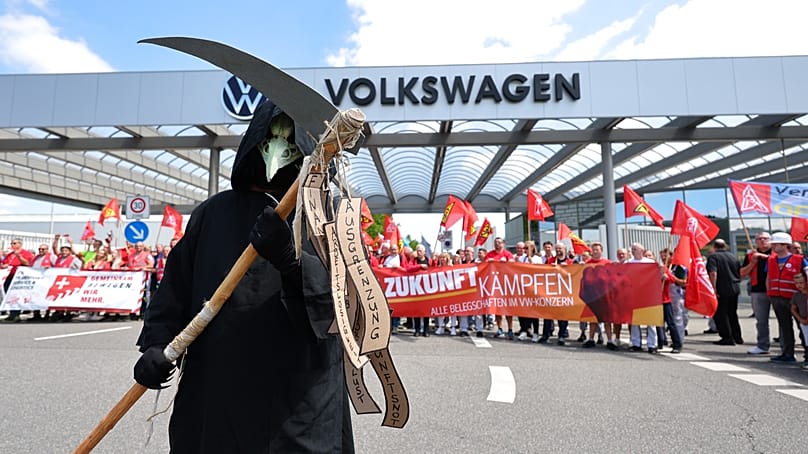
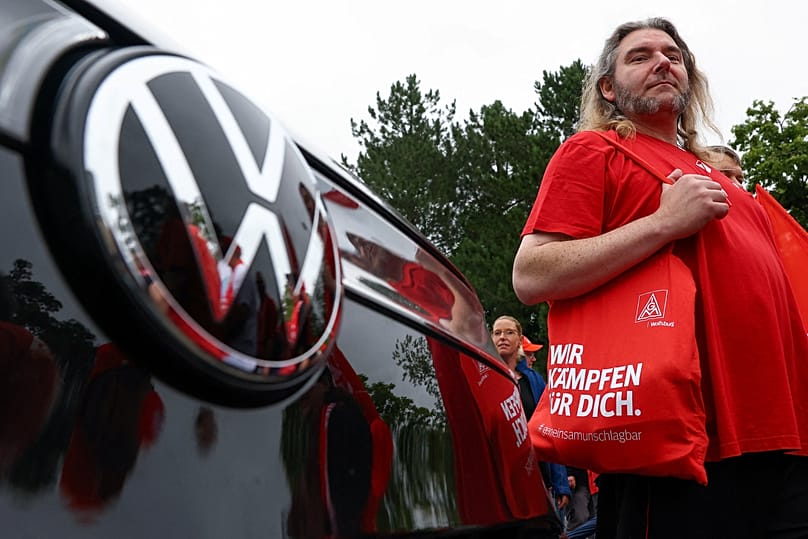
"We will not stand by and do nothing if the company does not change course," said IG Metall official Thorsten Groeger, as workers staged protests over the carmaker's reported plans to cut up to 100,000 jobs and close four factories.
Europe's biggest carmaker is under pressure from US tariffs, weaker profit margins on electric vehicles and, above all, fierce competition in China, the world's largest car market.
Volkswagen, whose 10 brands range from Seat to Porsche, is already cutting 50,000 jobs in Germany by 2030, including 35,000 at its core Volkswagen brand.
Those cuts were agreed with unions at the end of 2024, alongside a pledge to avoid plant closures in Germany until at least the end of the decade.
But Chief Executive Oliver Blume is now considering cutting 100,000 jobs worldwide, around 16% of Volkswagen's global workforce, and closing three Volkswagen plants in Germany as well as one Audi factory, according to Manager Magazin, citing company sources.
"If these plans came to fruition, we would stop them with all our might", Christiane Benner, head of the powerful IG Metall union, said in a joint statement with VW works council chief Daniela Cavallo.
IG Metall is organising protests by VW workers outside plants across the country on Thursday, when the carmaker's bosses will present the restructuring plans to the supervisory board.
What is on the table?
Thursday's meeting is unlikely to produce an immediate decision. Instead, it could mark the start of months of negotiations between management, unions and politicians over plant closures and further job cuts.
According to media reports, the board will discuss a sweeping restructuring plan that could include closing four German plants — Hanover, Emden, Zwickau and Audi's Neckarsulm site — and cutting up to 50,000 additional jobs.
Management is also reviewing Volkswagen's corporate structure and could carve out or spin off its core Volkswagen brand and components business to simplify the group.
Rather than shutting factories outright, Volkswagen could shift production of China-focused models to underused German sites, such as Zwickau, an idea Blume has previously proposed
Another option would be to stop assigning new models to certain plants, gradually ending production instead of closing sites immediately.
The company has also suggested that underused factories could eventually be repurposed by defence manufacturers seeking to expand production.
Why approval will be difficult
The supervisory board normally consists of 20 members split equally between shareholder and employee representatives.
However, labour representatives currently hold a majority following the recent resignation of Susanne Wiegand, the former head of defence company Renk.
Volkswagen's ownership structure also complicates any restructuring. Lower Saxony, home to the company's Wolfsburg headquarters and six factories, holds a stake large enough to block key decisions.
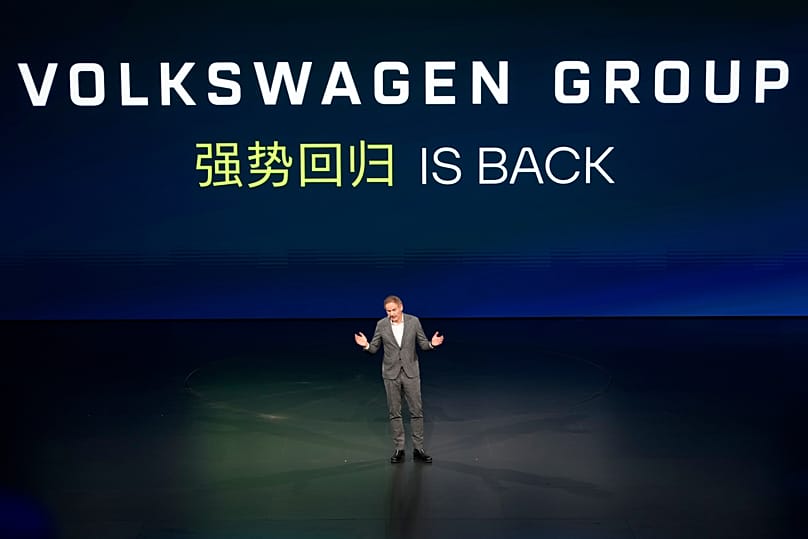
If ultimately approved, the plans would reduce Volkswagen's global workforce of around 630,000 by roughly 15%.
That would surpass previous job-cutting programmes in the auto industry, including General Motors' reduction of nearly 50,000 jobs during its 2009 bankruptcy.
Germany's wider car industry — including BMW, Mercedes-Benz and their suppliers — has also been cutting jobs and restructuring in response to weaker demand and rising competition.