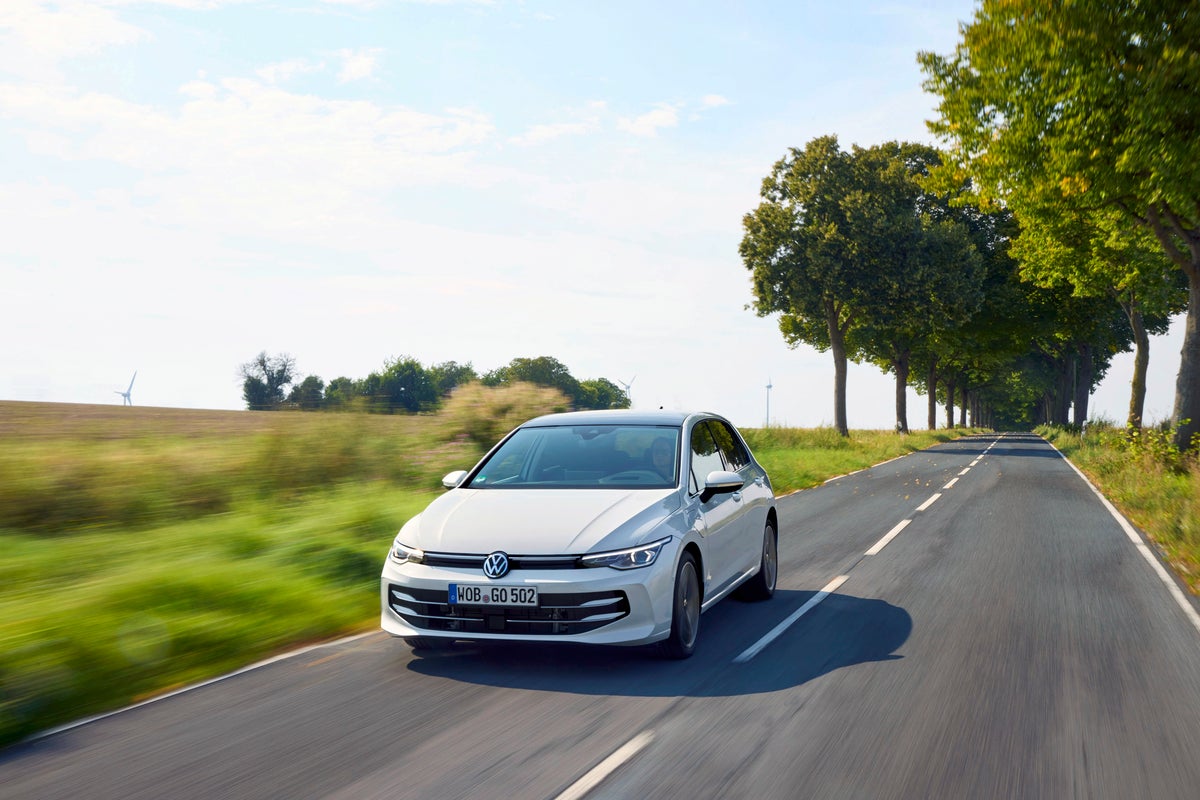
The Volkswagen Golf has been one of Europe’s best-selling cars for decades. The faithful family hatch is now into its eight generation and shows no signs of letting up. There isn’t yet an all-electric version – that’s mooted for the ninth generation – but the firm isn’t standing still when it comes to electrification. Indeed, with the Golf eHybrid (not to be confused with the eTSI mild hybrid), it offers one of the few plug-in hybrid family hatchbacks on the market. And also, one of the best.
This generation of Golf was updated in 2024, into the so-called ‘Golf 8.5’. The eHybrid received one of the biggest makeovers, with the plug-in hybrid system gaining a much larger battery. This has taken the pure EV range to almost 90 miles, and it’s also added DC rapid-charge ability.
Volkswagen took the opportunity to update the infotainment technology inside. This was another big bugbear of this generation of Golf. Otherwise, the updates were subtle, continuing the timeless look that’s marked out the Golf ever since its launch in 1974. And with 37 million sales (and counting), who’s to argue with VW’s approach here?
How we tested
I spent a morning driving the Volkswagen Golf eHybrid in the English Midlands – coincidentally on some of the same roads Aston Martin uses to develop its latest supercars. It was a stern test that the VW passed with flying colours.
Volkswagen Golf: From £36,485, volkswagen.co.uk

Independent rating: 8/10
- Pros: EV range of nearly 90 miles, passenger-friendly interior, it’s a Golf!
- Cons: Boot space shrinks compared to a regular model, some might not like how it defaults to EV mode
Volkswagen Golf eHybrid Specs
- Price range: £36,485-£37,445
- Battery size: 19.7kWh
- Maximum EV range: 88 miles
- Engine: 1.5-litre petrol
- Claimed battery & engine range: 620 miles (Volkswagen estimate)
Battery, range, charging, performance and drive
It’s the updated battery, now 19.7kWh in capacity, that helps make the latest Volkswagen Golf eHybrid such an impressive plug-in hybrid. The range is now an exceptional 88 miles, meaning that many will be able to go several days without plugging it in and still enjoy all their journeys purely under electric power.
The car helps here, by defaulting to EV mode whenever there’s charge in the battery. If you want to switch into hybrid mode, you have to manually do so every time you start it up. It’s worth being aware that it does this, mind – if you want to spread the EV power over a long journey, rather than using it all in one go, you’ll have to switch into hybrid mode yourself.
Stamping on the accelerator to demand maximum power will see the engine kick in, but I found this a rarity – and the dashboard display is clear enough to highlight how much electric power is in reserve before the engine starts up.
The engine is an upgraded 1.5-litre TSI motor, with clever turbocharger and combustion tech. When combined with the electric motor, there’s an overall output of 204hp, good for 0-62mph acceleration in a swift 7.4 seconds. On the move, you shouldn’t notice the engine switching in and out, and it seems to click back into EV mode frequently even in hybrid mode.
To drive, it’s just like a Golf. Handling is stable and assured, the ride is comfortable and there’s an overall sense of quiet confidence to it that helps underline what a well-developed car this is. Overall refinement is excellent too – particularly, of course, when it’s driving in full EV mode.
As for charging, the ability to now use 50kW DC rapid chargers is a real boon. Volkswagen calculates it will achieve an 80% charge in just 27 minutes. It also has 11kW AC charging capability, which will speed up the time it takes to fully charge using a home wall box.
Interior, practicality and boot space
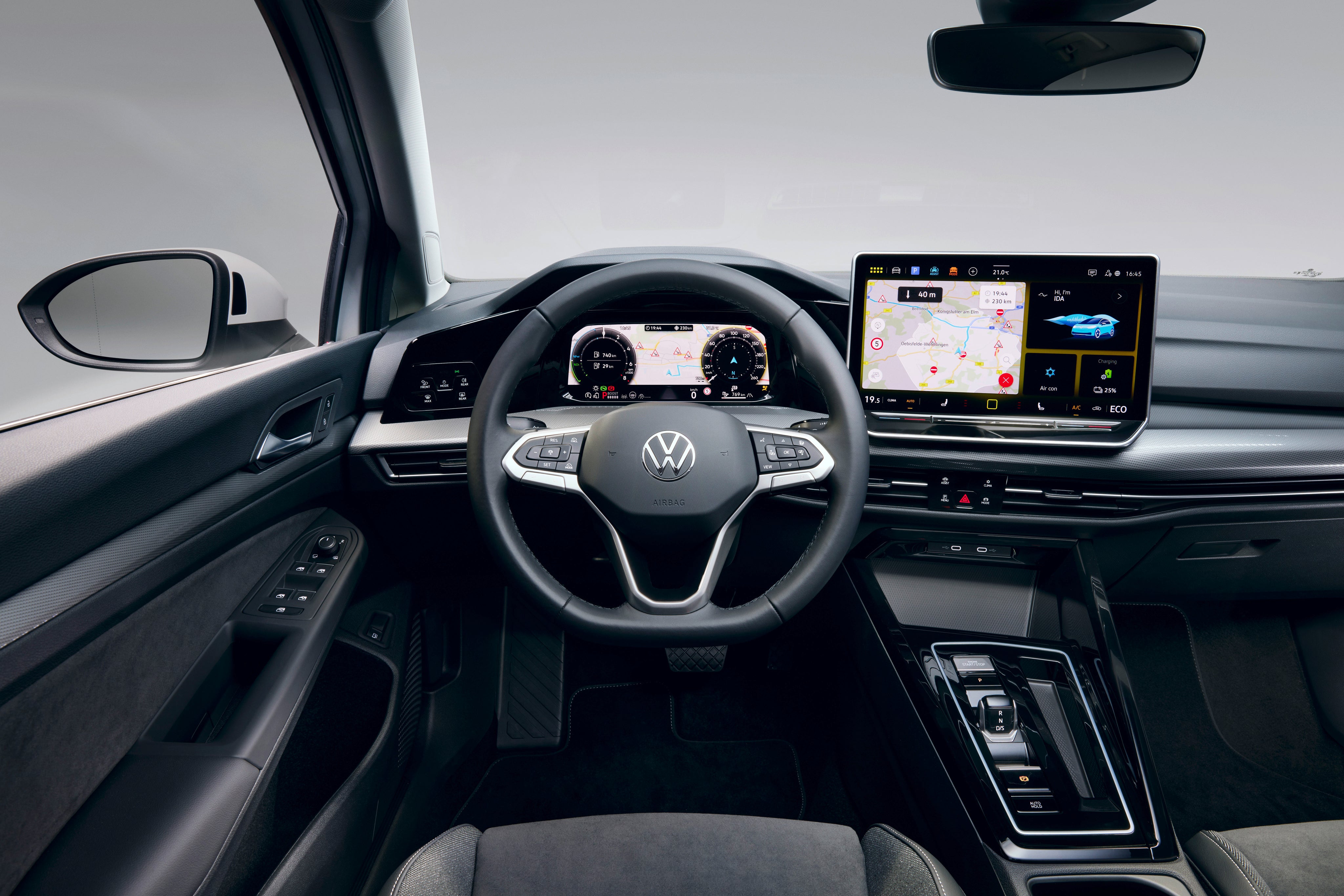
The Volkswagen Golf has a generally high-quality feel inside. Many of the materials seem to have been upgraded to make them feel a bit more, well, VW-like, and the overall impression is of robustness. It has an excellent driving position too, with good visibility, well-placed controls and comfortable, firmly-supportive seats. Everyone should be able to get comfortable behind the wheel of a Golf.
Pleasingly, Volkswagen has ditched the fiddly touch-sensitive buttons on the steering wheel. There are now proper physical controls, making it much easier to use. I also found it simple to select and disable the more annoying of the safety assist systems now fitted to all new cars.
Space is also good in the rear. Again, it’s all thoughtfully designed to people of all shapes and sizes should be able to get comfortable. Headroom is particularly generous.
There are nice little practical touches too, such as the pockets on the back of the front seats to stow mobile phones. In Style models, three-zone climate control is standard, with separate controls for those in the rear. Style models also have dark-tint rear glass, making the cabin a bit gloomier back there than standard Match models.
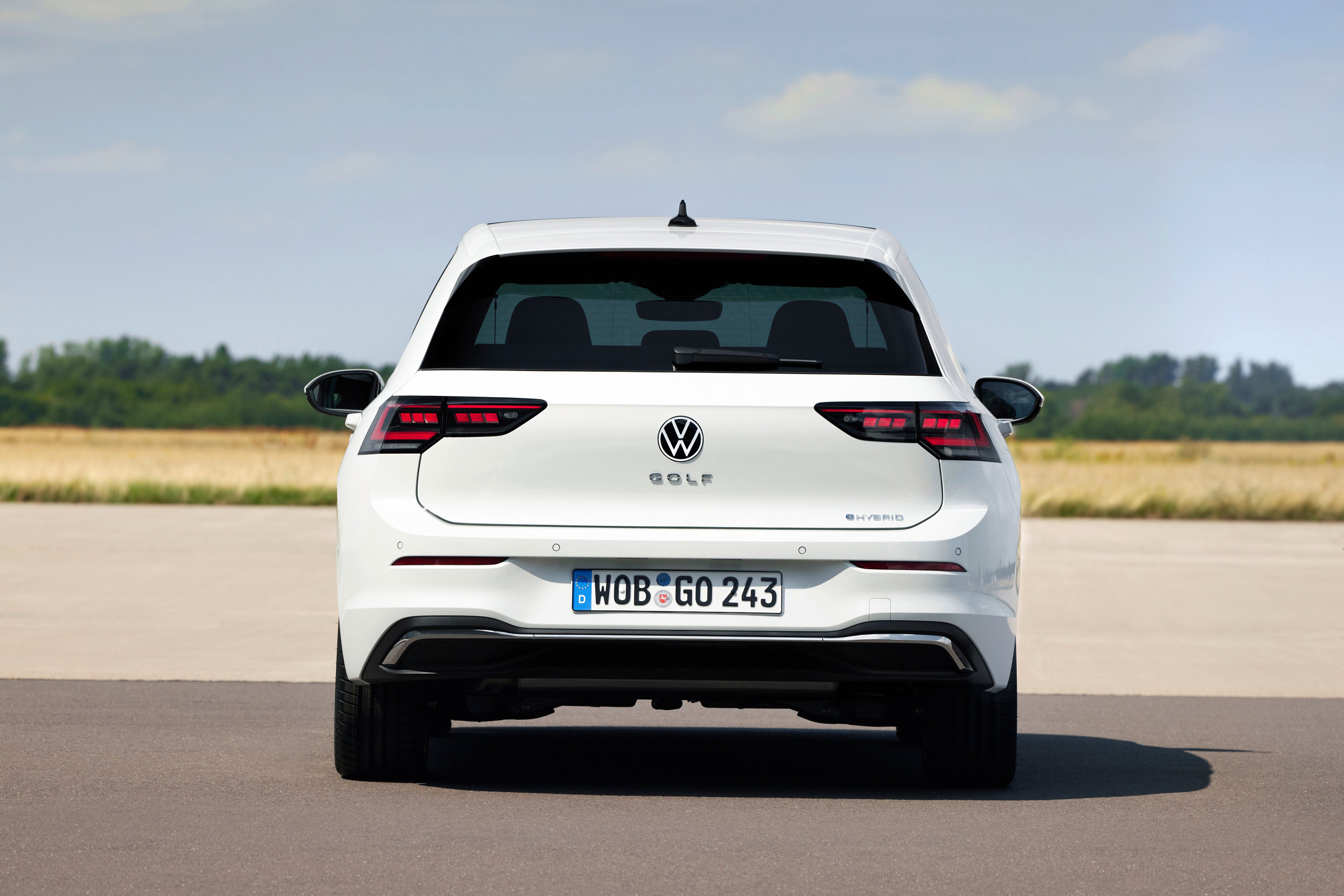
Boot space is less well thought-out. Due to the packaging of the plug-in hybrid battery and other electronics, the boot is much shallower than a standard Golf. Total capacity drops from 381 litres to just 273 litres, which is smaller than many supermini cars from the class below. At least the shallower space is easy to load – you can just slide things in and out.

Technology, stereo and infotainment
A completely redesigned infotainment system, within a much larger 12.9in touchscreen, has helped transform the Volkswagen Golf. Compared to the previous system, the new setup is clearer, more colourful and much more logical to use. There’s less need to dive deep into sub-menus for the simplest of things, and you’ll spend less time staring at the screen trying to work it all out.
There are still a couple of physical shortcut buttons below it, for quick access to major sections like driver assist and climate control, but unlike before, I rarely had to call upon them. I even like the inclusion of a mobile phone-style ‘home’ icon at the bottom of the screen, and the configurable strip of icons along the top is also a smart solution.
The physical touch bar for changing the heater and volume remains fiddly, mind – I simply used the permanently-displayed climate bar in the bottom of the touchscreen instead. At least that touch bar is now illuminated.
The Volkswagen Golf eHybrid has a standard six-speaker stereo, with DAB, and music streaming via Apple CarPlay and Android Auto. It’s fine, but those seeking a premium alternative will be disappointed; the optional 480-watt Harman Kardon system offered on other Golfs is not available here.
Prices and running costs
Volkswagen Golf eHybrid prices start from around £36,500. This is quite a jump over a regular Golf petrol, although it is still significantly cheaper than a plug-in hybrid Volkswagen Astra or Peugeot 308. Trims start with the already well-specced Match grade, with Style adding posher trim and extra little details such as more colour choice for the interior ambient lighting.
The larger battery capacity means a far greater EV range, which should pay dividends for overall fuel economy. As mentioned, if you have a wall box, you’ll be able to maximise the EV capability and significantly reduce the amount of unleaded petrol you have to fork out for. My test saw me achieve overall economy of 180mpg at the end of it, plus EV efficiency of 4.7 miles per kWh. It was a fairly representative drive too – I can’t promise you’ll achieve this, but it does show what’s possible.
Of course, the Volkswagen Golf also enjoys strong retailed values, which help lower monthly finance payments, and this is also beneficial for leasing costs too.
Volkswagen Golf rivals
- Seat Leon
- Skoda Octavia
- Audi A3 Sportback
FAQs
How long does it take to charge?
The Volkswagen Golf eHybrid can use 50kW DC rapid chargers, taking it to an 80 per cent charge in under 30 minutes.
How much does it cost – is it worth it?
The Volkswagen Golf eHybrid is expensive compared to a regular Golf, but its long EV range helps justify this.
Does Volkswagen replace batteries for free?
The Volkswagen Golf eHybrid has an eight-year, 100,000-mile warranty for its high-voltage battery.
Why trust us
Our team of motoring experts have decades of experience driving, reviewing and reporting on the latest EV cars, and our verdicts are reached with every kind of driver in mind. We thoroughly test drive every car we recommend, so you can be sure our verdicts are honest, unbiased and authentic.
The verdict
The Volkswagen Golf is an institution, and deservedly so. It’s delivered practical, reliable motoring for more than 50 years, and the eHybrid version brings it right up to date in terms of plug-in hybrid technology. There are a couple of obvious niggles, but overall, it’s a fine all-rounder.
Citroen C5 Aircross review: Comfortable, practical and sensible
Audi Q3 review: A sophisticated reinvention of a popular compact SUV
Best used electric cars 2025: Top 10 second-hand EVs to buy
Best electric cars 2025: Top 12 EVs to buy
Jeepers creepers! Has the Grand Cherokee gone all soft on us?
Honda CR-V review: Sensible, reliable, but pricey
10 best cheap electric cars: Affordable EVs worth ditching petrol and diesel for