Vodafone, Deutsche Telekom, Orange and five other telecoms providers have agreed to share mobile phone location data with the European Commission to track the spread of the coronavirus, lobbying group GSMA said on Wednesday.
The companies, including Telefonica, Telecom Italia , Telenor, Telia and A1 Telekom Austria met with EU industry chief Thierry Breton on Monday.
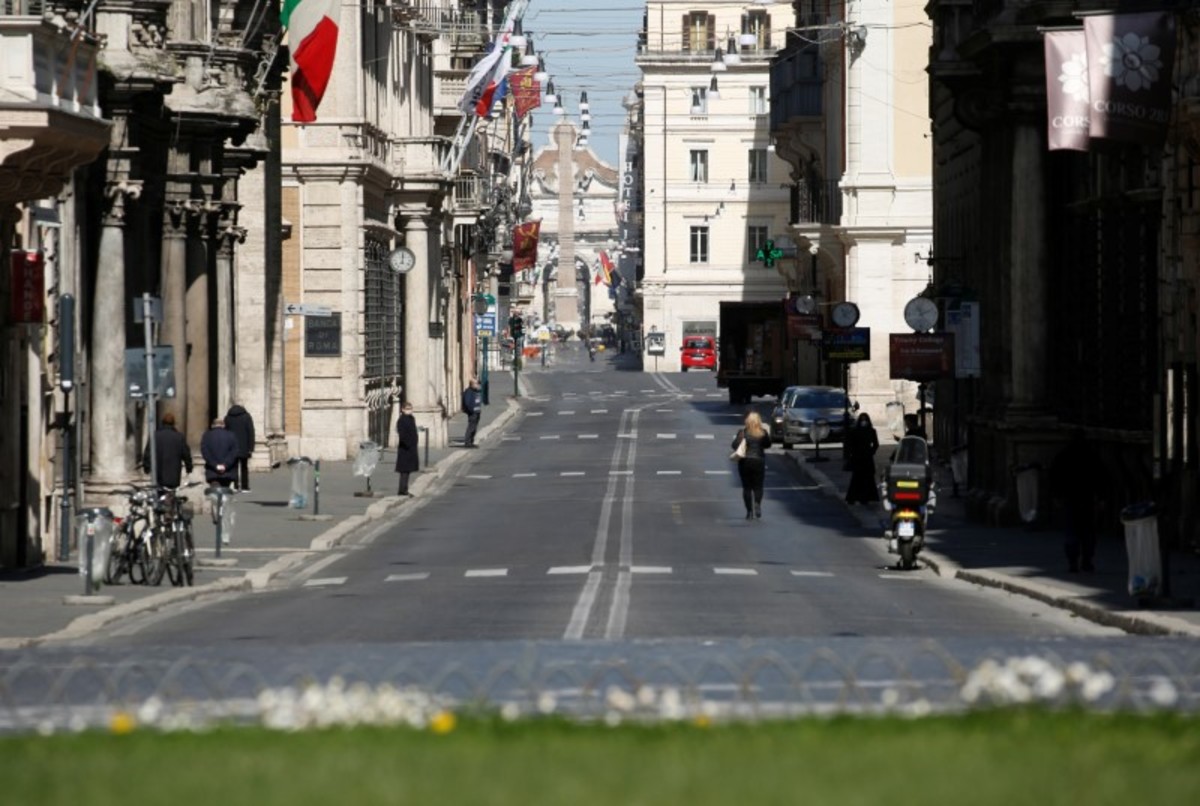
Worries about governments' use of technology to monitor those in quarantine and track infections have intensified in recent weeks over possible privacy violations, with some raising the spectre of state surveillance.
The Commission will use anonymised data to protect privacy and aggregate mobile phone location data to coordinate measures tracking the spread of the virus, an EU official said.
To further assuage privacy concerns, the data will be deleted once the crisis is over, the official said, adding that the EU plan is not about centralising mobile data nor about policing people.
While anonymised data falls outside the scope of EU data protection laws, the European Data Protection Supervisor (EDPS) said the project does not breach privacy rules as long as there are safeguards.
"The Commission should clearly define the dataset it wants to obtain and ensure transparency towards the public, to avoid any possible misunderstandings," the EU's data watchdog said in a letter to the EU executive seen by Reuters.
"It would also be preferable to limit access to the data to authorised experts in spatial epidemiology, data protection and data science," EDPS head Wojciech Wiewiorowski said.
However he also warned about the possibility of such measures becoming permanent.
"The EDPS often stresses that such developments usually do not contain the possibility to step back when the emergency is gone. I would like to stress that such solution should be still recognised as extraordinary," Wiewiorowski said.
Countries from Singapore to Taiwan and Israel are using various methods such as contact-tracing smartphone apps, a mobile phone-based "electronic fence", satellite-based phone tracking and location-tracking wristbands to fight the spread of the virus.
(Reporting by Foo Yun Chee; Editing by Elaine Hardcastle)