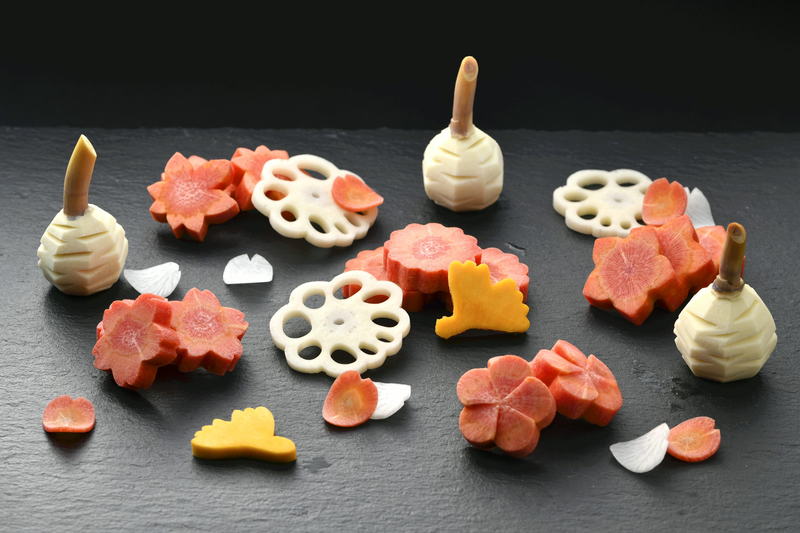
Japanese cooking includes the techniques of cutting vegetables and other ingredients to evoke shochikubai (pine, bamboo and plum) and other auspicious motifs.
Cutting vegetables into decorative shapes turns them into terrific garnishes that can bring a distinct Japanese touch and a sense of the season to the table.
Techniques for these decorative cutting styles to garnish Japanese cuisine are said to have been developed in Kyoto together with the chanoyu tea ceremony and kaiseki ryori, a type of cuisine with its origins in elegant drinking parties.
Tetsuya Hasegawa, an instructor at Tokyo College of Sushi & Washoku, developed his skills in Kyoto's Gion district.
"[Decorative cutting was based on] the techniques of using knives to cut ingredients to make flavors easier to absorb or give them a better texture, and they have developed into to an elegant food culture that shows appreciation for the many types of beauty in nature," he said.
"Nowadays, when it becomes difficult for us to get a feel for each season through food, [decoratively cut vegetables] are essential to convey the sense of season."
Hasegawa displayed some typical examples of decoratively cut vegetables.
The chef started by using carrots to create items representing cherry blossoms, chrysanthemums and maple leaves, by cutting off or making cuts into the surface.
"Carrots are available all year-round," Hasegawa said. "The red provides some additional color to the dining table."
He then sliced carrots and daikon into curved pieces and scattered them on a serving plate to decorate it with "flower petals."
Hasegawa turned bright yellow pumpkin slices into maple leaves. For lotus roots, he made some curved V-shaped cuts on the outer part of the vegetable before slicing it to create flower-like pieces. Kuwai arrowheads were scored on their surface to resemble white pine cones.
These cutting techniques not only create small garnishes, but can also decorate main items.
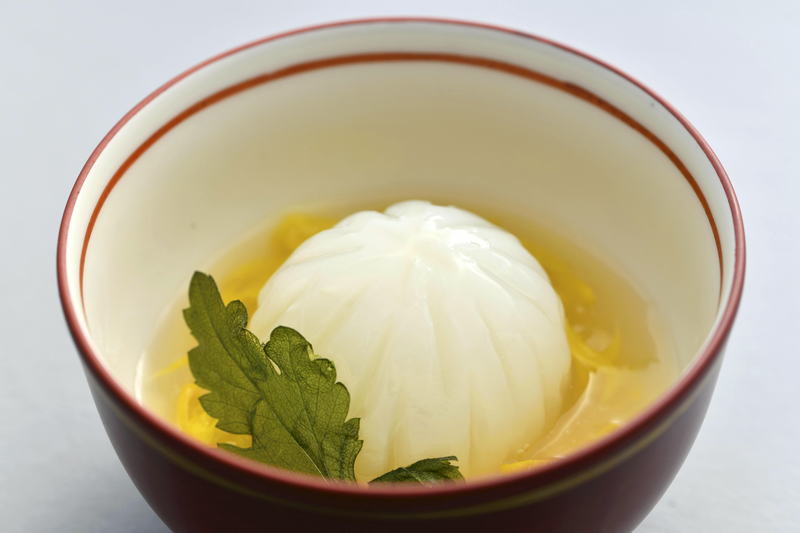
Hasegawa peeled a turnip and made some slits lengthwise to resemble a chrysanthemum. "Pouring a thickened soup over it can make a nice dish," the chef said. "You can add an elegant touch if you garnish the turnip with a deep-fried leaf of edible chrysanthemum."
A turnip or a daikon can be used as a serving bowl if the core of the vegetable is scooped out.
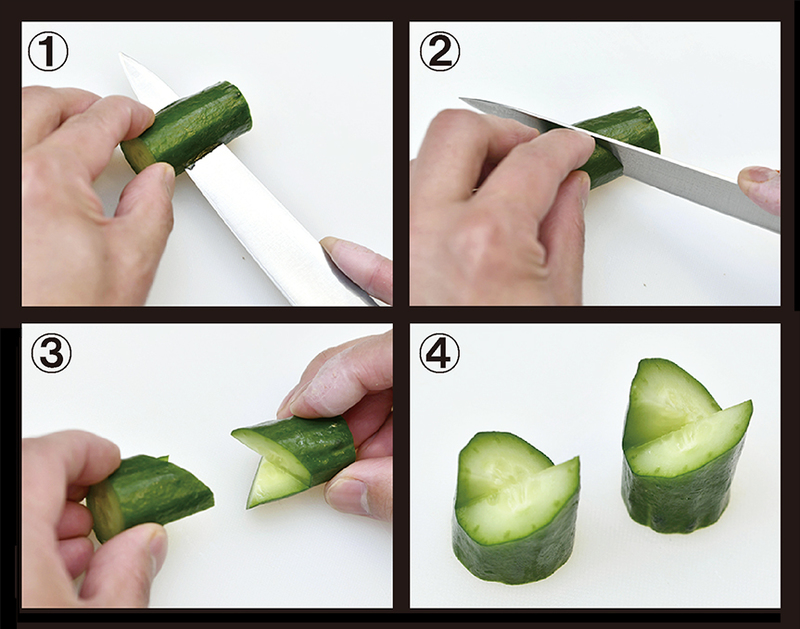
Some decorative cutting techniques can also be tried at home. Hasegawa showed how to cut a cucumber to top with miso or wasabi.
First, cut the cucumber into a 5-centimeter-long piece. Hold a paring knife horizontally to pierce it near its center (photo 1). Then cut the piece diagonally halfway through (photo 2). Turn the piece and make a similar cut. Separate into two smaller pieces (photo 3). Stand them on end before adding condiments (photo 4).
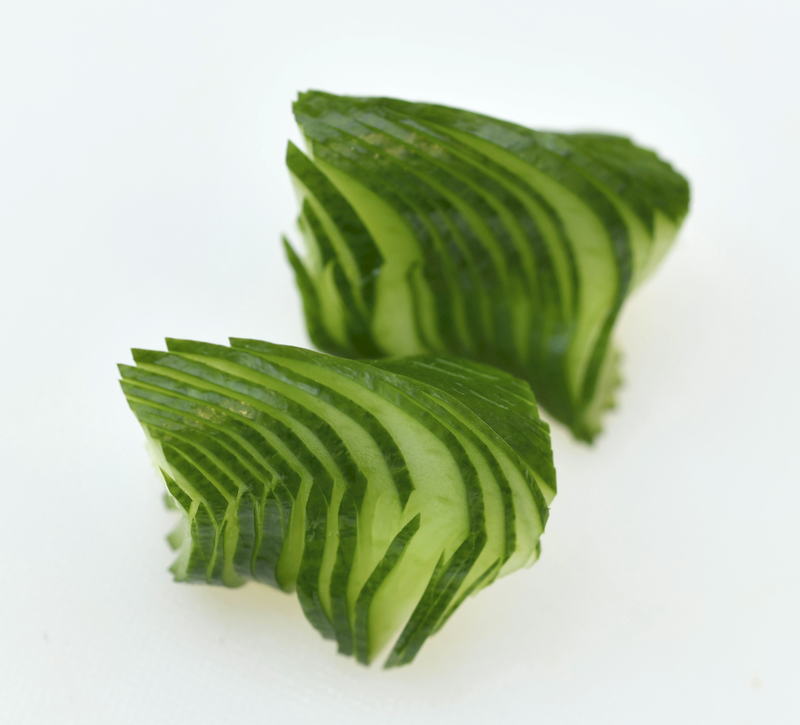
Hasegawa also showed another technique for "accordion cucumber," in which he made diagonal cuts halfway through on one side, with the widths between the cuts almost the same. He then repeated the same process on the opposite side. The cucumber not only took on an interesting appearance, it also had a pleasant texture. This style of cutting can also help seasonings more easily soak into vegetables.
"Even a single piece of decoratively cut vegetable can make the dining table elegant," Hasegawa said.
The techniques employed in washoku traditional Japanese cuisine have been getting more attention since it was added to UNESCO's Intangible Cultural Heritage list in 2013. However, even some washoku chefs tend to shy away from decorative cutting, as they consider these techniques troublesome as they require time, according to Hasegawa.
"The delicate techniques of decorative cutting are also appreciated by people overseas, and are an important element in promoting Japanese cuisine," Hasegawa said. "I hope to continue to preserve and pass on the techniques and the spirit of omotenashi hospitality, which can be found in every detail of these techniques."
To find out more about Japan's attractions, visit http://the-japan-news.com/news/d&d
Read more from The Japan News at https://japannews.yomiuri.co.jp/