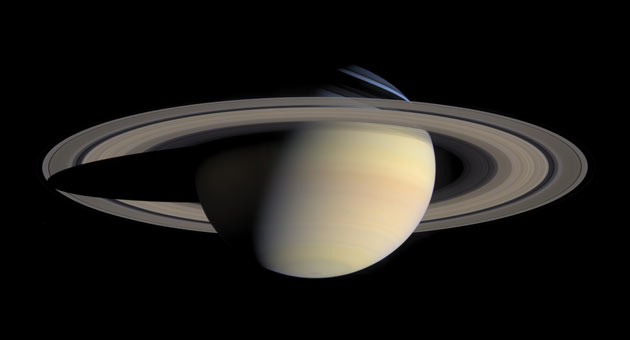
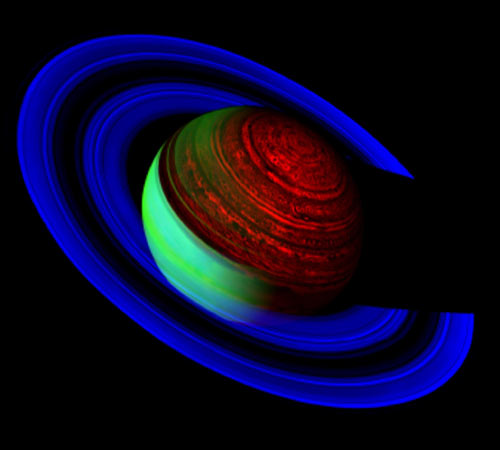
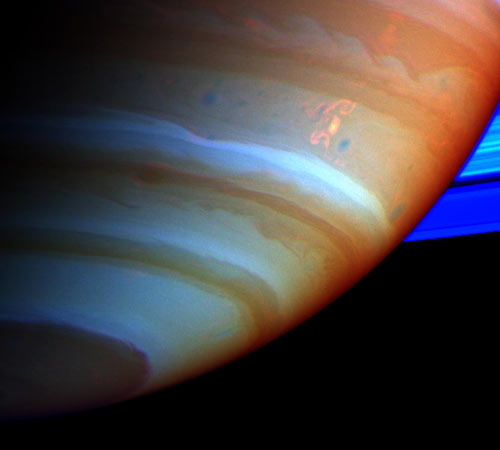
In October 2004, Cassini captured a series of 126 images within the space of 2 hours, which were then combined to create the largest, most detailed global view of Saturn and its rings in natural colour ever made. The spacecraft was approximately 6.3 million kilometres from the planetPhotograph: NasaCassini's visual and infrared mapping spectrometer captured this image of Saturn's glow on its unlit side, represented here in electric blue, sapphire and mint green. The planet is casting a strong shadow over its rings. This is a composite of 25 images taken over a period of 13 hoursPhotograph: NasaA huge storm (just above right of centre) known as the Dragon Storm which appeared in Saturn's southern hemisphere in mid-September 2004. This composite image of Saturn's atmosphere and rings was taken in near infrared light through filters that sense different amounts of methane gas. Large concentrations show up in red, indicating clouds deep in the atmosphere. Grey indicates high clouds, and brown indicates clouds at intermediate altitudesPhotograph: Nasa
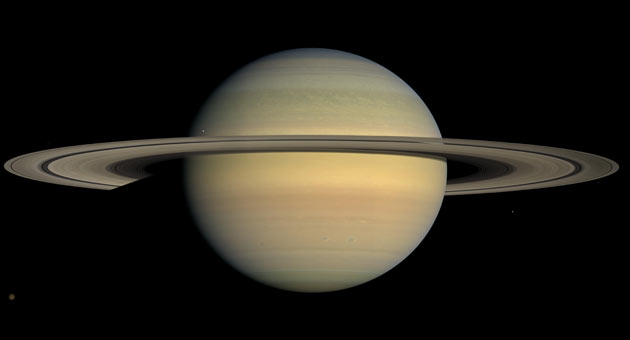
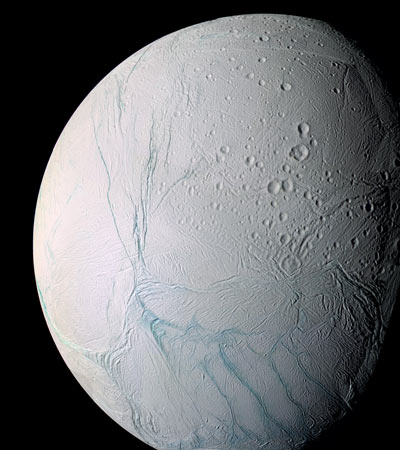
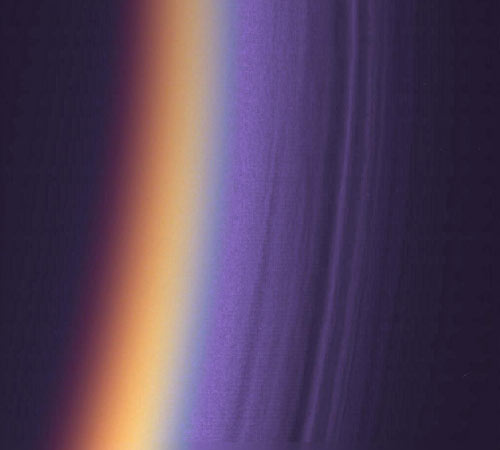
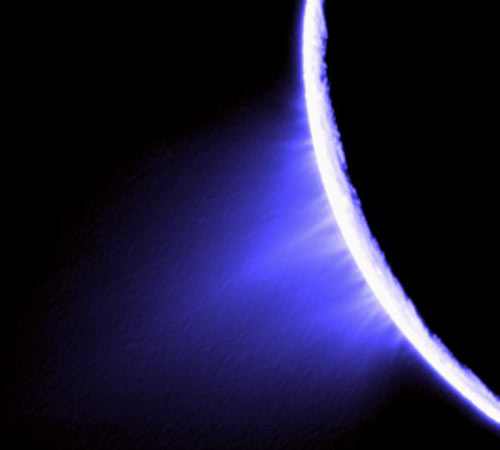
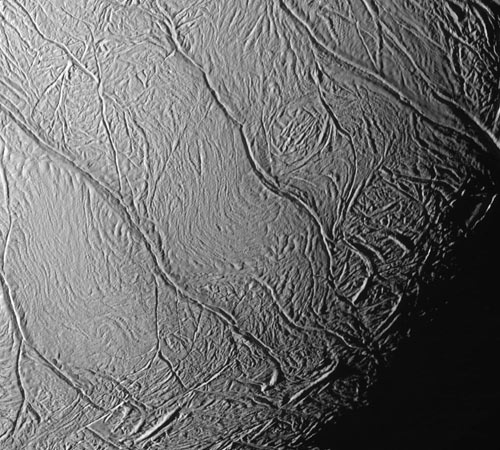
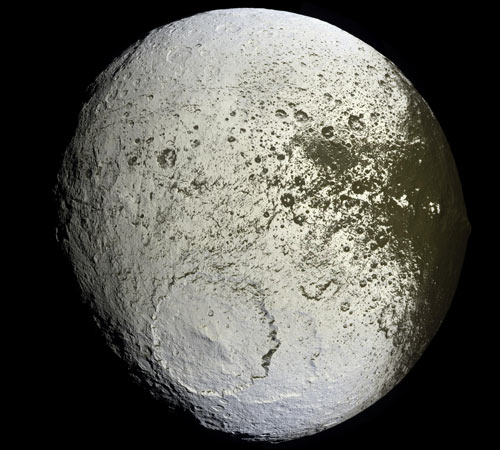
A mosaic image of Saturn combining 30 pictures – 10 each of red, green and blue light – taken over the course of two hours as Cassini panned its wide-angle camera across the entire planet and its ring system in July 2008Photograph: NasaAncient craters on Saturn's moon Enceladus. The blue fractures in the south polar terrain are encircled by a continuous chain of folds and ridges, reflecting the seismic forces within the moonPhotograph: NasaFalse-colour ultraviolet image showing layers of haze in Titan's upper atmosphere. The fine layers extend several hundred kilometres above the moon's surfacePhotograph: NasaJets of ice particles, water vapour and trace organic compounds spurting from the surface of EnceladusPhotograph: NasaClose-up of Enceladus showing a distinctive pattern of roughly parallel faults within the moon's southern polar latitudes, referred to by imaging scientists as tiger stripesPhotograph: NasaSaturn's moon Iapetus, which is just 912 miles in diameterPhotograph: Nasa
Sign up to read this article
Read news from 100’s of titles, curated specifically for you.