With the countdown to the July 23 opening of the Tokyo Olympics at three months, organizers consider measures to deal with a pandemic with no end in sight. This is the third and last of the series, in which The Yomiuri Shimbun explores the evolving situation as this major event approaches.
Unlike the 2012 London Games, where the main venues were located close to each other, the Tokyo Olympics and Paralympics will be held at 43 venues across nine prefectures. Due to the coronavirus crisis, the number of vehicles needed for the Games has not yet been determined, and those involved in preparations are struggling to deal with the anticipated traffic congestion.
On Friday, it will be three months until the opening ceremony of the Tokyo Olympics.
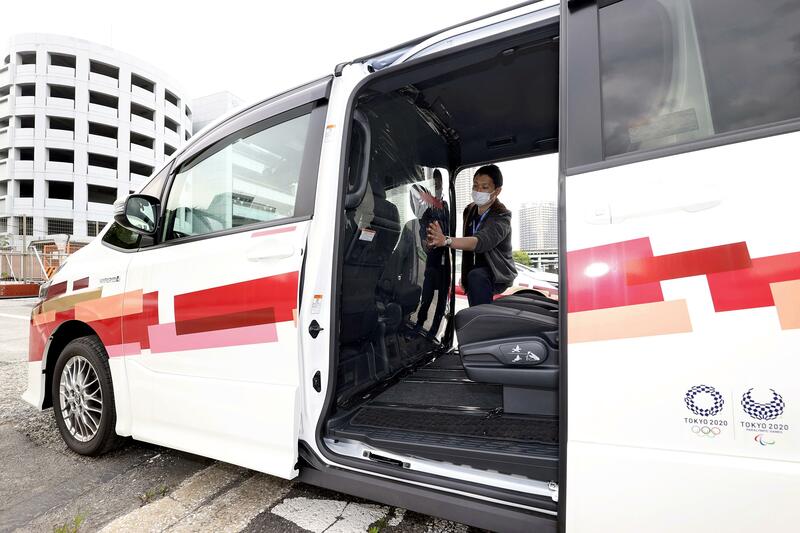
In July last year when the second wave of the infections arrived, the Tokyo metropolitan government -- with a sense of urgency because of the increasing number of infections -- asked the Tokyo Organizing Committee of the Olympic and Paralympic Games to lend them vehicles to transport COVID-19 patients.
At that time, there was a fear that there would be a shortage of vehicles to transport people with minor symptoms from their homes to places where they could receive medical treatment.
The Tokyo government took notice of the vehicles that were lined up at the site of the former Tsukiji Market in Chuo Ward. The vehicles had been secured to transport International Olympic Committee officials to venues and hotels, but they were sitting idle due to the postponement of the Games.
The Tokyo government, which rented 24 of the cars, separated the driver's seat from the back seat with a sheet to prevent infections and used them until March.
"It's better to use them for coronavirus responses than to park them for a long time and have their batteries go dead," a senior official of the organizing committee said.
There are about 5,500 vehicles, including buses, set aside for the Games. Before the postponement, the number of people from the International Sports Federations and foreign media was estimated to be about 50,000, but this number is expected to decrease due to infection prevention measures and cost reductions.
However, it is still unclear whether the number of vehicles will be enough.
The initial plans included use of other types of transportation, such as trains, in addition to the vehicles. But the Tokyo 2020 Playbook, a guideline for the prevention of infections compiled by the IOC and other organizations in February, prohibits the use of public transportation.
To meet the demand for vehicles during the Games, increasing the number of bus services and securing taxis have been considered. But there have been a number of additional requests for transportation to and from the hotels that were not in the initial plan.
"If we respond to all of these requests, no matter how many cars we have, there would not be enough," another official of the organizing committee said.
The idea of halving the capacity of the vehicles to allow sufficient distance between passengers was discussed but abandoned, because it would double the number of vehicles needed. Preparations are now underway to ensure that people inside vehicles wear masks and refrain from talking.
Measures to ease traffic congestion, which were as important as those for the summer heat before the pandemic, are still an issue that needs to be addressed.
Traffic volume in Tokyo is an important consideration when ensuring that athletes' vehicles can travel without delay. On weekdays, more than 1 million vehicles traveled on the Metropolitan Expressway on average each day, but after the virus outbreak, that number dropped to about 800,000 between April and May last year.
At the same time, the number of home delivery services increased rapidly due to a strong demand from people staying at home. The number of private cars on the expressway also saw an increase. As of November last year, the number of vehicles on the expressway returned to about 1.06 million, or 96.7% of the level in the same period last year, and has remained above 90% since then.
The organizing committee and others have set a target of reducing traffic volume by 30% on the Metropolitan Expressway and by 10% on public roads excluding expressways. On the Metropolitan Expressway, traffic control measures, including "road pricing," in which tolls are raised or lowered depending on the time of day, and closure of certain entrances will be implemented.
The Tokyo Trucking Association, which has about 3,300 member companies, will call for refraining from traveling on the Metropolitan Expressway from later this month until the end of the Games.
"With the one-year postponement, awareness of the Olympics has waned, and many companies mistakenly believe that traffic volume remains low," a senior official of the trucking association said.
A senior official in charge of transportation on the organizing committee said, "There are many unpredictable factors, but we will do our utmost in the remaining three months to ensure safe and smooth traffic."
Read more from The Japan News at https://japannews.yomiuri.co.jp/