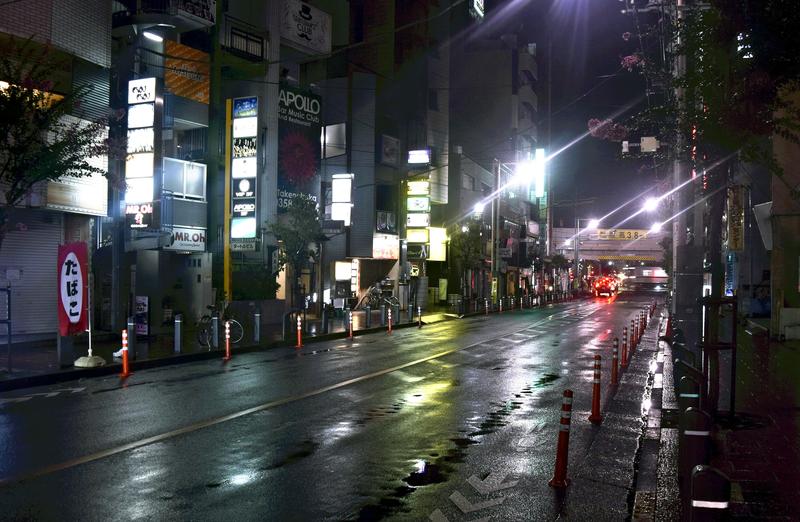
More than 100 people have reportedly been confirmed infected with the new coronavirus in the Takenotsuka 1-chome district of Adachi Ward, Tokyo, where clusters occurred at four nightlife spots where employees entertain customers. Why has the infection spread in this district, which is called "Little Manila" as it is home to establishments where Philippine women entertain customers?
On July 20, clusters of infections were confirmed at two pubs in the district where Philippine women work. Another cluster occurred at two similar establishments in the same district. According to a ward official, more than 100 people, including those infected at other nightlife spots and the family members of club employees, were infected with the virus.
According to a man in his 40s from Adachi Ward, who visited at least two of the establishments where clusters were confirmed after March when the virus spread nationwide, preventive measures had been taken at those places, such as wearing masks, sanitizing hands and opening doors for ventilation.
But it is said to be usual for customers at the establishments to have a conversation or sing karaoke with Philippine workers. They even hug or kiss at times, the man said. "The distance between customers and employees was close at such establishments in the first place, creating the possibility for infections to spread."
Exchanges among Philippine workers may have also spread the virus. According to the Adachi public health center, employees of several nightlife spots, including the one where an infection cluster occurred, attended a party in July and some of the party participants became infected.
The district receives many visitors from the southern part of Saitama Prefecture and other areas outside Tokyo. Therefore, the ward unveiled the names of the four establishments and called for those who had visited them to take a PCR (polymerase chain reaction) test. Consequently, 10 customers were found to have been infected with the virus.
In early August, the ward office conducted PCR tests over a four-day period on nightlife employees who had not been infected or had no close contact with people infected with the virus. Two hundred and twenty people were tested and only one of them was found positive.
Arata Teranishi, head of the Adachi public health center, apparently felt this was a good outcome.
"We were able to grasp the approximate extent of the spread of infections in the entertainment district by checking cases early," Teranishi said.
However, not all entertainment establishments allowed the tests.
According to a ward official in charge of the testing, there are many establishments that do not reveal their customers or employees. Since some of them conduct business without a license in the first place, it is difficult to accurately determine even the number of establishments.
According to Muneaki Sekiya, 70, who chairs the Takenotsuka restaurants and bars association, the number of customers at the establishments in and around the Takenotsuka district has dropped. It plunged by almost 50% at one time, Sekiya said. "Takenotsuka became famous in a bad way," he lamented.
-- Concerns about discrimination
According to the Tokyo metropolitan government's population statistics division, there were 3,704 Philippine residents in Adachi Ward as of July 1, giving it the largest Philippine population among Tokyo's local governments.
University of Shizuoka Prof. Sachi Takahata, an expert on the situation of Philippine residents in Japan, said that she is concerned that the spread of the virus at the Takenotsuka establishments may lead to discrimination against all Philippine people. "In addition to thorough infection prevention measures, it may be necessary to provide Philippine residents with support to change their jobs to daytime ones so that they can land on nursing care or other stable jobs," Takahata said.
Read more from The Japan News at https://japannews.yomiuri.co.jp/