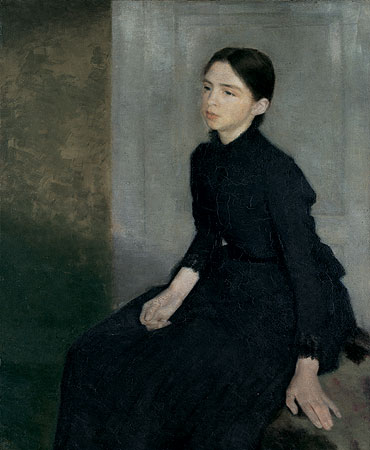
Hammershøi's portrait of his sister Anna was painted when the artist was 21. The Danish Royal Academy passed over the work when judging the 1885 Neuhausen Prize, and the omission prompted a furious backlash from fellow artists who saw considerable potential in the young painter's work. Photograph: PR
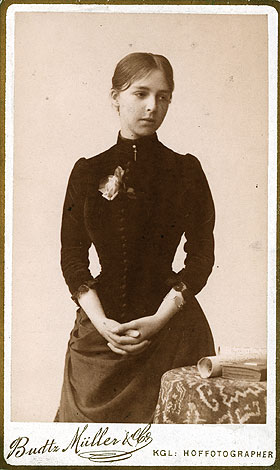
An official carte de visite portrait of the subject of Hammershøi's painting, his nineteen-year-old sister Anna, taken by the Court Photographer Budtz Müller. Photograph: PR

The artist aged 25, four years after painting the portrait of his sister. Photograph: PR
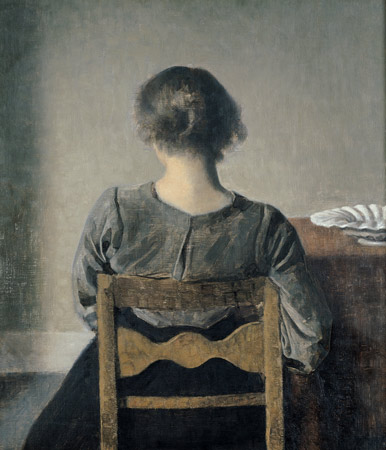
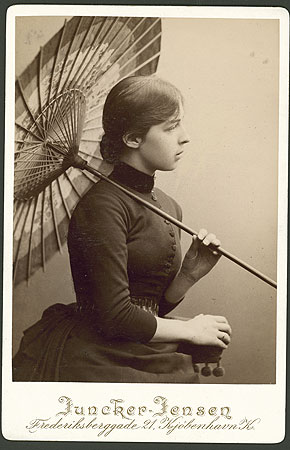
It is doubtful whether Hammershøi painted at this time from a photographic original, but he and his siblings loved to visit photographers. Some shots of Anna reveal resemblances to the seated posture and the predominance of the hands in Hammershøi's painting. Photograph: PR
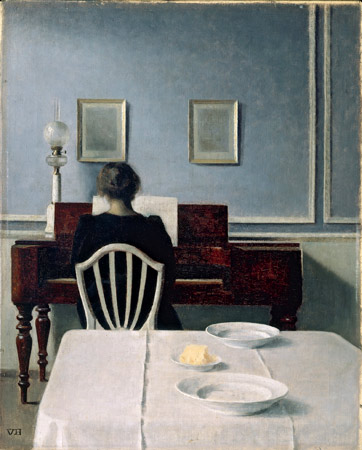
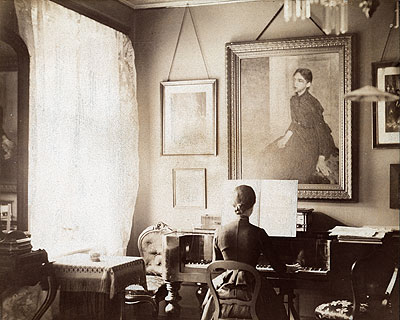
The living room of the Hammershøi family home, as photographed by the painter V. Schønheyder Møller. Hammershøi's portrait hangs on the wall, and Anna herself is seated at the piano. Photograph: PR
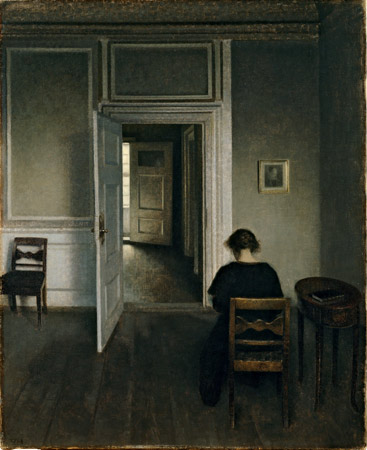
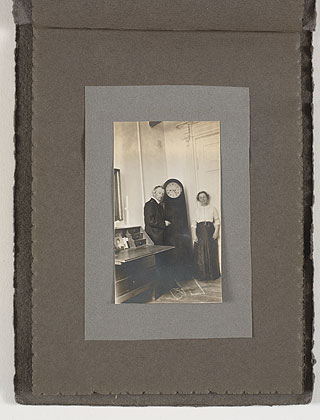
Hammershøi and his wife Ida at their home at Strandgade 25. The couple married in 1891, and Hammershøi's wife features in many of his interiors, often depicted in simplified renderings of their own home. Photograph: PR

Ida also modelled frequently for her brother, Peter Ilsted. Hammershøi and Peter were lifelong friends, and the Metropolitan Museum of Art held a joint exhibition of their collected works in 2001. Photograph: PR
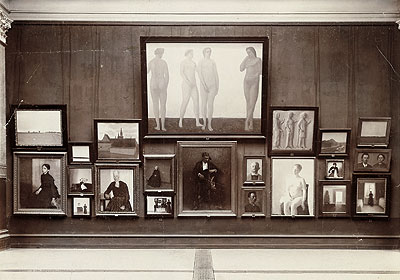
Two of Hammershøi's paintings can be seen in this photograph of the Artists’ Study School exhibition at Charlottenborg around New Year 1896. Portrait of a Young Girl hangs at the outer left, and to the left of the painting of the cello player can be seen Hammershøi's 1886 painting, Old Woman Seated, which had been lent to the exhibition by the collector and patron Heinrich Hirschsprung. Photograph: PR
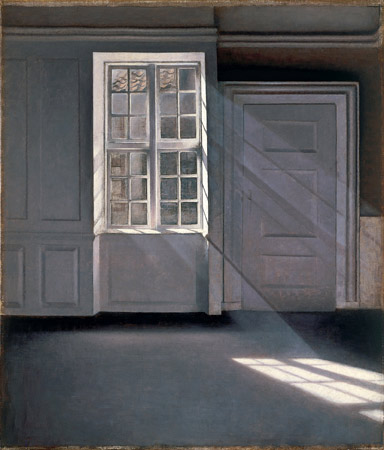

A photograph taken by the photographer Kristian Hude (1864-1926) of a courtyard which once belonged to Hammershøi. Photograph: PR
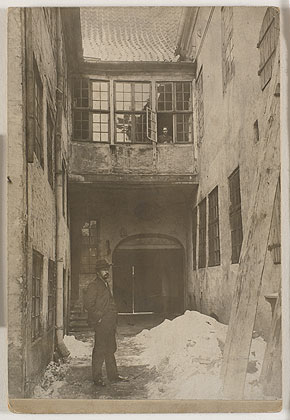
Ida can be seen looking through a window of the couple's apartment. Hammershøi painted the interior of this old merchant house in Copenhagen more than 60 times, and many of the images on which his reputation is founded were created here. In a rare interview Hammershøi commented: "Personally I am fond of the old; of old houses, of old furniture, of that quite special mood that these things possess." Photograph: PR
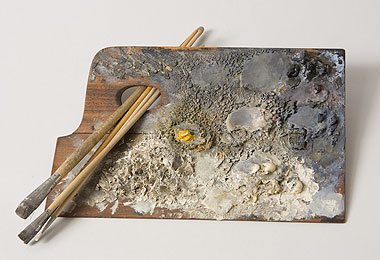
On the death of Hammershøi in 1916 the painter and sculptor Joakim Skovgaard recalled that he had visited his fellow artist in 1894: “On that occasion I saw Hammershøi’s palette ... Layer had been laid upon layer of paint, and down inside these layers the paint was strangely smoothed out, so that it looked as if four oyster shells lay on the palette.” Photograph: PR