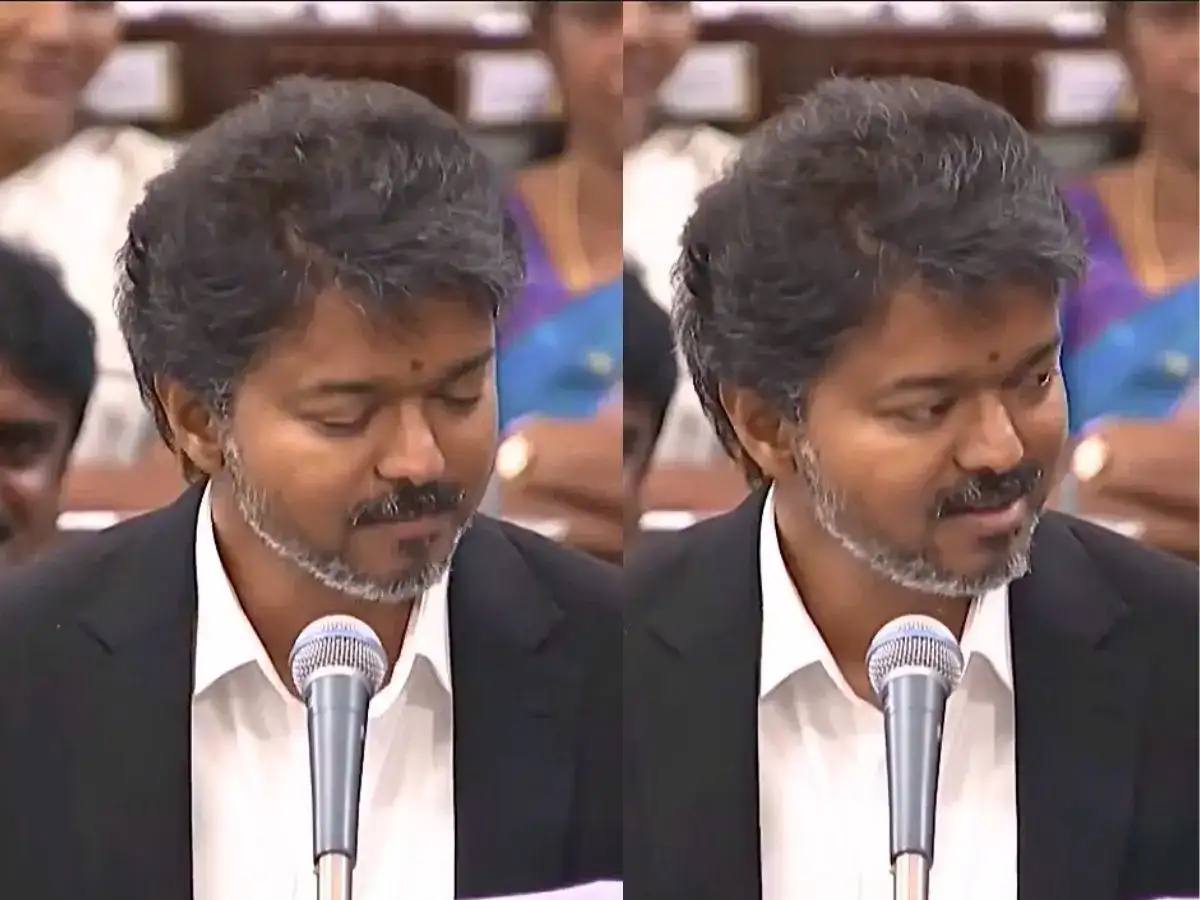
Tamil Nadu Assembly sessions are usually associated with shouting matches, walkouts, table-thumping and political one-liners. But on Tuesday, Chief Minister C. Joseph Vijay unexpectedly turned the Assembly into something between a history class, a stand-up set and a parliamentary trivia reel.
The moment came during the election of JCD Prabhakar as Speaker of the 17th Tamil Nadu Legislative Assembly. As no other nominations were filed, the TVK MLA from Thousand Lights was elected unopposed.
Prabhakar, a former AIADMK MLA who joined TVK before the elections, is considered one of the senior-most leaders in the ruling alliance and played a key role in Vijay’s campaign and manifesto planning.
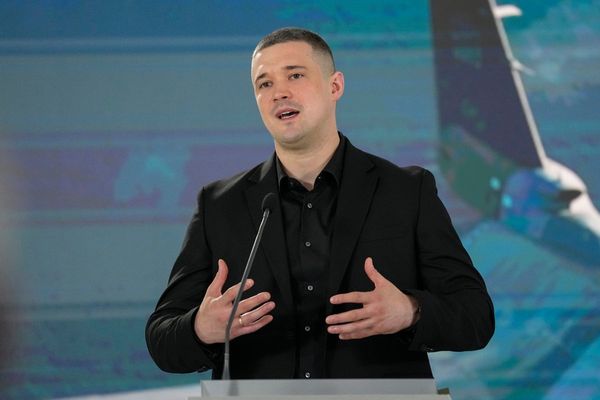
But it was Vijay’s speech after the election that grabbed attention.
While speaking about the Assembly tradition where the Opposition leader escorts the newly elected Speaker to the chair, Vijay launched into what many online are already calling a classic “Vijay kutti story.”
And honestly, this one came with British political history, danger, drama and a surprisingly dark punchline.
“Nobody wanted the Speaker’s job”
Vijay explained that several parliamentary traditions followed in India trace their roots back to the British Parliament.
According to him, in older times in Britain, the Speaker’s role was considered extremely risky because the Speaker had to communicate Parliament’s decisions to the monarch. If the king felt the Speaker was acting unfairly, biased, or against royal interests, the consequences could reportedly be severe, including killing in extreme cases.
Which is exactly why, Vijay joked, nobody wanted to become Speaker back then. “The Speaker had the responsibility of informing the King whenever Parliament rejected his proposals. In those days, kings even had the power to order executions, and Speakers sometimes faced severe punishment for conveying Parliament’s stand,” Vijay said.
That is where the famous tradition comes from.
He also referred to the old parliamentary custom where newly elected Speakers would symbolically hesitate to occupy the chair. Historically, newly elected Speakers in the British House of Commons were symbolically “dragged” to the chair by other members because the role was once seen as dangerous and politically risky.
So when Opposition leaders ceremonially escort the Speaker to the chair today, it is actually a continuation of that centuries-old parliamentary custom.
Inside the Tamil Nadu Assembly, the responsibility fell to Opposition leader Udhayanidhi Stalin, who accompanied Prabhakar to the Speaker’s chair as part of the convention.
And suddenly, one of the most formal rituals in politics became something people online actually wanted to Google.
Watch CM Vijay's Full Speech in TN Assembly here:
Vijay said the Tamil Nadu Legislative Assembly must function as the “heart of democracy” and quoted former US President Abraham Lincoln’s famous definition of democracy as a government “of the people, by the people and for the people”.
The internet: “Wait… that tradition is REAL?”
The moment instantly stood out because Assembly conversations rarely become internet-friendly unless there is chaos involved.
This time, though, people were talking about parliamentary history.
Many online users were surprised to learn that the “dragging the Speaker” tradition was not symbolic theatre invented for TV cameras, but an actual continuation of British parliamentary customs dating back centuries.
Others joked that Vijay managed to make legislative procedure sound like one of is classic "Kutty Story."
A serious role behind the humour
Behind Vijay’s storytelling was also a political message.
The Speaker’s role is expected to remain neutral, even when elected from the ruling side. The office is responsible for maintaining order, deciding on Assembly procedures and ensuring debates function fairly.
That expectation of neutrality is exactly why the Speaker’s chair carries so much symbolic weight in parliamentary democracies.
And in classic Vijay fashion, instead of turning the moment into a dry procedural speech, he turned it into a “kutty story” that had MLAs listening — and social media clipping the speech within minutes.