Get all your news in one place.
100's of premium titles.
One app.
Start reading
Reuters
Reuters
Entertainment
Marwa Rashad and Stephen Farrell

Islam's holiest sites emptied by coronavirus crisis as Ramadan begins

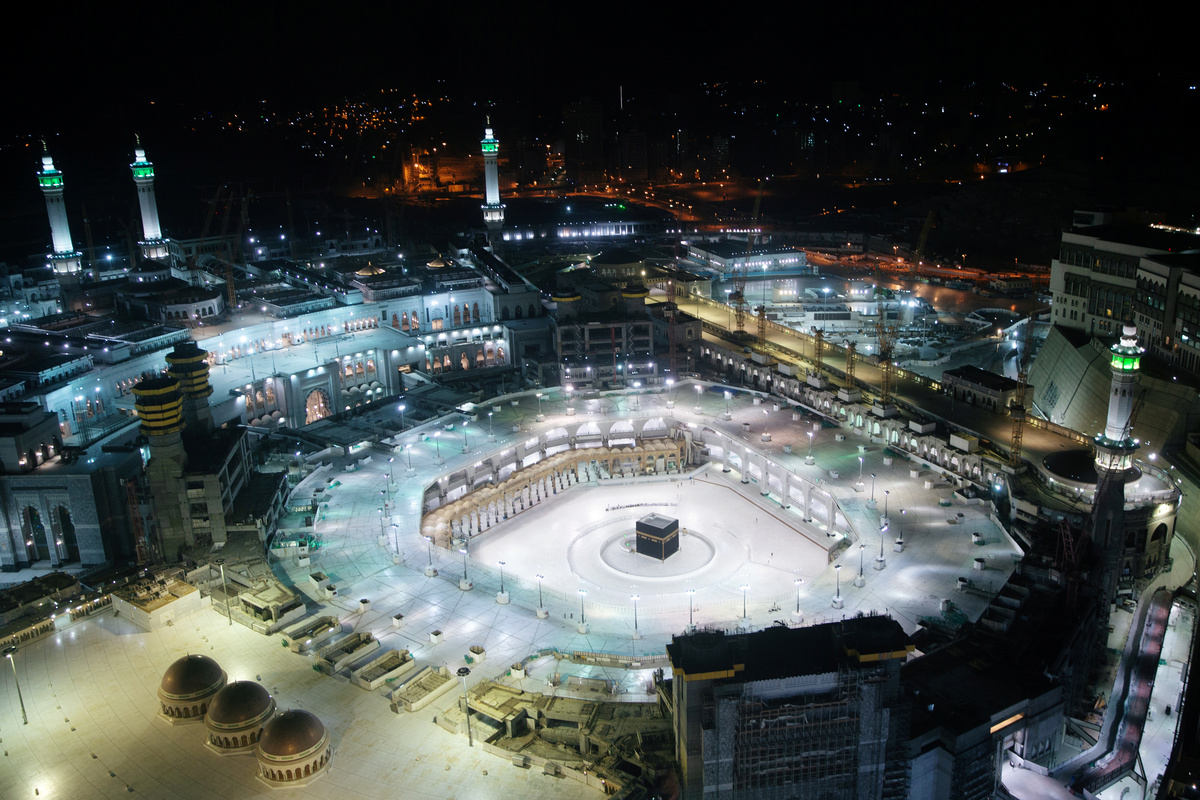
An aerial view of deserted Grand Mosque on the first day of the holy month of Ramadan during the outbreak of the coronavirus disease (COVID-19), in the holy city of Mecca, Saudi Arabia April 24, 2020. Picture taken through a window. REUTERS/Yasser Bakhsh

The holy month of Ramadan began on Friday with Islam's holiest sites in Saudi Arabia and Jerusalem largely empty of worshippers as the coronavirus crisis forced authorities to impose unprecedented restrictions.

During Ramadan, Muslims the world over join their families to break the fast at sunset and go to mosques to pray. But the pandemic has changed priorities, with curbs on large gatherings for prayers and public iftars, or meals to break the fast.
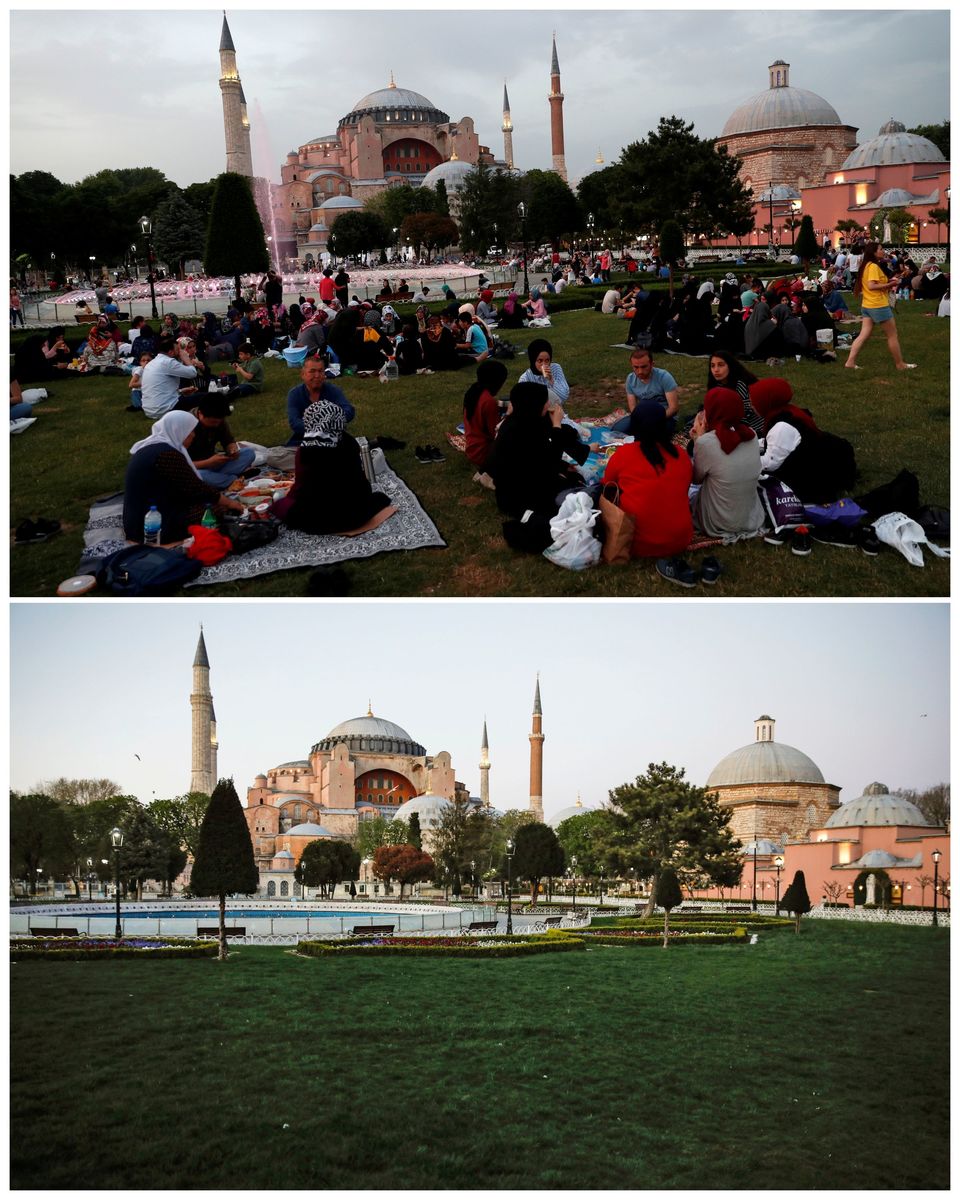
A combination picture shows people having their iftar 'break fasting meal' at Sultanahmet Square during the holy month of Ramadan in Istanbul, Turkey, May 28, 2019 (top) and a general view of the deserted Sultanahmet Square on the first day of Ramadan, during a four-day curfew which was imposed to prevent the spread of the coronavirus disease (COVID-19), April 24, 2020 (bottom). REUTERS/Murad Sezer, Umit Bektas

In a rare occurrence in Islam's 1,400-year history, Mecca's Grand Mosque and the Prophet's Mosque in Medina - the religion's two holiest locations - will be closed to the public during the fasting period.

Prayers from inside the mosque at Mecca on the first evening of Ramadan on Thursday were restricted to clerics, security staff and cleaners, in a ceremony broadcast live on television.

In comments marking the start of Ramadan, King Salman, who is the Custodian of the Two Holy Mosques, lamented the need for social distancing during the holy month.
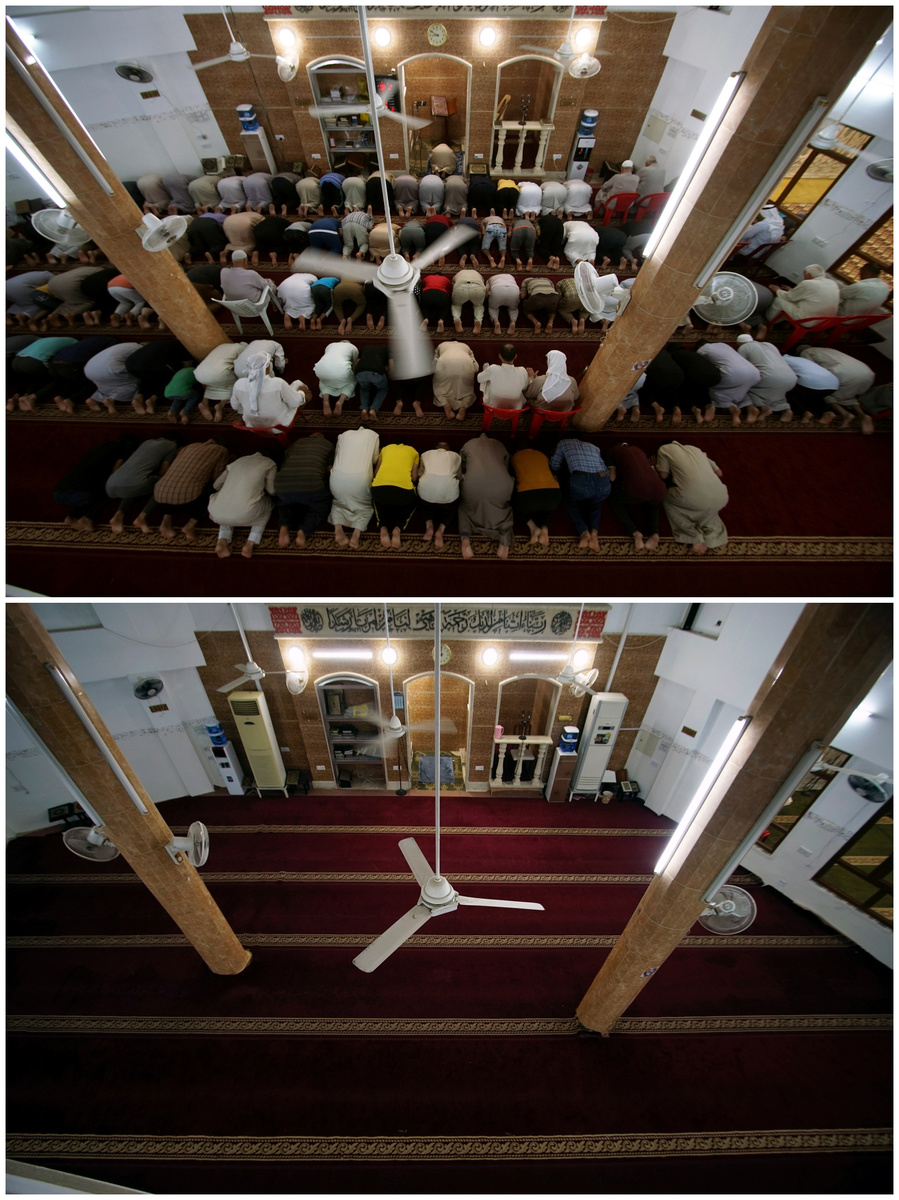
A combination picture shows people praying in Mohammed Al-Milhem mosque, during the holy month of Ramadan in the old city of Mosul, Iraq May 20, 2019. Picture taken May 20, 2019 (top) and the same site, empty, on the first day of the holy month of Ramadan during the outbreak of the coronavirus disease (COVID-19), April 24, 2020. REUTERS/Abdullah Rashid

"It pains me to welcome the glorious month of Ramadan under circumstances that forbid us from prayers in mosques," he said, according to the official Saudi Press Agency.

"It doesn't feel special this year, we don't feel any Ramadan vibes," said Sarah, a mother-of-two in Riyadh.

At a near-empty Al-Aqsa Mosque in Jerusalem, an imam called out the first Friday prayers of Ramadan across a windswept plateau almost devoid of worshippers.
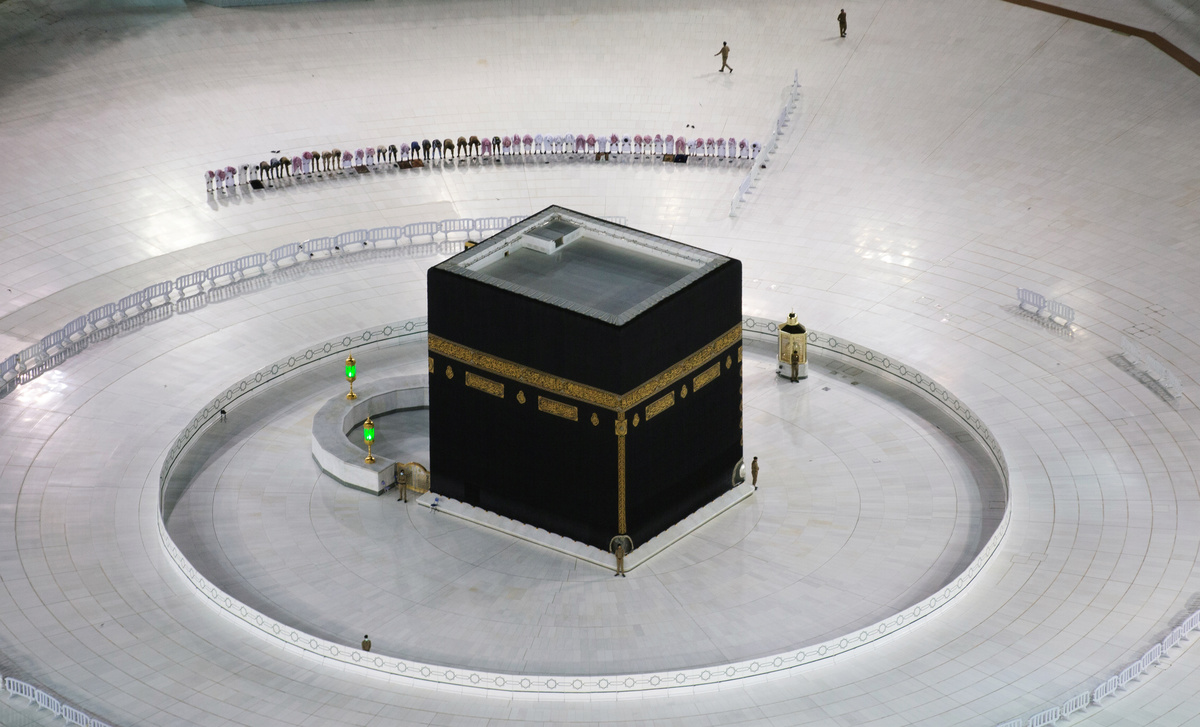
Worshippers pray Taraweeh at Kaaba in the Grand Mosque on the first day of the holy month of Ramadan during the outbreak of the coronavirus disease (COVID-19), in the holy city of Mecca, Saudi Arabia April 24, 2020. Picture taken through a window. REUTERS/Yasser Bakhsh

A handful of clerics in face masks knelt below the pulpit, keeping several feet apart to comply with coronavirus restrictions.

"We ask God to have mercy on us and all of humanity and to save us from this lethal pandemic," the imam said.

Ramadan typically draws tens of thousands of Muslims daily to the mosque and the adjoining Dome of the Rock. Worshippers will instead have to watch prayers on television.
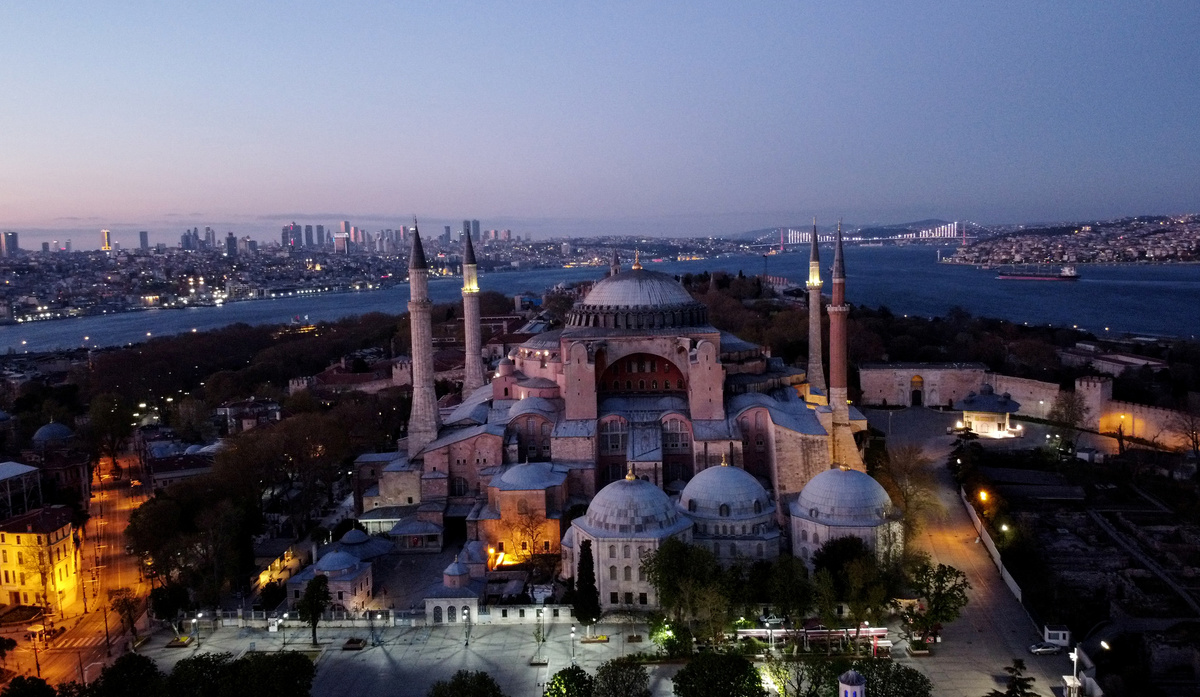
An aerial view of the Byzantine-era monument of Hagia Sophia on the first day of the holy month of Ramadan, during a four-day curfew which was imposed to prevent the spread of the coronavirus disease (COVID-19), in Istanbul, Turkey, April 24, 2020. Picture taken with a drone. REUTERS/Umit Bektas

ASIAN OUTBREAKS

Governments in Asian countries with large Muslim populations urged people to keep their distance while observing Ramadan.

Early outbreaks in Asia, home to many of the world's 1.8 billion Muslims, were traced in some cases to pilgrims returning from Iran and Saudi Arabia to Afghanistan and Pakistan, or to gatherings of Islamic groups in India and Malaysia.
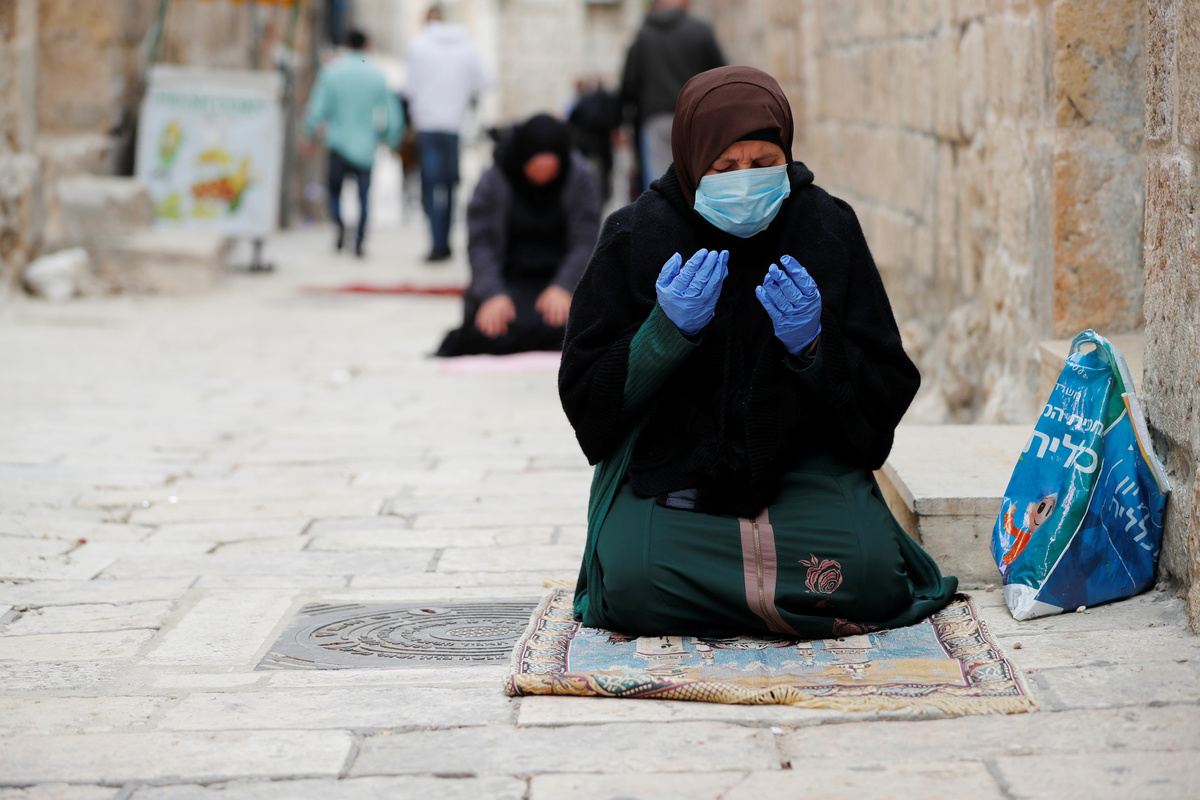
Muslims pray during the first Friday prayer of Ramadan in an alley in Jerusalem's Old City amid the coronavirus disease (COVID-19) restrictions April 24, 2020 REUTERS/ Ammar Awad

"Just like when we fast, we must struggle and fight against our desires," Malaysian Prime Minister Muhyiddin Yassin said in a televised address to his country, one of the hardest hit by the virus in Southeast Asia.

On Thursday, his government extended curbs on movement until May 12, cancelled popular evening bazaars and banned attendance at mosque prayers as well as travel back to people's hometowns.

In Indonesia, which has the world's biggest Muslim population and Asia's highest coronavirus toll outside China, President Joko Widodo urged people to work and pray at home.
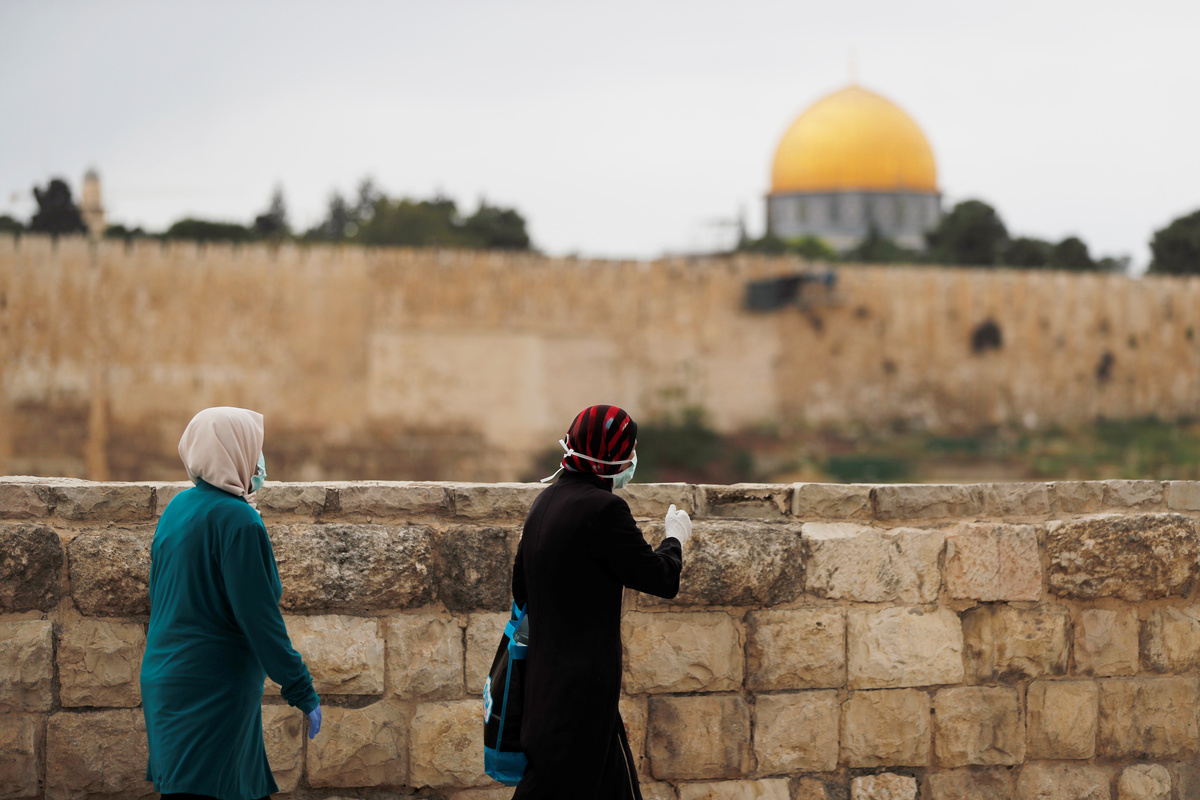
Women walk outside Jerusalem's Old City overlooking the Dome of the Rock, as Muslims mark the first Friday prayer of Ramadan amid the coronavirus disease (COVID-19) restrictions April 24, 2020 REUTERS/ Ammar Awad

On the island of Java, Tatan Agustustani, 52, and his family were clearing furniture to make way for prayer mats.

"It's the same in the mosque or at home," said Agustustani. "For me, no matter where we are, prayers must go on, even though we cannot pray in the mosque."

But that message appeared lost in Indonesia's sharia-ruled province of Aceh, as worshippers crowded into a mosque on the eve of Ramadan.
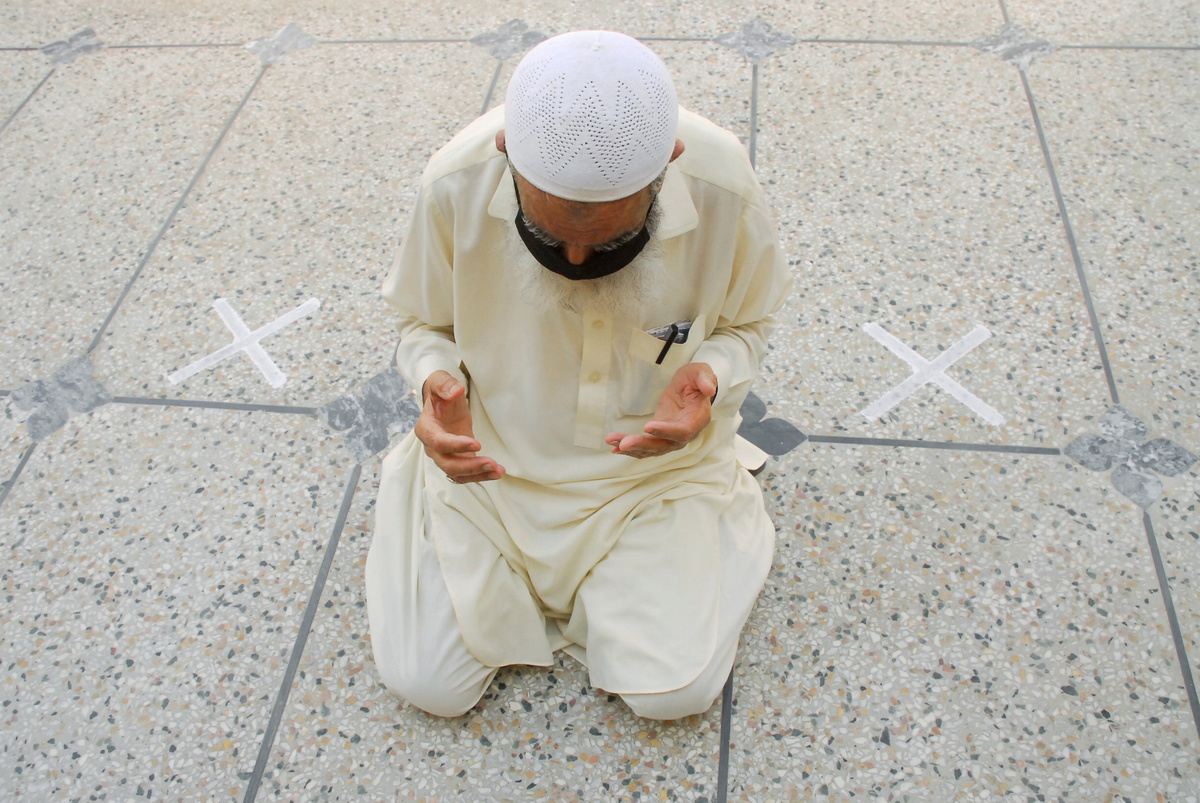
A man sits on the floor of a mosque with marks to maintain safe distance as he attends a Friday prayer amid the spread of coronavirus disease (COVID-19), Islamabad, Pakistan April 24, 2020. REUTERS/Waseem Khan

Some said their fate was not in their hands, although many wore masks as they lined up shoulder-to-shoulder to pray.

"In our belief, it is God who decides when we will die," said one devotee, Taufik Kelana. "But we will stay alert, like wearing a mask."
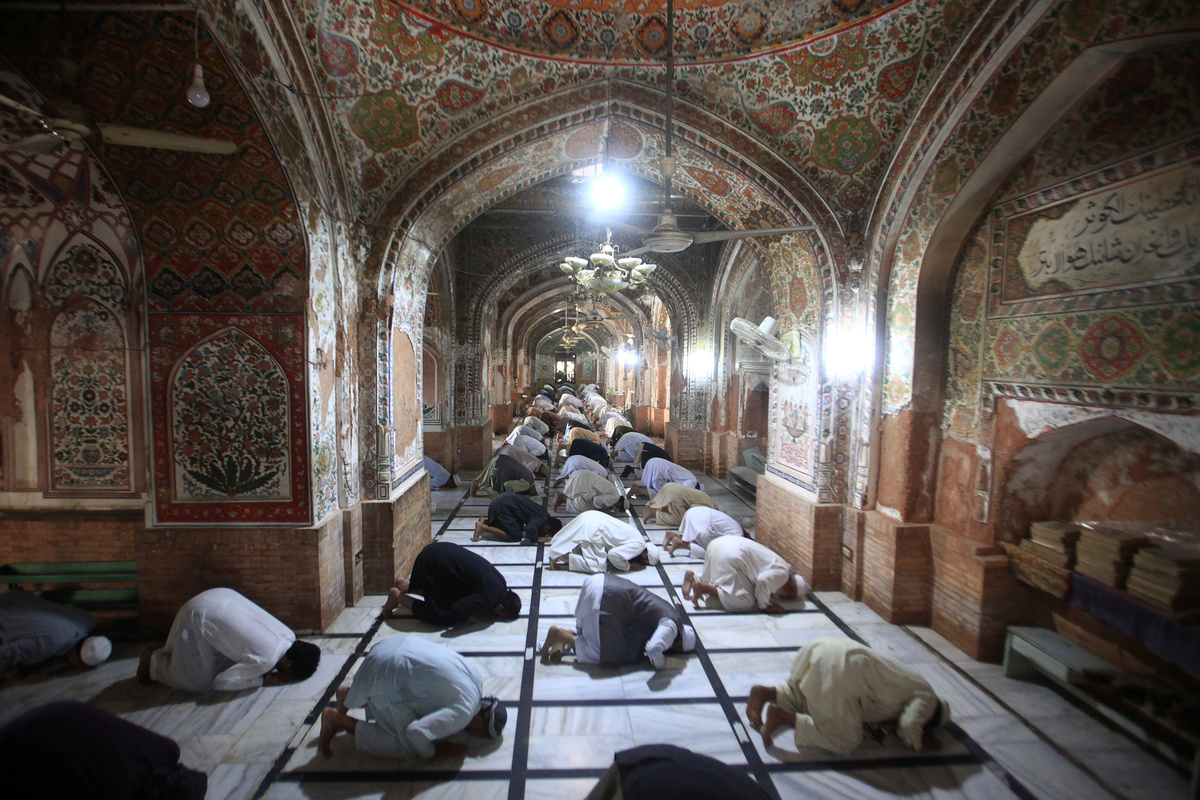
Muslims maintain safe distance as they attend a Friday prayer at Mahabat Khan mosque, amid the spread of coronavirus disease (COVID-19), Peshawar, Pakistan April 24, 2020. REUTERS/Khuram Parvez

SOME EASING

In South Asia, Ramadan is expected to start on Saturday.

Leaders of India's 160 million Muslims have urged people to heed the nationwide lockdown throughout the month.
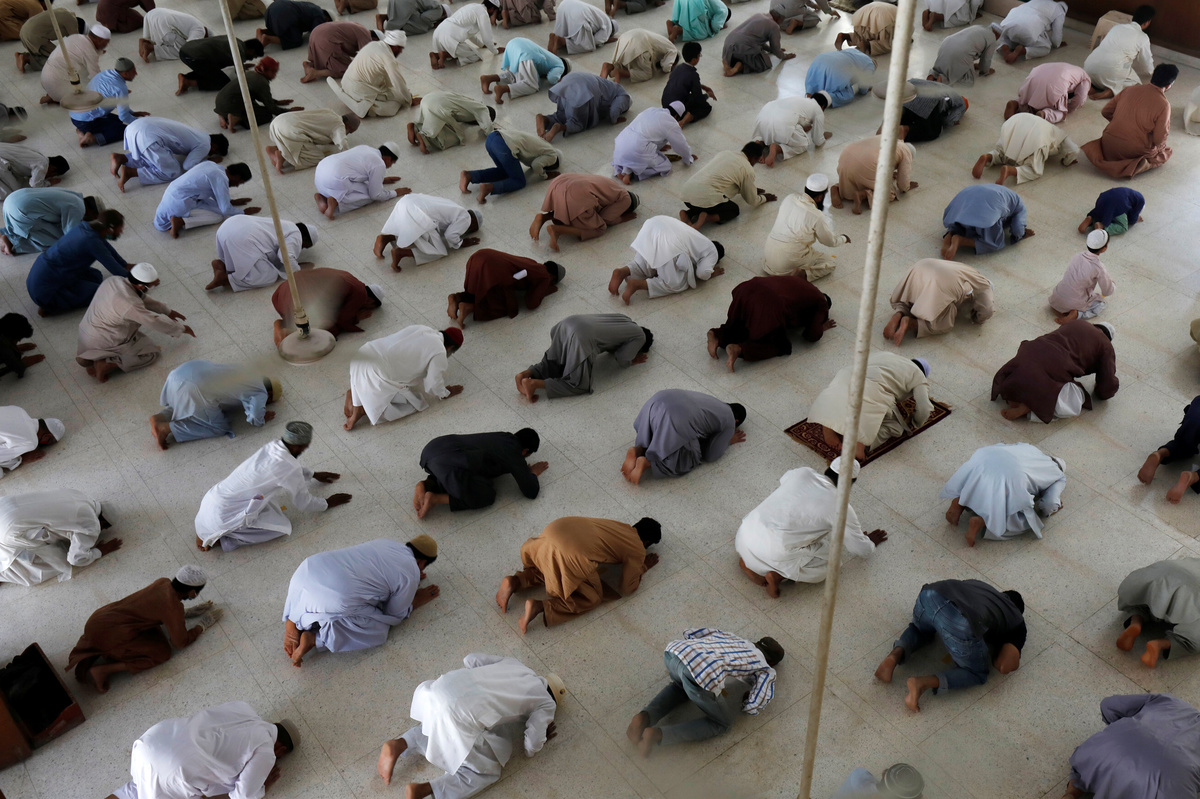
Muslims maintain safe distance as they attend Friday prayer as provincial government limited congregational prayers and ordered to stay home, in efforts to stem the spread of the coronavirus disease (COVID-19), in Karachi, Pakistan April 24, 2020. REUTERS/Akhtar Soomro

A large number of infections there were linked to a religious gathering of a Sunni missionary group. The Tablighi Jamaat event in mid-March drew participants from across India, neighbouring Bangladesh and even Indonesia and Malaysia.

The All India Islamic Centre of religious teaching will livestream recitations from the Koran, the Muslim holy book, every evening.

"This is the best way to pray to Allah and keep everyone safe," said its chairman, Khalid Rashid Firangi Mahali.
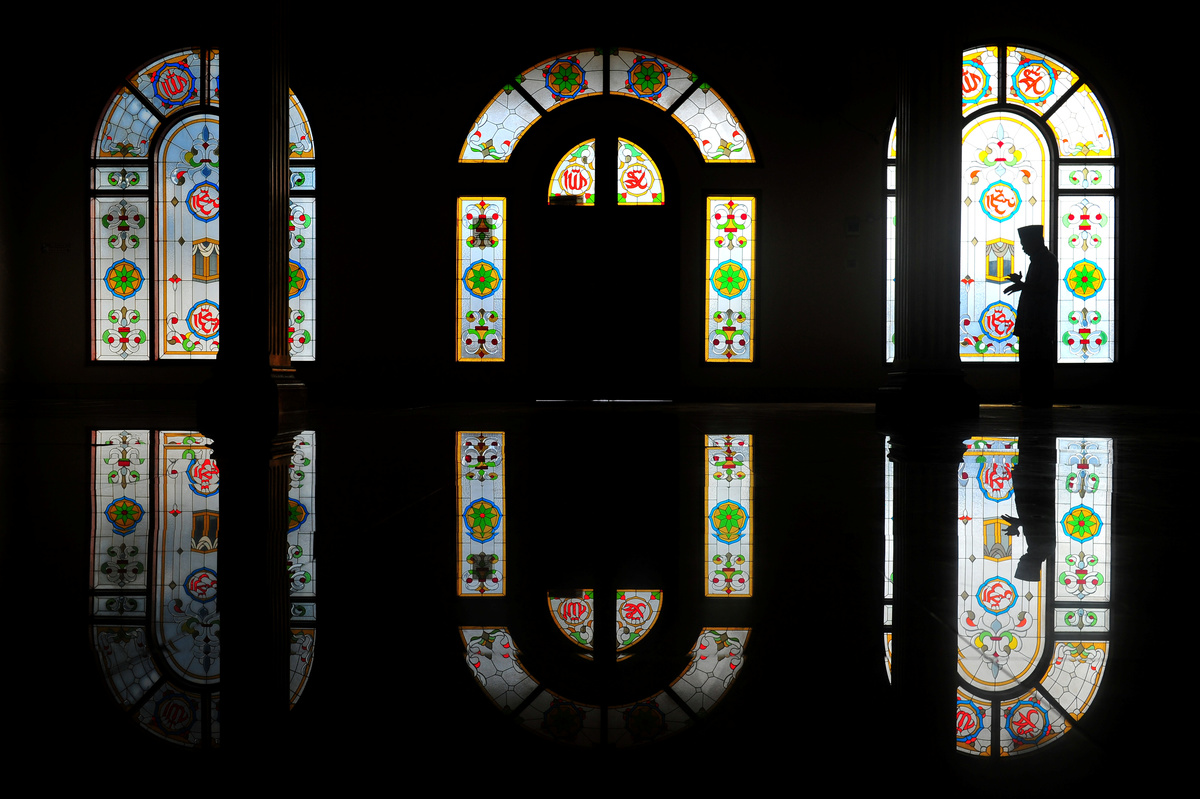
An Indonesian Muslim man prays inside a mosque during the holy fasting month of Ramadan, amid the spread of the coronavirus disease (COVID-19) outbreak, in Jambi, Indonesia, April 24, 2020 in this photo taken by Antara Foto. Antara Foto/Wahdi Septiawan/via REUTERS

Doctors in Pakistan are worried by the government's decision to lift curbs on mosque congregations for Ramadan.

Bangladesh has ordered mosques to restrict Ramadan evening prayers to 12 people and banned iftar gatherings, while Sri Lanka has closed mosques.

In Algeria, authorities shortened a night curfew and lifted a full lockdown in a province near the capital Algiers to accommodate Ramadan worship.
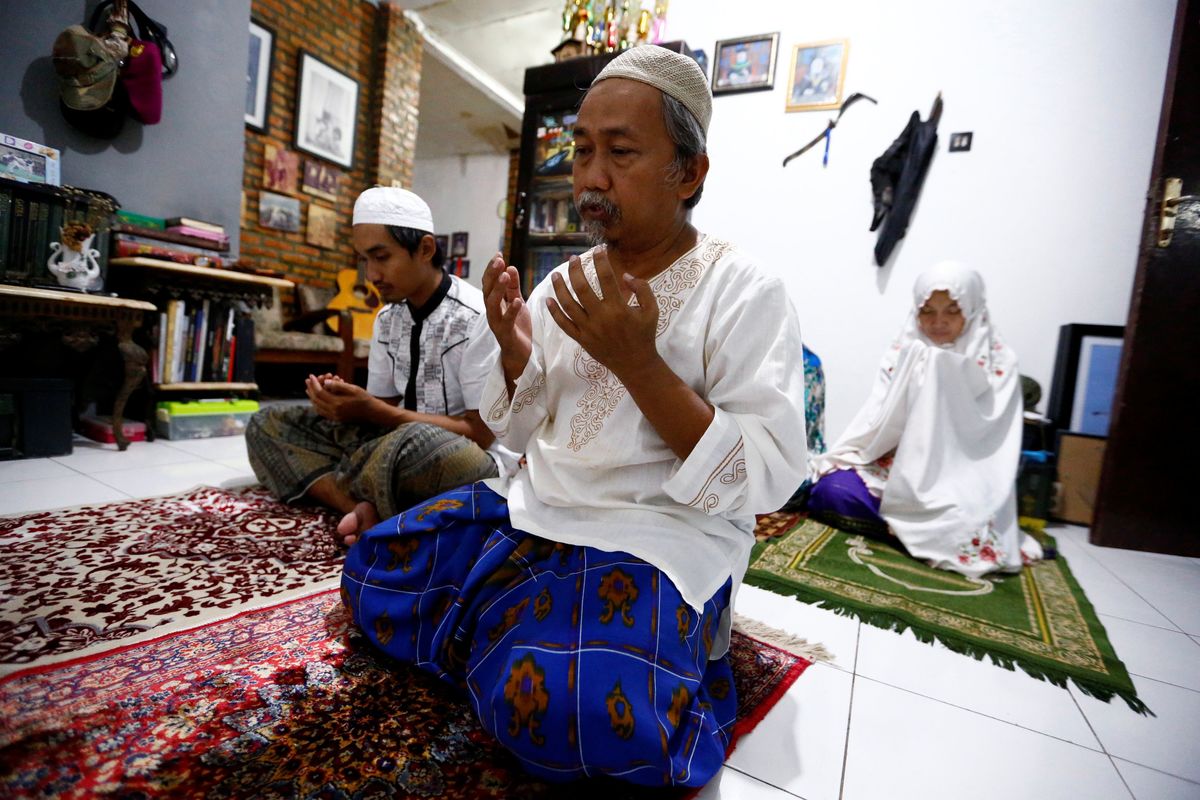
Tatan Agustustani, a 52-year-old Muslim man, prays with his family inside their house on the first day of the holy fasting month of Ramadan after deciding to follow the government's advice to pray at home, amid the outbreak of the coronavirus disease (COVID-19) in Bogor, near Jakarta, Indonesia April 23, 2020. REUTERS/Ajeng Dinar Ulfiana

The Nigerien capital Niamey was calm but police and military remained out in force following violent protests against a curfew and closing of mosques.

"I invite you to have more patience because patience is the feature of the Muslim believer," Prime Minister Brigi Rafini said in an address to the nation.

(Additional reporting by Rozanna Latif in Kuala Lumpur, Hidayatullah in Banda Aceh and Tommy Ardiansyah in Bogor, Saurabh Sharma in Lucknow, Sumit Khanna in Ahmedabad and Sanjeev Miglani in New Delhi, Ruma Paul in Dhaka, Waruna Karunatilake in Colombo and Gibran Peshimam in Islamabad, Nael Shyoukhi in Riyadh, Raya Jalabi, Boureima Balima in Niamey; Writing by Simon Cameron-Moore and Giles Elgood; Editing by Clarence Fernandez and Mike Collett-White)
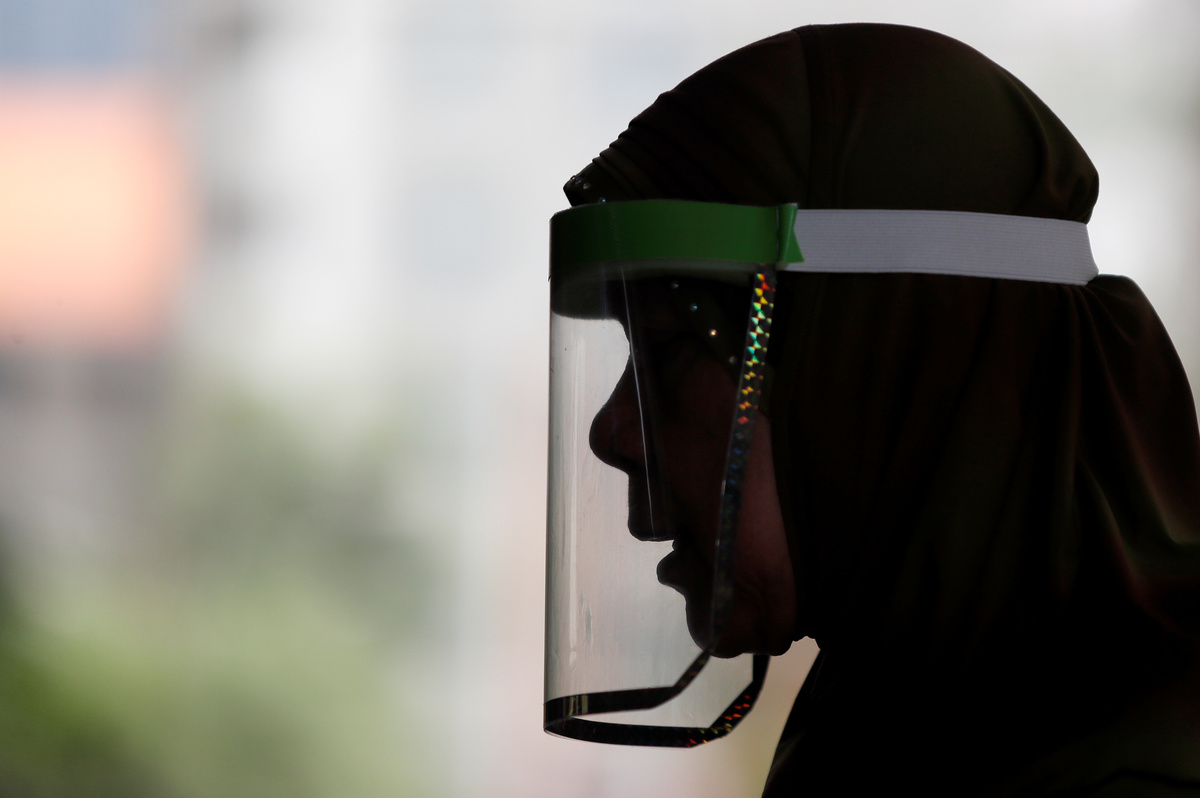
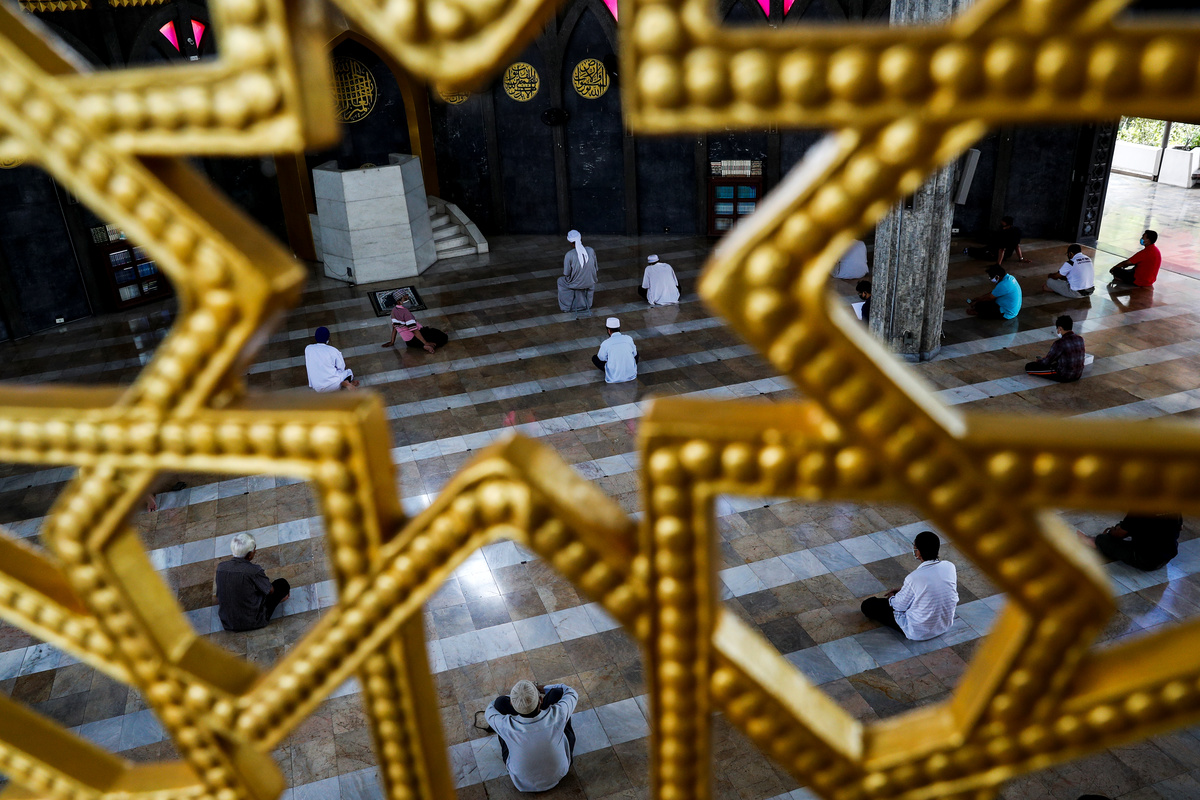
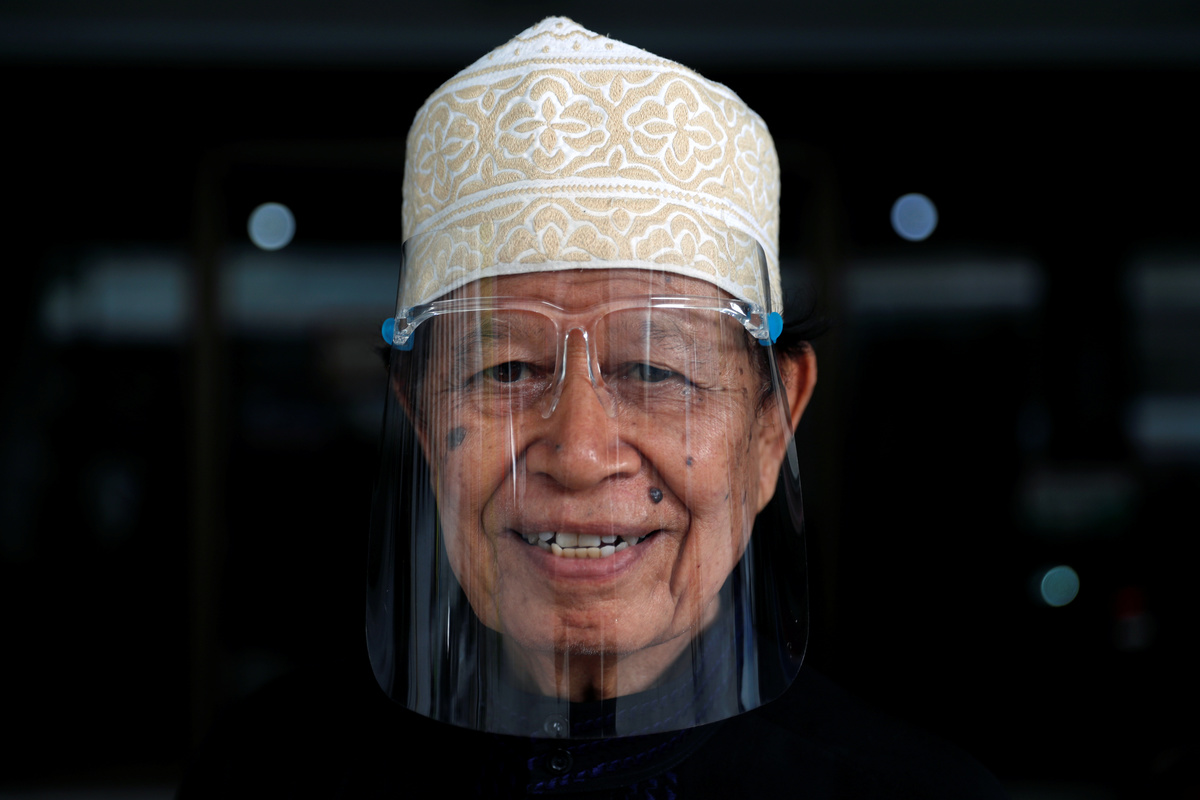
A Muslim woman wearing a face shield prays at a mosque on the first day of holy fasting month of Ramadan, amid the coronavirus disease (COVID-19) outbreak, in Bangkok, Thailand April 24, 2020. REUTERS/Jorge Silva
Muslims wait for Friday prayer to start at a mosque on the first day of holy fasting month of Ramadan, amid the coronavirus disease (COVID-19) outbreak, in Bangkok, Thailand April 24, 2020. REUTERS/Jorge Silva
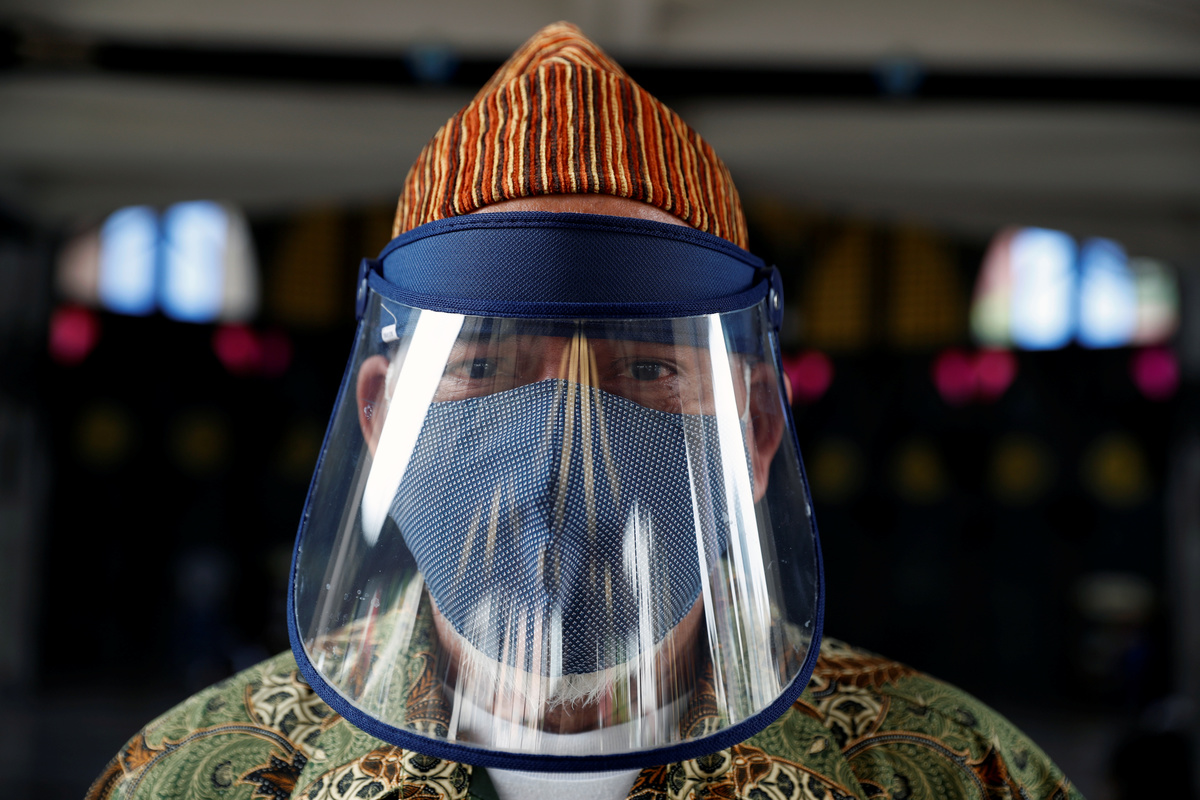
A Muslim man wearing a face shield is seen at a mosque, after praying on the first day of the holy fasting month of Ramadan, amid the coronavirus disease (COVID-19) outbreak, in Bangkok, Thailand April 24, 2020. REUTERS/Jorge Silva
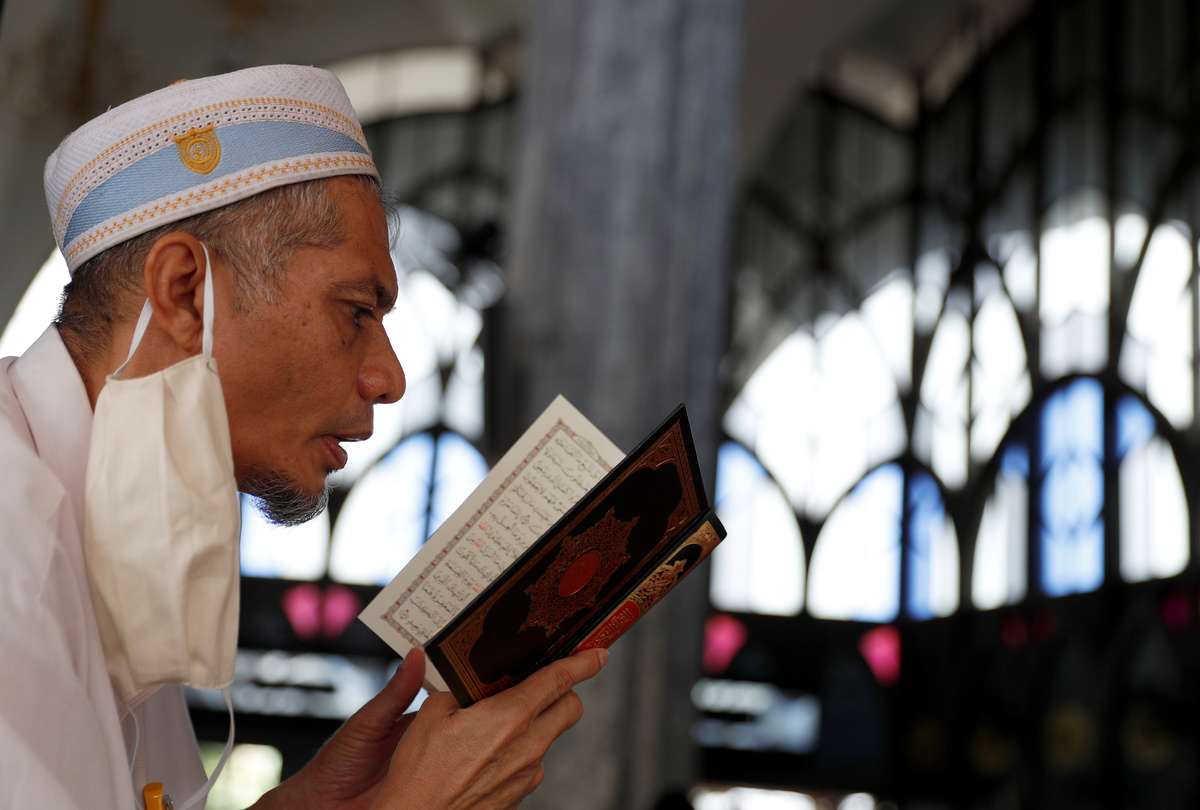
A Muslim man with a protective face mask prays at a mosque on the first day of the holy fasting month of Ramadan, amid the coronavirus disease (COVID-19) outbreak, in Bangkok, Thailand April 24, 2020. REUTERS/Jorge Silva
A Muslim man with a protective face mask is seen at the door of a mosque, after praying on the first day of the holy fasting month of Ramadan, amid the coronavirus disease (COVID-19) outbreak, in Bangkok, Thailand April 24, 2020. REUTERS/Jorge Silva
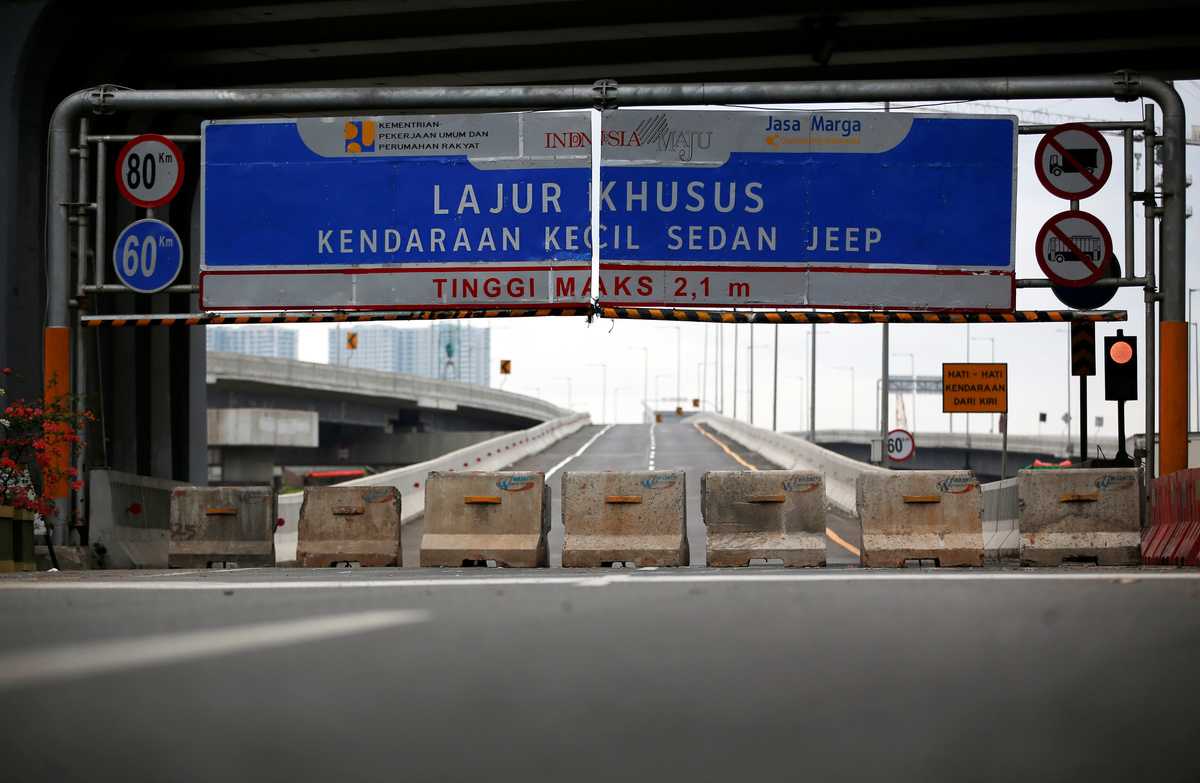
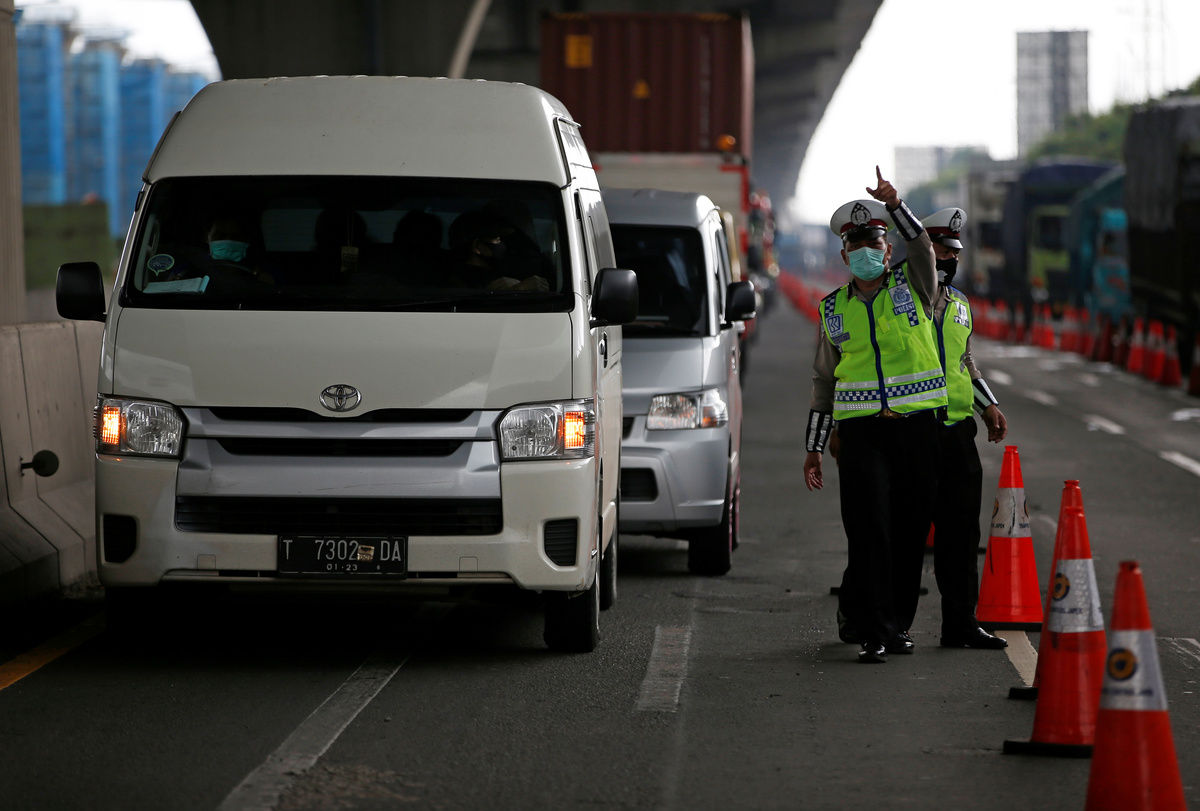
Barricades are seen on a blocked road following the government ban of the Indonesian Muslim traditional homecoming mass exodus to curb the spread of the coronavirus disease (COVID-19) outbreak, in Bekasi, on the outskirts of Jakarta, Indonesia, April 24, 2020. REUTERS/Willy Kurniawan
A police officer wearing a protective face mask gestures at a highway checkpoint following the government ban of the Indonesian Muslim traditional homecoming mass exodus to curb the spread of the coronavirus disease (COVID-19) outbreak, in Bekasi, on the outskirts of Jakarta, Indonesia, April 24, 2020. REUTERS/Willy Kurniawan
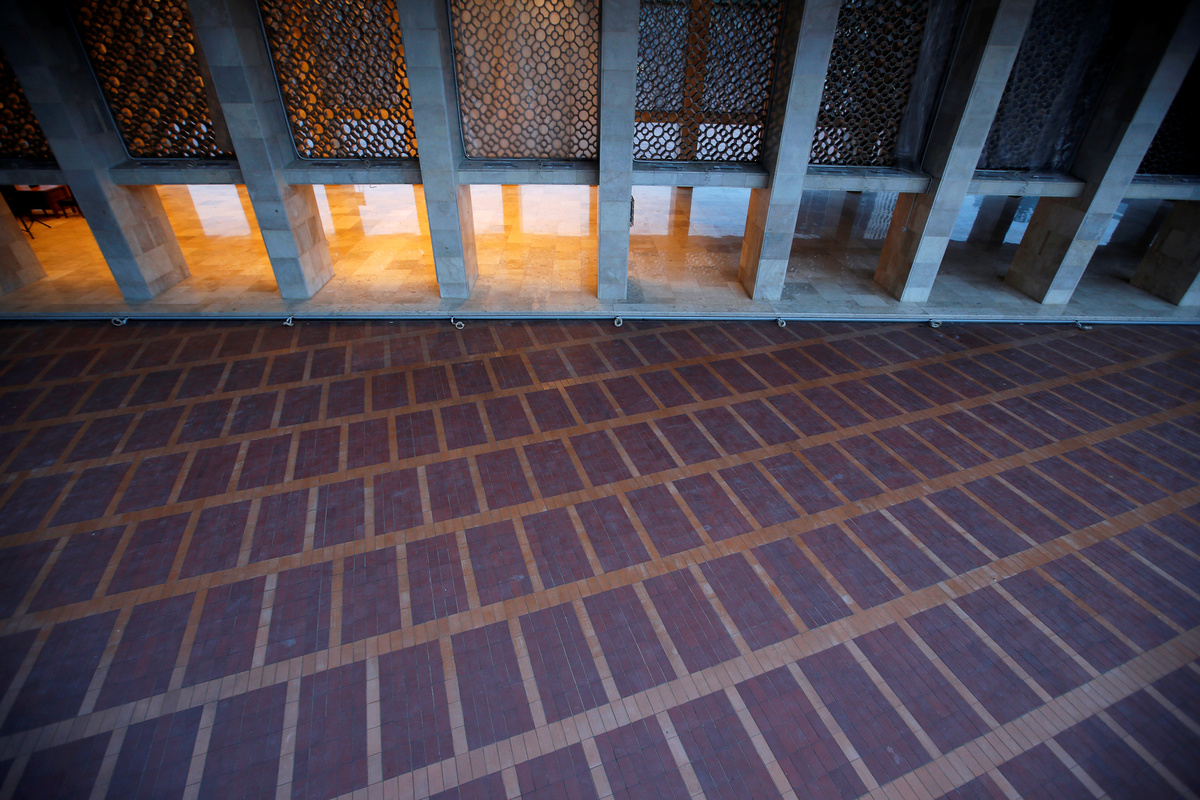
An area of the Great Istiqlal Mosque is seen empty a moment before iftar time as it closed during the imposition of large-scale restrictions by the government to prevent the spread of coronavirus disease (COVID-19) outbreak, during the holy fasting month of Ramadan in Jakarta, Indonesia, April 24, 2020. REUTERS/Willy Kurniawan
Sign up to read this article
Read news from 100's of titles, curated specifically for you.
Already a member? Sign in here
Related Stories
Top stories on inkl right now
One subscription that gives you access to news from hundreds of sites
Already a member? Sign in here
Our Picks
Fourteen days free
Download the app
One app. One membership.
100+ trusted global sources.