
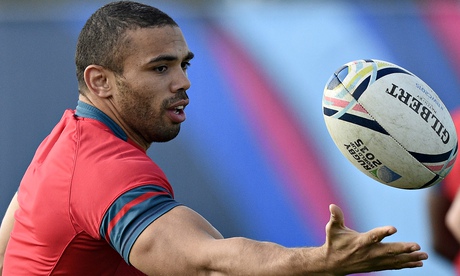
This has been a difficult World Cup for the Springboks, both on and off the field. Even before the tournament started, preparations were disrupted by a major debate over the team’s racial composition, with one minor political party even taking legal action to prevent the South African rugby team from leaving for England. The court threw out the suit but many politicians and influential commentators agreed: more than two decades after the end of apartheid, the Springboks are still far too white.
Then came that shock loss to Japan, already generally accepted as the greatest rugby upset in history. “Humiliation,” screamed the headline in one major paper; “SA Shamed,” ran another. Hardly the ideal start to the tournament for a team expected to brush the Brave Blossoms aside without breaking into sweat, although the South Africans have done well to rebound and make the semi-finals.
Even their late quarter-final win against Wales was not enough to silence the critics, however, who are generally unimpressed with South Africa’s one-dimensional gameplan. “The Boks, with a decided possession and field position advantage, should have put Wales away by 15 to 20 points. Instead, the Boks found themselves a point down going into the final six minutes … to find solace in only creating that one chance, from a set phase, would be denial, delusion and an insult to the individual ability of those wearing the Bok jersey,” said the rugby analyst Mark Keohane in Business Day.
Preparations for the semi-final against New Zealand were overshadowed again by off-field considerations, this time the devastating news from home: that two couples, going for a walk in a leafy park in Johannesburg, had been attacked by 12 men. The two men were bound with their own clothes and dumped in the nearby lake, where they drowned, while one women was brutally gang-raped. Even in a country that has had more than its fair share of violent crime, this came as a shock, and hundreds of people were expected to attend a memorial for the victims at Rhodes Park on Thursday.
One of the men who drowned, Zukisa Kela, was a rugby coach at the secondary school where he taught social sciences. The school principal recalled Kela’s last words to him: “Viva amabokoboko viva,” Kela said. Long live, Springboks, long live.
To their credit, the team was quick to acknowledge the tragedy, led by Bryan Habana, who paid tribute to Kela at a press conference. “We live in a wonderful country but not without challenges where tragic events happen daily. We’ve always said that we want to unite and bring together South Africans from all walks of life, give some form of hope and instil pride,” said the wing.
Hope and pride is, of course, what the Springboks are famous for. This was the team who transcended South Africa’s bitter racial divisions, and united the Rainbow Nation.
It is not only the Springboks who are having a tough time of it at the moment, however. The Rainbow Nation itself is fraying around the edges as its economy worsens and its politics become uglier. In the past two weeks, huge protests have spread around the country’s tertiary institutions as students vent their frustration at a system that still makes it difficult for poor, black students to receive a quality education. These protests have dominated media attention, relegating the Boks to second place on the national agenda.
Against this backdrop, it is far from clear that another World Cup victory would bring the same kind of hope and pride that Habana is looking for – and that accompanied the famous 1995 win. In fact, the opposite might even be true.
“There is a small, but very vocal, portion of the population who are extremely right wing and who will use a World Cup victory as proof that transformation is not needed at elite level, spectacularly missing the point of transformation as usual,” said Antoinette Muller, senior sports writer for local publication the Daily Maverick. “Of course there will be euphoria, of course we will celebrate in the streets, of course we will hug strangers and dance around until sunrise, but once that initial euphoria dies down, I think there is a risk that we might be even more divided than when the team was selected.”
Not that too many people are talking up South Africa’s chances of winning the World Cup, with few able to see past the semi-final. New Zealand’s nine-try demolition of France sent chills into the heart of even the most one-eyed Springboks fan. “It’s going to require something extraordinary from the Boks to nullify [the All Blacks’] strengths, while accentuating their own to a sufficient degree that will enable them to clinch what would be a significant upset,” wrote Craig Lewis for SA Rugby magazine.







.jpg?w=600)



