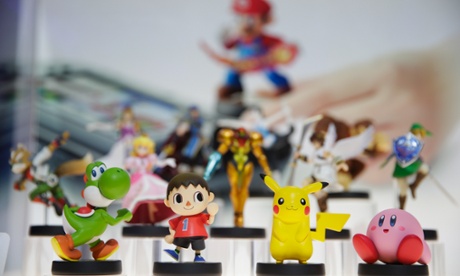
Video games used to compete with toys for pocket money, but combining the two is proving increasingly popular. Games such as Skylanders, Disney Infinity and Amiibo feature a collectible line of toys which interact with virtual games characters.
The toy figures are integral to the gaming experience and extend the storytelling away from the screen and invite imaginary adventures on the living room carpet.
Rather than movies introducing characters that then spawn toys and video games, this hybrid category creates a new point of contact for brands such as Toy Story, Spider-Man, Transformers and The Avengers. Star Wars is likely to be added next year.
The three-inch static plastic characters work as toys in their own right through their detailed design, paintwork and tactile materials. Each toy has a chip in the base that unlocks its character in the game when placed on a USB peripheral plugged into the console. Progress and customisations are automatically saved back to the toy ready for the next play session. On the shelf they look appealing, but in the hand they are hard to put down.
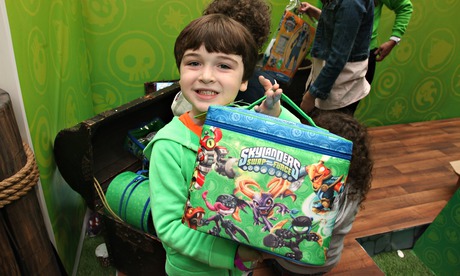
Thom, nine, has filled his toy box with them over the last three years. “They’re not like my other toys because they work in the game too when I put them on the portal. I don’t have to press save or anything; they remember my upgrades and money automatically. I can upgrade them at my friends’ too.”
The children’s fantasy game Skylanders went big on the idea three years ago, offering more than 30 toy figures to collect and special editions hidden on store shelves in a “golden ticket” style. The gamble paid off. Skylanders proved that its “toys to life” genre had legs.
According to Dorian Bloch, business group director of entertainment reseach company GfK Chart-Track, the hybrid toy-game sector generated £200m in revenue in 2011-13 in the UK. Skylanders shifted 175 million toys worldwide in that period and even scooped a Bafta award.
These big numbers come in part from purchases of add-on toy packs that cost from £9. In-game videos highlight characters not yet purchased and instigate considerable pester power. With tens of figures coming on the market each year, families wanting to collect them all can end up spending as much on the game as on the console it runs on.
While big chains such as Toys R Us quickly recognised the retail significance, independent toy sellers have been more cautious. “Toy shops were initially reluctant,” said Samantha Loveday, editor of ToyNews magazine, “but now see greater benefit in stocking games like Disney Infinity with its popular Frozen and other Disney characters.”
John Vignocchi, vice-president of production for Disney Interactive, sees the power of Disney Infinity in its game creator mode. “In the Toy Box mode you can become the Disney and Marvel storyteller. It gives players a chair at the table with developers.” This lets children take on-screen adventures in any direction they please, mixing up the usually tightly segregated brands.
This year Ellen, 11, encountered an array of Marvel characters for the first time. “I didn’t know who Rocket Racoon, Iron Man and Venom were, but now we’ve played the game I’d like to see the films too, maybe get some other toys.”
She is equally enthusiastic about Skylanders. “The Trap Team toys are pretty fun as well, I like how they are really different and the girls aren’t all princessy.” John Coyne, senior vice-president of marketing at Activision, suggests that this comes from the genre’s ability to be the starting point rather than terminus for brands. “I think it’s creativity and innovation that sets [Skylanders] apart, because we’re not just borrowing equity or characters from something that’s already created.” Skylanders offers characters that feel less commercial and buck the usual buff/slender binary for male/female heroes.
Like it or not, there is no going back now. The toys, video games and related media franchises create a powerful draw for young minds. Understanding how this changes children’s interactions with branded stories is essential for parents to make informed decisions about what to buy and when to resist pestering.
This revolution may not be televised, but it is certainly appearing on video-game screens, the living room carpet and playground games everywhere.
TOYS TO LIFE
SKYLANDERS
2011: Skylanders Spyro’s Adventure launched.
2012: Skylanders Giants adds larger and light-up figurines.
2013: Skylanders Swap Force introduces mix-and-match swappable toys.
2014: Skylanders Trap Team adds Trap-able player-controlled villains.
Unique selling point: Collectible original characters and multiple special editions.
Old toy figures can be used in the later games’ adventure modes and grant access to secret areas. Trap Team restricts its Elemental zones to the new Trap Master toys.
Prices: Starter pack, £39.99 to £44.99; single figures, £8.50 to £13.50; Traps, £5.99.
Formats: Wii, Wii U, Xbox 360, Xbox One, PS3, PS4, 3DS, iOS, Android, Kindle Fire.
DISNEY INFINITY
2013: Disney Infinity launched.
2014: Disney Infinity 2.0 Marvel Super Heroes adds Marvel adventures and upgraded game creator mode. Disney Infinity 2.0 Disney Originals offers an alternative upgrade based on classic characters.
USP: Disney characters and game creator Toy Box mode. All 1.0 figures can be used in the 2.0 game creator mode.
Prices: Starter pack, £39.99 to £42; single figures £9.50.
Formats: Wii U, Xbox 360, Xbox One, PS3, PS4, Tablet, 3DS.
AMIIBO
November 2014: First wave, with Super Smash Bros., including Mario.
December 2014: Second wave, including Luigi.
February 2015: Third wave, including Sonic.
USP: Nintendo characters that work across multiple games. Amiibo figures work across Super Smash Bros., Mario Kart 8 and Hyrule Warriors.
Prices: Single figures, £10.
Formats: Wii U, 3DS.