New homes being built in Victorvilla California by Kevin Anderson, Some Rights Reserved
When I was in Los Angeles and Riverside, they said the really hard hit areas were in the high desert east of the city, places like Victorville. I passed through the city on my way to Las Vegas and talked to realtors there. Building has all but stopped as the thousands of foreclosed homes are undercutting the cost of new homes, they said.
However, there is a silver lining. For those who didn't buy in the boom, they are finding the most affordable housing in California in a decade. But it will take years before the housing market recovers here.
Victorville was a desert boomtown. Up until a year ago, it was the second-fastest growing city in the US. There are still signs of the boom everywhere. Driving into town, there are signs pointing to new developments, and as you get closer, people stand on the street corners waving signs to try to entice buyers to model homes. But now, 11% of the homes in the city are in foreclosure, and the city recently was part of a $13m grant to help buy some of the homes before they are abandoned.
Realtors know the signs. One realtor, who I spoke to who but would not give her name because she didn't have clearance from her employer, said, "Dead grass is the give away that the bank has foreclosed." Just as in Riverside, some blocks have three or four foreclosures each, she said.
People took out "80/20" loans. They not only got a mortgage but also an additional loan for the 20% down payment. The foreclosures started two years ago, and just as in Riverside, they are seeing more home auctions as banks just want to sell the homes.
This realtor was selling homes in a new 29-house development. Some of the homes are unfinished, and I asked her if the credit freeze had cut off funding and stopped building. She said no, but they have had to cut the price of the homes by $100,000. Three-bedroom homes are selling for about $150,000 and four-bedroom homes are selling for $172,490.
Federal housing loans will cover the cost so they are still able to get loans for
qualified buyers. They had two families come in during the 10 minutes I was there, and half of the homes are already sold.
She said that resellers were being hard hit by the downturn. I drove across town and found Carlos and Christy Barberena, resellers, who were about to show a home. They are selling homes, but 80% of the sales are foreclosures, Carlos said.
"We're still looking at two years of the market being this way," he said.
Most of the buyers are investors, who are turning the homes into rental properties. The investors will find eager renters from the growing pool of people who have lost their homes. "And when the market comes back, (the investors) will make money," he said.
But it's not just investors who are buying. The average selling price is $80,000, and now "regular folks who saved their money" are coming back into the market. They were off to show a young couple in their 20s a house. "It's great for them", he said.
Some of the buyers are paying with cash, and for those who need mortgages, they can get them. But it is harder to qualify for mortgages, and buyers must make at least a 20% down payment.
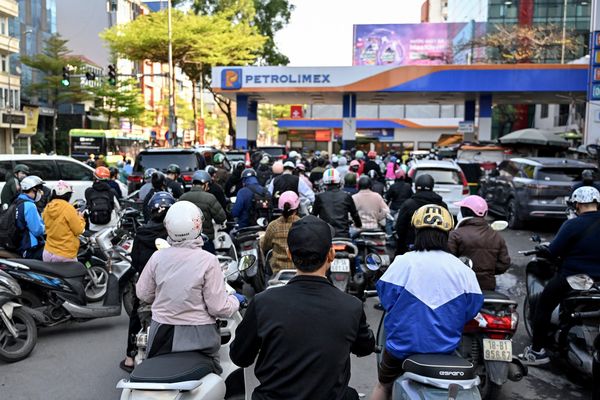
New building has come to a standstill. They can't build homes because the foreclosed homes are selling for less than the cost to build a new home, he said. That's hit the construction industry. High food and petrol costs have also hit the economy. The spike in petrol prices has made it prohibitively expensive for people who commute 50 plus miles to work in Los Angeles, and that might make it difficult for people to move there unless they work locally.
Carlos said commercial building has continued, and many people are finding jobs in retail. They aren't great paying jobs, but it is work, he said.
The real question is what happens as consumer spending tails off. Before the market melt-down of the last two weeks, people here still weren't sure that there would be a recession. Now, most people talk as if a recession has already begun. A drop in consumer spending could cut into these retail jobs and add even more woe to this already hard hit area.
It's no wonder why the economy is the issue of this election.