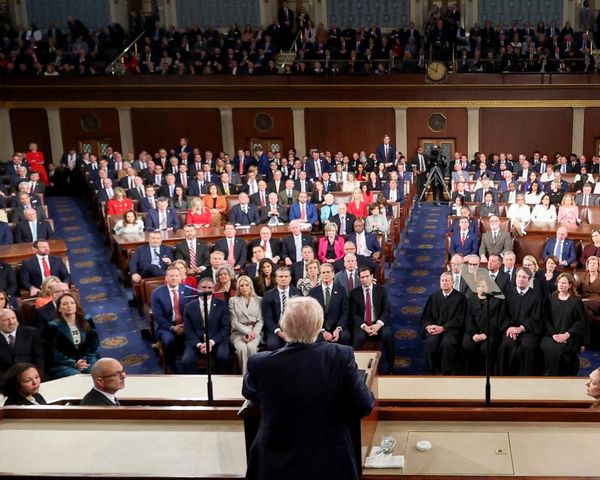
The Victorian government of Daniel Andrews sought to repeal controversial “move-on” laws that critics say criminalised peaceful protest, as parliament met for the first time on Tuesday.
The laws passed by the previous Napthine government gave police sweeping powers to move on protesters who might be obstructing buildings or traffic or causing people to have a reasonable fear of violence. They also allowed for police to apply to a court to ban someone from a protest site for up to 12 months, with a two-year jail term for a breach.
The Andrews government wants to distinguish itself as a civil libertarian reforming new broom, but the reality of government is becoming clearer, with no certainty the repeal will go through the complicated upper house.
A spokeswoman for the attorney general, Martin Pakula, told Guardian Australia negotiations were continuing with upper house members, and the repeal should go ahead in a fortnight. The government needs the support of the five Green upper house members, plus two crossbenchers to pass any legislation.
The Sex Party’s Fiona Patten – the first member of the party to be elected in Australia – said she would support the repeal. Two Shooters and Fishers party MPs – Daniel Young and Jeff Bourman – told Guardian Australia they were still considering their position. The DLP’s Rachel Carling-Jenkins did not return calls, but would be expected to oppose the repeal. Vote 1 Local Jobs member James Purcell said he had not yet made up his mind about which way he would vote.
Pakula said the repeal was justified because “this is Victoria, not Queensland”. Police already had extensive powers to “move on” protesters they suspected were breaching the peace, likely to cause injury or trespass, and could arrest those who were violent. He said it was wrong to target protesters against a McDonald’s restaurant in the town of Tecoma, or protests by paramedics or nurses, which plagued the previous government.
“All of those protests can be inconvenient to government or to other people, but we have a right to protest in this state and we don’t think it’s necessary to have move-on powers, where people have their names recorded, simply because you may obstruct traffic or you may obstruct someone from entering a building,” Pakula told 3AW. “It’s the price you pay for living in a democracy.”
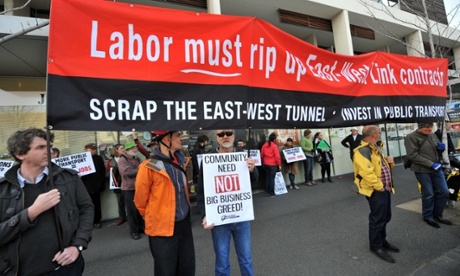
Pakula denied the repeal was a favour to the CFMEU union, which feared the laws would stop union pickets, or to anti-East West Link protesters, who briefly halted the project last year.
The Greens want to scrap the laws, but accused Labor of hypocrisy. Greens MP Ellen Sandell pointed out that Labor last year supported restricting peaceful protests against logging and duck shooting.
Andrews refused to respond directly, saying only that the Greens’ claim was “yet again flippant commentary from people who haven’t thought about these issues”.
The government was also due to introduce a range of measures to improve the running of parliament. It will ban “Dorothy Dixers”, where ministers orchestrate questions from government MPs to enable them to outline how good the government is. It is believed to be the first government to ban Dorothy Dixers, named after an American advice columnist who wrote her own questions.
Only non-government MPs will be allowed to direct questions to a minister under the new rules. Ministers will be allowed two-minute statements to outline initiatives and achievements.
Ken Coghill, a former speaker of the Victorian parliament, said the changes had the potential to restore some public trust.
The appointment of Gavin Jennings as special minister of state to oversee government transparency, integrity and accountability was a major step forward, Coghill said.
“That is very promising for reforms which could greatly increase the level of trust and accountability of the system of government in Victoria. The challenge for the opposition will be to accept that here’s the opportunity to make the parliament function in Victoria better than it has in the past and seize that opportunity.”