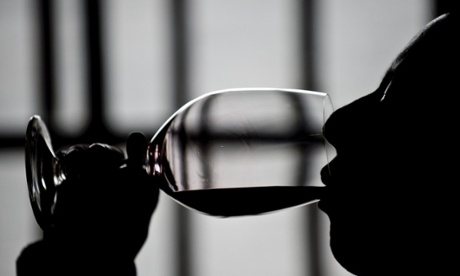
Victorian politicians who enjoy a tipple may find themselves penalised if Labor wins the state election on Saturday, with the party vowing to introduce random breath testing of parliamentarians.
The shadow attorney general, Martin Pakula, said on Thursday that Labor wants to ensure MPs “are in full control of their faculties while legislating”, as part of a push to clean-up politics.
“I think if .05 is the limit for driving, it should be the limit for legislating,” Pakula said. “If you’re not right to drive a car, you’re not right to pass laws that impact on Victorians every day.”
And in what would be an Australian first, Pakula said magistrates and judges would also be breathalysed, although implementation would be left up to the chief justice and chief magistrate.
A parliamentary committee would be established to determine how to best implement the tests for MPs. But suggested penalties for blowing over include docking a day’s pay.
“I think anyone who has been in parliament for long enough has seen other members who have maybe not been in the best shape when they have been in the house,” Pakula said. “It’s not a widespread problem, it’s not a common occurrence, but it should never happen.”
The premier, Denis Napthine, told reporters he had no personal objection to the proposal. But he described it as a “stunt”. If Labor were serious about the issue it would support the Coalition’s policy to introduce compulsory drug and alcohol testing on construction sites, to include the CFMEU, he said.
Pakula insisted Labor were not “wowsers,” and were not suggesting parliamentarians “could never have a glass of wine with dinner”. Although Labor politicians hoping to toast their victory should the party win on Saturday will be disappointed. The celebratory garden party, estimated to cost $200,000, would be ditched, Pakula said.
“We think it’s a waste of money,” he said. “We think it’s appropriate people get back to work and start making laws.”
If elected, Labor would also do away with Dorothy-Dixers and supplementary questions in the upper house, and give the parliamentary speaker more powers to make ministers answer the questions put to them. If a minister failed to satisfactorily answer a question, they would be given 24 hours to provide a written response to parliament.
The president of the Law Institute of Victoria, Geoff Bowyer, said he was sceptical of Labor’s proposal.
On Tuesday, he criticised a policy announcement from the Coalition which would see criminals convicted of repeat killings or serious sex offences given an indefinite jail sentence, taking that discretion away from judges.
“I think we need to look at these last-minute election announcements with some scepticism,” Bowyer said. “We think both parties are coming up with policies they didn’t necessarily well-consider and are populist.”
Existing protocol meant it was already mandatory for anyone working in a court to report a judge or magistrate under the influence of alcohol or other drugs, he said.
“We should not be immune to scrutiny, we are like any other profession,” Bowyer said. “But we do say the vast majority of this election has been talking about other issues and in the last 48 hours the government and opposition have suddenly turned their minds to this in a populist bid to be elected.”