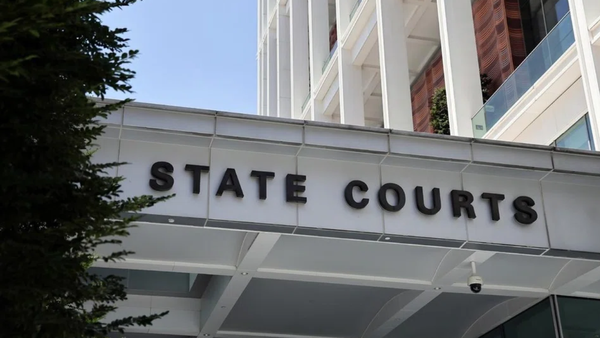
Criminals convicted of repeat killings or serious sex offences would be given an indefinite jail sentence under a new policy proposed by the Napthine government if it is re-elected on Saturday.
Legal experts say the policy could breach human rights and push an already stretched prison system beyond capacity.
The latest figures from the Australian Bureau of Statistics reveal Victoria’s prison population grew by more than 14% in 2014, and a discussion paper by the ombudsman, released in June, warned the prison system was unsustainable.
Under the Coalition proposal, offenders who have previously been jailed for murder, attempted murder, manslaughter, child homicide or a serious sexual offence, and who offended again after being released, would automatically receive an indefinite jail sentence.
The president of the Law Institute of Victoria, Geoff Bowyer, said he was “dismayed” by the government’s approach.
More than 50% of Victorian prisoners went on to reoffend, Bowyer said, meaning the government’s proposed changes could be disastrous for prisoner numbers.
“Enough is enough,” Bowyer said. “We’re tired of popular justice rather than smart justice. Good policies should reduce recidivism and there is little evidence increased sentencing acts as any form of deterrent.
“Our view is the government is investing in an ineffective justice system rather than aiming towards a smart justice program which includes investment in early intervention and treating people for the root cause of their issues through rehabilitation.
“I’m not saying I want soft justice. But I want effective justice.”
A coalition of 31 legal and community organisations, Smart Justice, said the government was using a small number of extreme cases to deflect scrutiny from an over-reliance on the prison system.
Their senior policy advisor, Michelle McDonnell, said Victoria already had indefinite detention, but only a judge could impose it.
“What this policy would do is take that discretion away from a judge, who is best placed to make a decision given they have all of the evidence from both sides, and make it automatic,” McDonnell said.
“A policy like this needs to be road-tested, we haven’t seen a bill for this go through parliament … it’s simply a pre-election policy we would argue is tantamount to a last-minute vote-grabbing exercise.”
Strengthening the parole system and increasing monitoring of released prisoners would be more effective, she said. Many prisoners were unable to get into rehabilitation programs because there were not enough spaces.
The government has already tightened parole and increased jail sentences since being elected in 2010, and has recruited 1,900 extra police officers. Victoria’s prison population grew faster than any other state’s last year.
The ombudsman reported an “unintended consequence” of refusing parole more often was that more prisoners were released without any supervision or monitoring, making them more likely to reoffend.
But the premier, Denis Napthine, said keeping prisoners behind bars protected the public.
“When dangerous criminals are behind bars, they are not out on the street able to commit further crimes and hurt more innocent victims,” he said.
The attorney general, Robert Clark, said the current law made it too hard for the director of public prosecutions to appeal against sentences considered too low.
“This runs the risk that inadequate sentences can go unchallenged, that the community is not properly protected, and that further crimes are not adequately deterred,” Clark said on Tuesday.
“It is also means that sentences can too easily trend lower over time, as tougher sentences get appealed against more often than weaker sentences.”
But a senior lawyer at the Human Rights Law Centre of Victoria, Ruth Barson, said the idea of introducing a mandatory, indefinite sentencing regime was “extremely concerning”.
“This proposal is particularly insidious because it isn’t just talking about imposing mandatory sentences, it’s talking about what are effectively mandatory life sentences,” she said.
“It’s very extreme, risks unjust outcomes and raises serious human rights concerns. It’s not in the community’s interest to have inflexible blanket rules that prevent judges from assessing individual circumstances and making appropriately tailored decisions.”