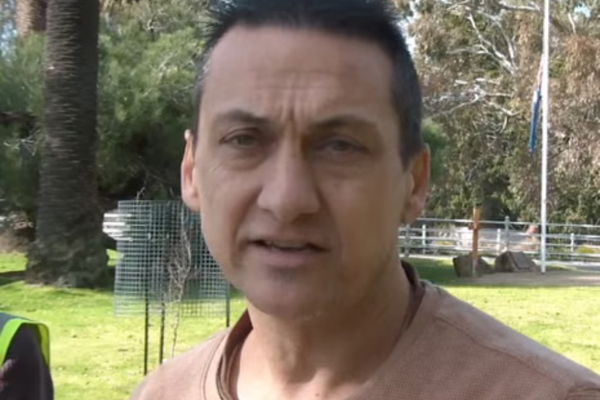
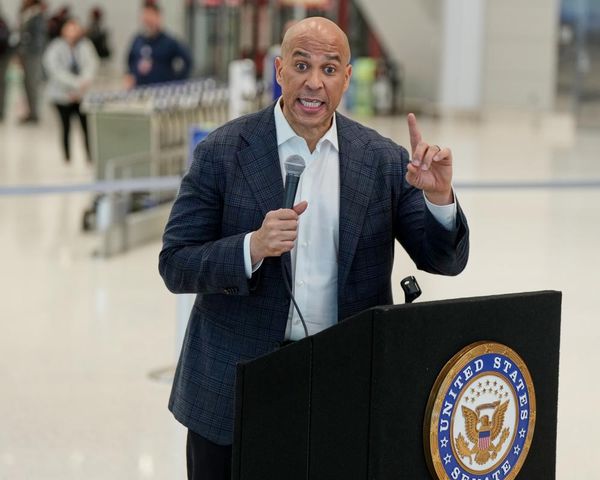
The revelation on Sunday that the Victorian government will invest $5.3bn to build 12,000 new social housing units across the state is, as noted by Emma King, head of the Victorian Council of Social Service, “a game-changer”.
The announcement was not before time: the waiting list for social housing in Victoria had blown out to almost 50,000 households by the end of September this year. That represents more than 100,000 people, a quarter of whom are functionally homeless. At just $82.94 per person, Victoria was spending less than half the national average on social housing.
To be delivered over four years, the funding from the upcoming Victorian budget on 24 November is 10 times the state spend on social housing in the 2018 to 2019 financial year and means Victoria goes from laggard to leader in terms of state-based investment in the sector. A quarter of new units will be built in regional Victoria, and a proportion will be allocated to the most vulnerable groups on the waiting list, including people with mental illness and women and children fleeing family violence.
Social service organisations and homelessness advocates have been pushing for this outcome for years, but recent calls from economists to boost social housing investment in response to the recession brought on by Covid-19 has lent considerable weight to the cause. According to the government, the investment will create 10,000 jobs per year over four years.
Critically, the Andrews government will use government procurement policy to ensure that 10% cent of jobs on the major housing projects in the scheme will be filled by apprentices and trainees, and will use its social procurement targets to create jobs for women, people with disabilities and Indigenous Australians.
With an estimated return of $6.7bn in increased economic activity across the state over the four-year life of the building program, it’s an investment that more than pays for itself in the short term, and will reap longer-term benefits as it provides stability and security to thousands of the most disadvantaged Victorians, allowing them to more fully participate in society and give children the opportunity to thrive.
In short, it’s a well-designed, smartly targeted package that will turbocharge the state’s economic recovery and address an urgent social policy challenge. And it’s yet another example of a state government forging ahead with an economically sound, evidence-based public investment in Australia’s future while our federal leadership flounders around with half-baked measures aimed at encouraging a private-sector led recovery that few experts believe will trickle-down quickly enough to stave off real damage to Australian households and small businesses.
When prime minister Scott Morrison announced his “homebuilder” scheme to support the construction industry in June this year, it was roundly criticised (including by Per Capita) as poorly targeted and likely to be ineffective. Early indications are that the scheme is failing to fire, with a significant shortfall in applications, and nowhere near the number of projects commenced under the scheme as the government forecast. The decision to give cash to existing homeowners for renovations, and for first-home buyers already geared up to buy, was a missed opportunity to increase social housing stocks across the nation.
Australia’s stock of social housing is low by OECD standards: at just 4.4% of all dwellings nationally, we are well behind the most advanced economies in Europe, in most of which public and community housing units represent at least one-sixth of all housing stock.
Yet there’s little sign the Morrison government intends to listen to experts and shift its attention to the social housing crisis facing Australia. The federal housing minister, Michael Sukkar, deflected criticism of the lack of funding for social housing in October’s federal budget by saying that it was the responsibility of the states and territories (although Morrison is yet to break with recent practice and thank Dan Andrews for stepping up to that responsibility on the weekend).
But as noted by the opposition housing spokesman,Jason Clare, in a speech to an almost empty House of Representatives last week, this shouldn’t be about “whose job it is” to fix a national crisis; there is urgent work to be done and the government has at its disposal billions of stimulus dollars with which it could create tens of thousands of jobs and lift thousands of Australians out of poverty and homelessness.
Clare’s speech highlighted the appalling state of many of the nation’s existing public housing units, relaying shocking stories of young families living in mould-infested properties, some with raw sewage leaking from bathroom pipes, and others so uninhabitable that the tenants have fled to live with relatives while still paying the 25% of their income in rent to the government.
In what universe is it a better use of public debt to fund a $150,000 kitchen renovation in a private home than it is to provide safe and secure homes for Australian families?
With federal government borrowing now effectively free, a national investment on the scale of Victoria’s commitment remains the single best use of public debt we could make to rebuild our shattered economy and guarantee long-term social and economic returns for future generations. This should begin, as Clare suggests, with urgent repairs to existing social housing stock, and extend to the provision of more social housing across the nation – particularly public (government-owned and operated) housing, which offers the best route out of homelessness.
Procurement policies should also be updated to guarantee not only the energy efficiency standards that are included in the Victorian package, but to embed universal design principles across our social housing stock to build in accessibility for people of all ages and abilities; and social housing tenants and their local communities should be involved in the planning of new housing stock to ensure that the health and wellbeing of residents is at the forefront of the design process.
There is a wealth of evidence, both economic and social, that a national housing strategy and federal funding to at least match Victoria’s commitment across the nation is the single best investment we can make to reduce inequality, create jobs and provide long-term returns to future generations. If the Morrison government would accept and act on that evidence, that really would be a game-changer.
• Emma Dawson is executive director, and Abigail Lewis a research associate, at Per Capita