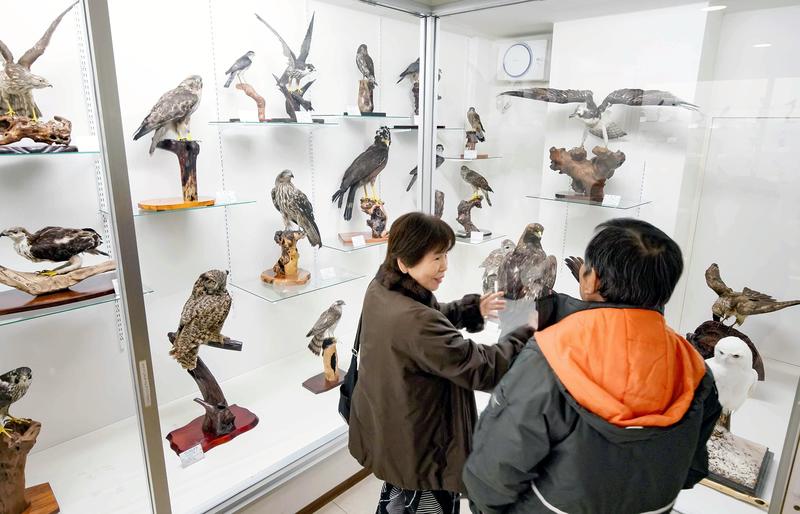
UTSUNOMIYA -- Visitors to a taxidermy museum in Utsunomiya may gasp in surprise at the hundreds of exhibits there, feeling like they could come alive at any moment.
Yoshimura Yacho Shizen Hakubutsu-kan (Yoshimura wild bird and natural wonder museum) is overflowing with about 350 stuffed wild birds of about 270 kinds.
"These days, children have few opportunities to get close to nature. I hope they don't forget they're living with nature," said Yasushi Yoshimura, 81, a company executive who owns the facility.
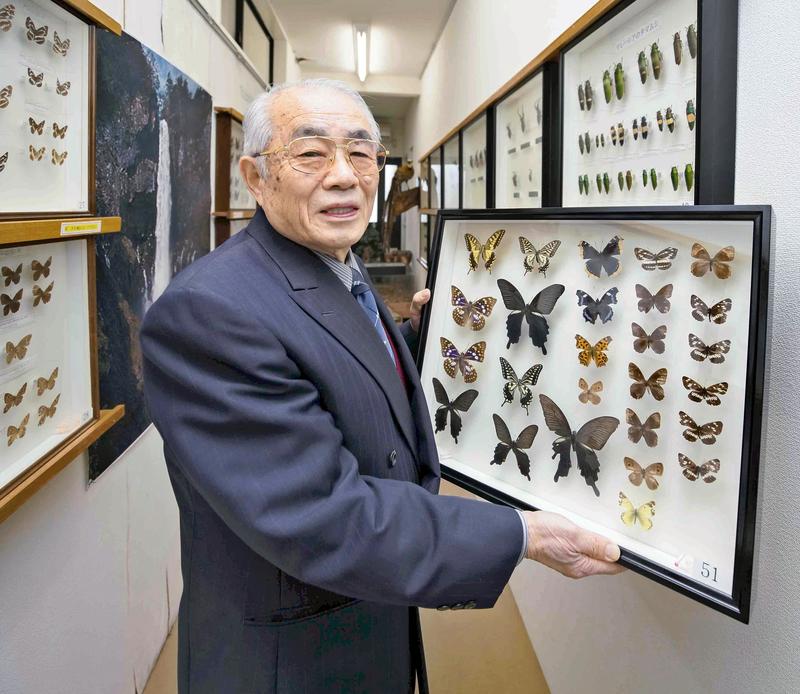
Yoshimura's private museum opened in 2004. He had longed to open such a facility, hoping to display all the stuffed wild birds and animals he had collected as a hobby. It is a wish many collectors must surely have.
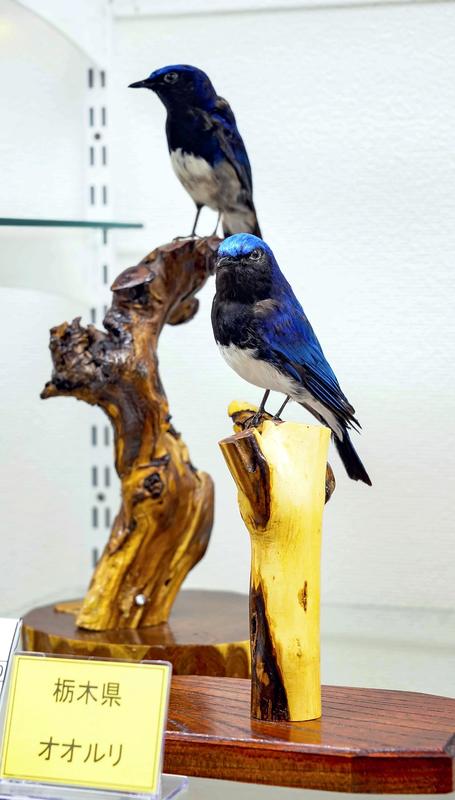
Each of the stuffed wild birds exhibited at the museum has expressive facial features. They are classified into three types -- water birds, field and mountain birds, and birds of prey. The museum also provides such information as the scientific name of each bird and its habitat, as well as its particular call.
Yoshimura is a long-time bird lover and owned birds as pets. His first encounter with stuffed birds was when he was 26 years old. He became acquainted with a taxidermist who had a shop near the Tochigi prefectural office building.
Yoshimura asked the taxidermist to stuff his mejiro Japanese white-eye that had just died. He was quite surprised to see his stuffed bird. It looked as if the dead bird had been restored to life.
Yoshimura was so strongly impressed by stuffed specimens, he started buying not only stuffed birds but also a stuffed polar bear and wolf. The more specimens he collected, the more strongly he wanted other people to see them. Eventually, he set up a museum by renovating the about 240-square-meter first floor of his own company's dormitory.
Yoshimura's museum is open only on Saturdays and Sundays. On request, however, he opens the facility on weekdays for elementary school students from in and outside the prefecture.
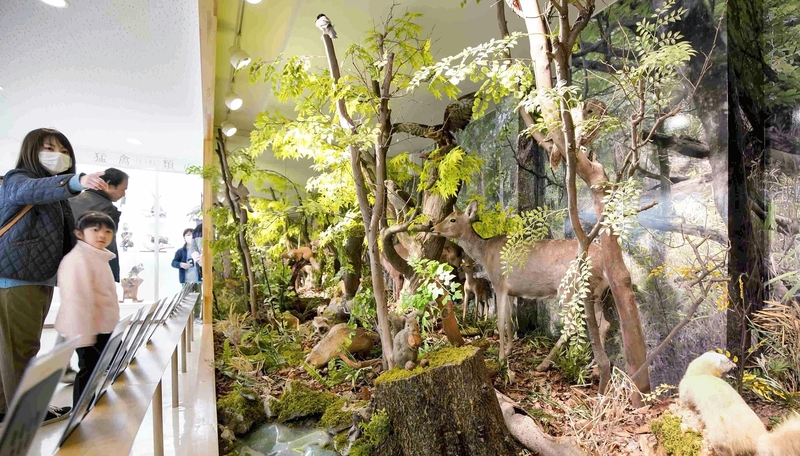
He shows children a diorama representing mountains and forests in the prefecture's Nikko area, while asking them, "Before coming here, what did you have for breakfast this morning?"
He crafted the diorama on his own, using pieces of wood he cut in a garden at his home and covering the base of the diorama with fallen leaves.
A careful look at the diorama shows an owl eyeing a cute squirrel gnawing at a walnut. This arrangement is intended to show that the natural world consists of living creatures that eat others and those that are eaten.
"People's selfish behavior has ruined the ecosystem, causing environmental problems," Yoshimura explains to children.
Yoshimura used to keep rabbits and goats while chasing after birds, even when he was an elementary school student. His museum also exhibits butterfly specimens donated by experts.
Yoshimura's museum exhibits the stuffed birds and animals he has collected over more than a half century. Situated in a concrete-paved residential area, it serves as a place for visitors to learn the importance of nature.
-- Yoshimura Yacho Shizen Hakubutsu-kan
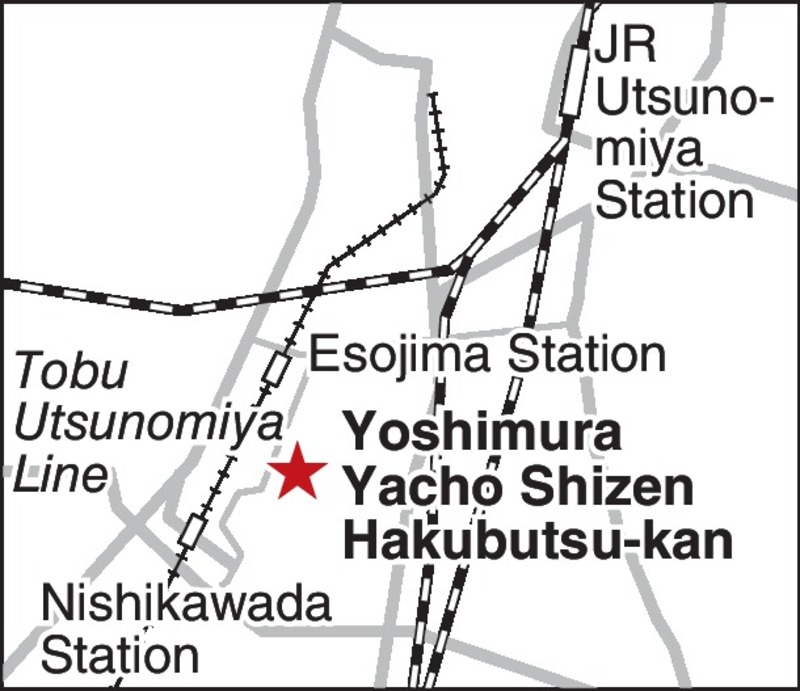
The museum has a parking lot for several vehicles. The facility is about 15 minutes away from the Kanuma Interchange on the Tohoku Expressway by car, and about 20 minutes away from the Mibu Interchange on the Kita-Kanto Expressway by car. It is also a five-minute walk from the Midori 2-chome bus stop along routes operated by Kanto Transportation, Inc., starting from JR Utsunomiya Station or from Esojima Station on the Tobu Utsunomiya Line.
Address: 2-22-11, Midori, Utsunomiya
Open: 10 a.m.- 4 p.m. on Saturdays and Sundays
Admission: Free
Information: (028) 645-8935
Read more from The Japan News at https://japannews.yomiuri.co.jp/