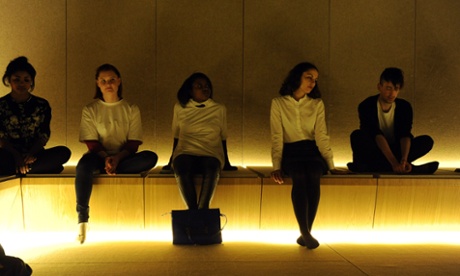
Lost in Thought takes its title from a quote by Thai monk, Ajahn Chah who, when asked to sum up the state of the western world, used those three words. There’s nothing wrong with thinking, of course, but he was referring to the patterns of preoccupation, lack of focus and distraction that most of us would happily do without.
I chose it as the title for my opera to challenge people’s ideas of what meditation is. I’m often surprised by preconceptions of what it’s about. I get reactions like “chillout”, “relaxation” and even “spa-break”.
When I first became interested in meditation, eight or nine years ago, I doubtless had similar ideas. I’d been to India many times, was interested in the culture and practised yoga daily, so the next step seemed clear: I took the plunge and went on a silent weekend retreat. I was surprised, indeed awestruck, by how much more austere and yet rich and deep the whole experience was than I’d imagined.
Something as simple as observing the contents of one’s mind and gently returning to a focus such as the sensation of breath – the two essential ingredients of the vipassana, or insight, method, practised over a few silent days, seemed to open up realms of experience I’d never visited before. And, unlike my previous, and very mild, dabbling with recreational drugs, these new places seemed natural, mine, and available at any time. I was hooked to the practice, as well as to the unfolding discoveries that beckoned.
For me, mindfulness is a quality of awareness that focuses on the present experience, be that the physical sensations in the body, or the thoughts and images in the mind. Once you have known it, it’s hard to ignore its depth and width. Meditators often use the word “spacious” – it seems to create more time to listen, feel, reflect and respond. For me, it allows deeper listening and connection with that experience, as opposed to the more familiar patterns of reactivity and (sometimes snap) judgment.
At the Guildhall School of Music and Drama, where I teach piano and composition, I set up a research project that offered students a structured mindfulness teaching programme. The outcomes largely confirmed my own experience, as well as that of a burgeoning body of research data in other sectors: mindfulness helps! The students found themselves developing strategies and approaches to performance anxiety, practising and harnessing their creativity, which sprang from the mindful meditative approach.
At the same time, I was thinking more deeply about how this profound new experience in my life might affect, or at least play a part in, my own creative work.
Doubtless, it may seem like an irony that musical ideas should evolve from a silent setting, but I have often been struck by the context that particularly a longer retreat gives to both music and indeed poetry, lending them a weight and resonance which seem to me their natural properties, and that they have been rendered thin, weightless and disposable by their ubiquity in our modern lives.
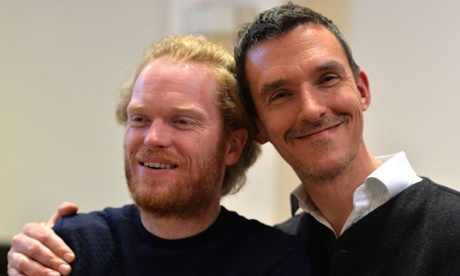
And so my opera – for want of a better word – Lost in Thought uses a singer and seven instruments to try to forge a meaningful hybrid between sung and instrumental music, and the structure of a short silent retreat. I want the audience to have the time to dwell in the music without leaping to decisions or judgments, just as mindfulness helps practitioners to be present in the moment. How often do we develop opinions before we’ve listened, whether it be to music, or someone’s point of view?
I’m far from the first composer to think about this. It was pretty much John Cage’s life’s work to liberate notes from value judgments and let them be, and much of his writing will be very familiar in its tone to meditators: “Our intention is to affirm this life, not to bring order out of chaos, nor to suggest improvements in creation, but simply to wake up to the very life we’re living, which is so excellent once one gets one’s mind and desires out of its way and lets it act of its own accord.”
Another US composer, Morton Feldman, often seems to me to have created an object of meditation – sounds to which you can return as an unforced focus as you would to the sensation of breath in vipassana.
Originally, I was working with Mahogany Opera Group – my enlightened hosts on the piece – on a more conventional opera, in the sense that the audience came along and watched the drama of a weekend retreat unfold.
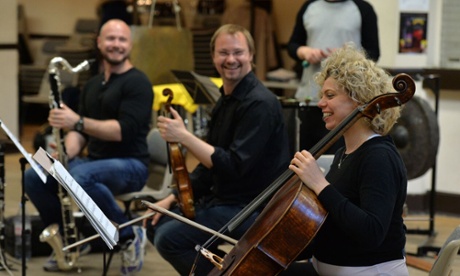
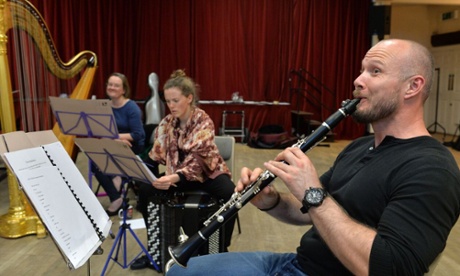
But that seemed to miss the essence of the meditative experience, so we decided that a more radical solution was to actually have a singer (Lore Lixenberg) who leads the meditation, and musicians who remain in the space and sometimes mingle and interact with the audience. The players themselves are on retreat, eating, resting and sitting with the audience, sometimes in music that is strictly notated, at other times working within parameters we’ve tested on trial audiences. The audience participates, and is led and coached in different types of meditative activities – sitting, walking, eating, working, that sometimes add to the music.
The music of the opera can act like the meditative object, or sometimes it emerges organically from sounds and rhythms that are part of everyday actions; elsewhere, it’s a kind of game in which the audience of retreatants are invited to join. At one point, it stands in for a Dharma talk (the sermon, if you like, on a day at a Buddhist retreat) where what you’ve heard before is retold and recast. And, occasionally, at the deep heart of the piece there is music and words, brief in duration but I hope resonant and weighty. Meditators talk of vertical time, moments loaded with depth, and this is something I wanted to recreate.
•Lost in Thought: A Mindfulness Opera is at LSO St Lukes, London on 25 September (6pm) and 26-27 September at 12noon.