Venice Architecture Biennale: the highlights - in pictures
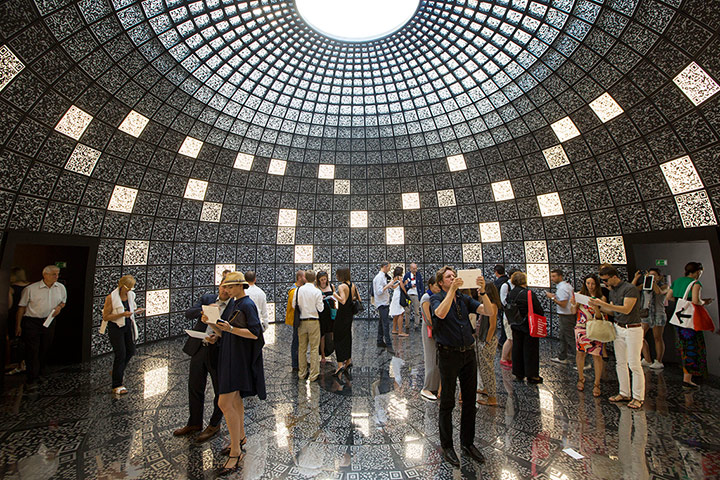
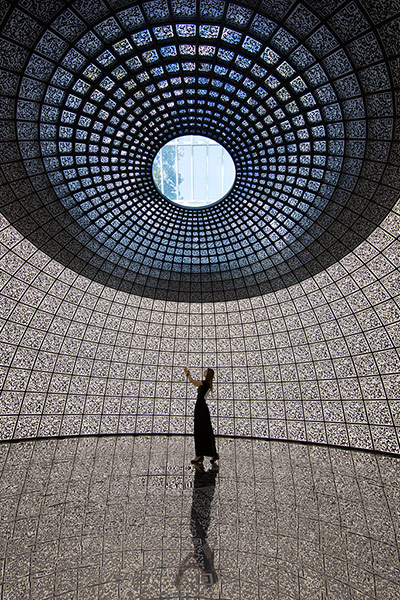
A Biennale highlight is the Russian pavilion, a refreshing blast of op-art that – though flash bordering on vulgarity, and out of step with the overriding themes – sticks in the memory. Three rooms are tiled on every surface with a giant mosaic of QR codes Photograph: David Levene/for The Guardian Visitors are given an iPad when they enter, which they can point at any particular code. They all translate into information on Skolkovo – a project to create a Silicon Valley-style science city just outside Moscow Photograph: David Levene/for The GuardianAnother view of the flashy Russian pavilionPhotograph: David Levene/for The Guardian
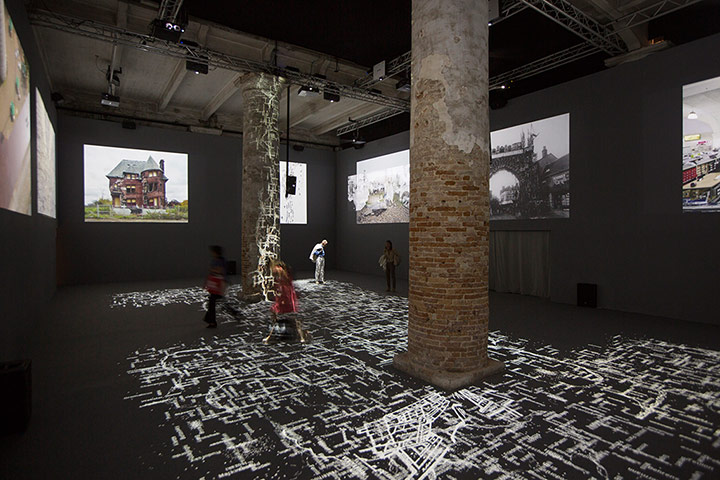
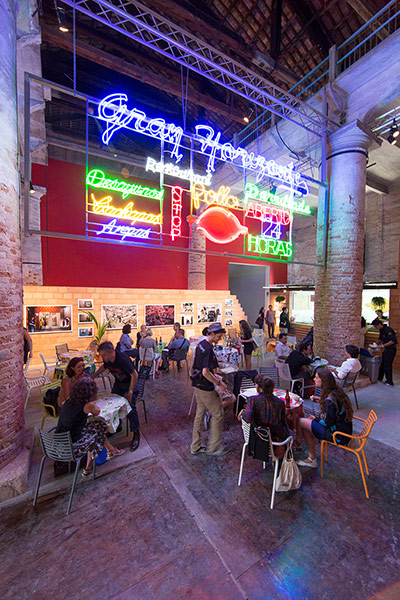
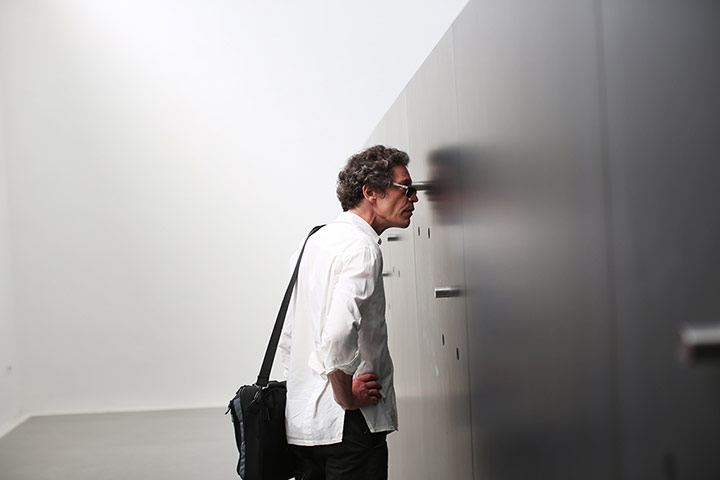
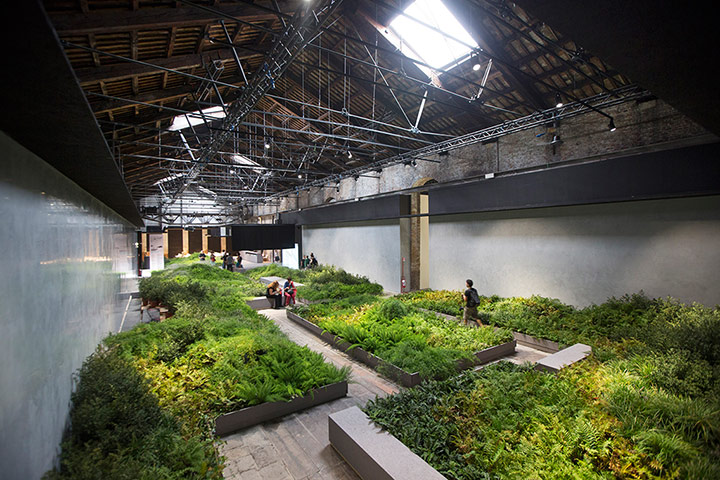
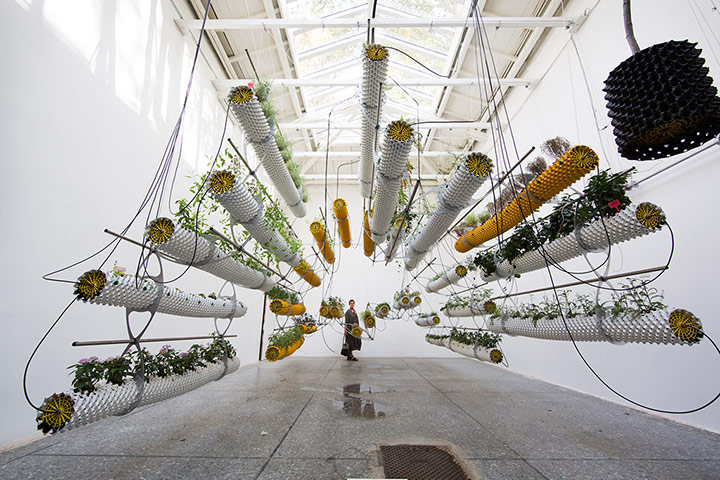
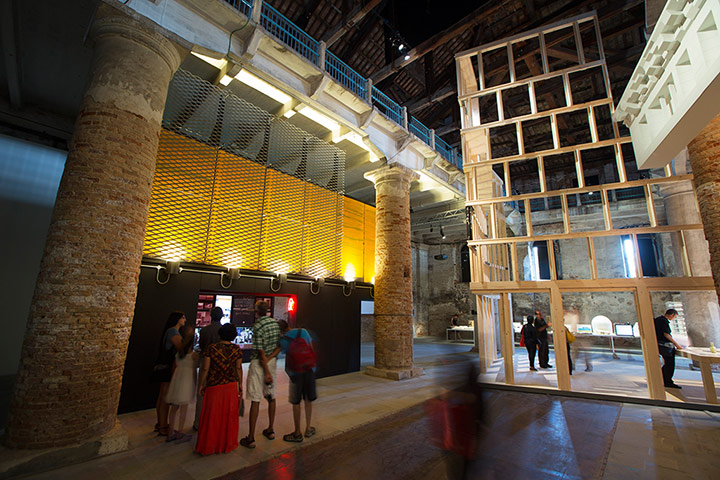
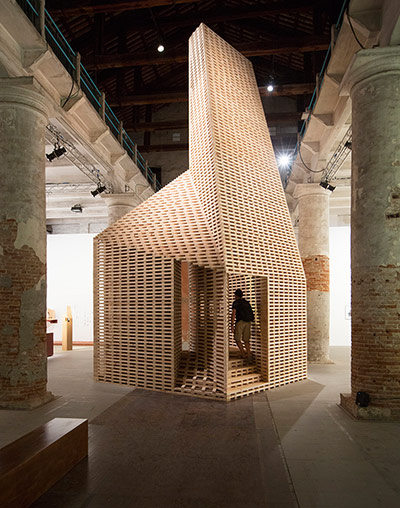
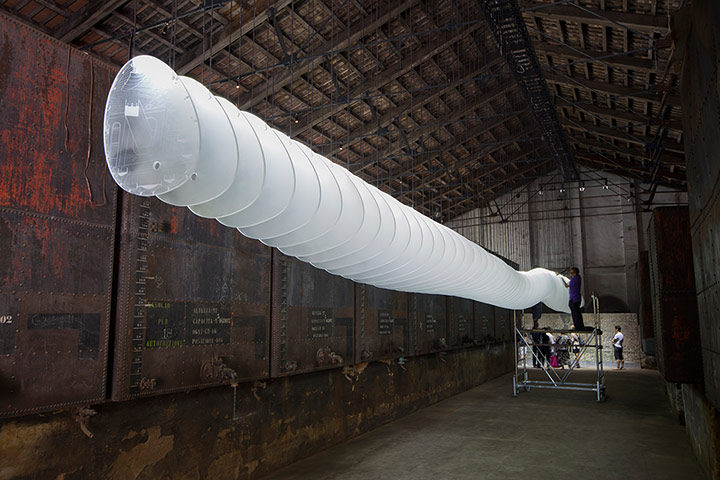
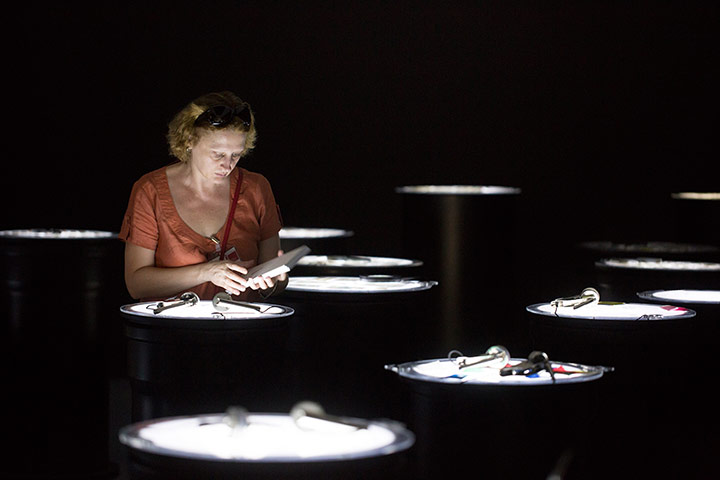
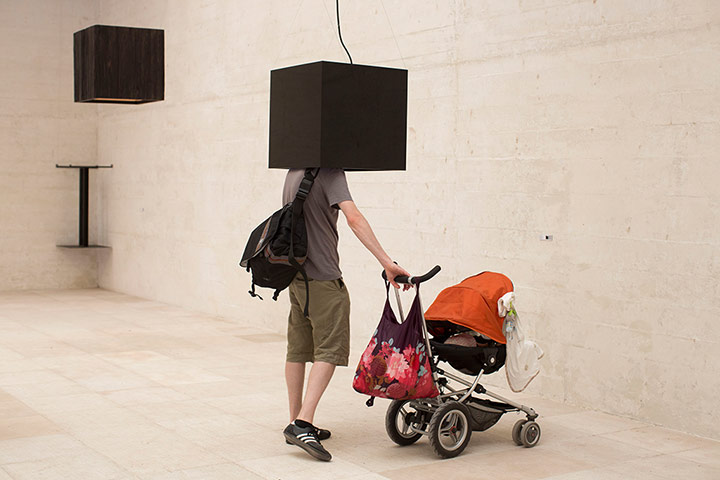
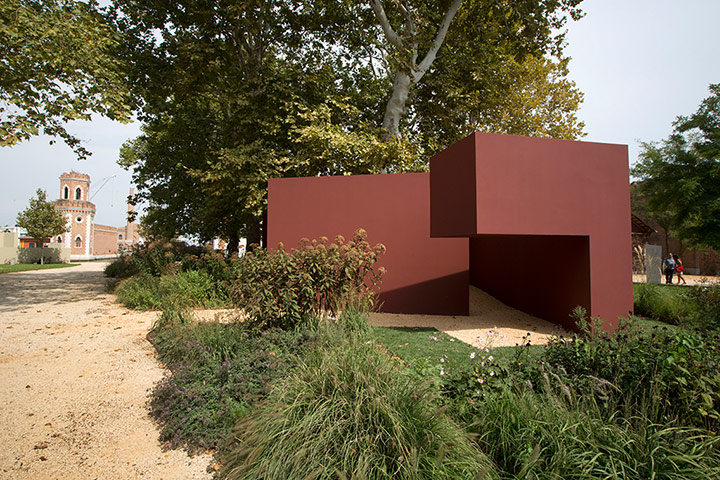
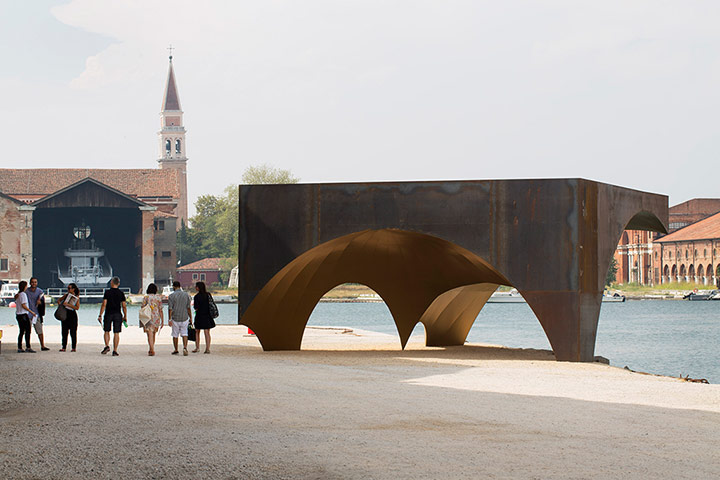
Norman Foster has made a decidedly un-Fosterish installation in the exhibition, which touches on architecture's divisions. The floor is crisscrossed by digital flows of eminent architectural names, but the walls are covered by montages of global strife created by film-maker Carlos Carcas: protests, slums, natural disasters, dispossessed people Photograph: David Levene for the GuardianZaha Hadid's room is dedicated to forging connections between her trademark, computer-driven geometries and analogue 20th-century structural pioneers like Frei Otto. Her space is dominated by this sprouting tower, made of wafer-thin pleated aluminiumPhotograph: David Levene/for The GuardianThe Museum of Copying, by London studio FAT, cheekily highlights the ways architects borrow from each other. The space is dominated by an arch formed of two portions of a scale model of Palladio's classic Villa RotundaPhotograph: David Levene/for The GuardianGolden Lion winners Urban-Think Tank and Guardian contributor Justin McGuirk have created a working mock-up of a Venezuelan restaurant. It's become a lively hub, with eating, drinking, music and dancing. Around the walls are photos of an abandoned 45-storey office tower in Caracas which has been squatted by some 750 families. It's not a developing world poverty saga, rather a celebration of improvisationPhotograph: David Levene for the GuardianThe Brazil pavilion has a wall of peepholes (designed by Marcio Kogan) running down one side, through which observers can spy on the occupants of a luxury Sao Paolo villa and watch their lives unfold like a hilarious telenovelaPhotograph: David Levene/for The GuardianOn the other side of the Brazil pavilion there's a series of hammocks to lounge in, and guitars to strum, all accompanied by a quote from Lucio Costa, planner of Brasilia: 'The same people who rest in hammocks can, whenever necessary, build a new capital in three years' time' Photograph: David Levene/for The GuardianGreen in every sense, Italy's sustainability-minded pavilion takes the four seasons as its theme, seeking ways to promote both growth – both economic and horticulturalPhotograph: David Levene for the GuardianSelgasacno al aire (between air) at the Spain pavilion is a living hydroponic installation that aims to rethink nature's ability to flourish in small spaces or structuresPhotograph: David Levene/for The GuardianHaworth Tompkins have transported a 'temporarily on loan' fragment of London's Young Vic theatre into the Arsenale's Corderie space, blurring the lines of authorshipPhotograph: David Levene for the GuardianAlso at the Arsenale is Vessel, by Irish architects O'Donnell and Tuomey. A towering lattice of Irish Sitka spruce, referencing the venue's maritime roots and intended as a place for contemplation of the surrounding exhibits, it's also been popular with childrenPhotograph: David Levene for the GuardianSequence, by Shao Weipinghe, in the China pavilion. Sections from a model of the architect's doughnut-shaped Phoenix Media Centre in Beijing are unwound to form a snaking installation, which runs the full length of the pavilionPhotograph: David Levene for the GuardianPlay Mincu: a Game Between Officialdom and Architecture, at the Romania pavilion. Playing on the Romanian passion for official stamps, visitors were invited to choose from a selection of architectural quotations and images in this interactive exhibitionPhotograph: David Levene/for The GuardianC-O-M-B-I-N-E. Content Box, Sweden at the Nordic Pavilion. One of 32 models of conceptual houses dotted through Sverre Fehn's much-loved Nordic Pavilion, which celebrates its 50th anniversary this yearPhotograph: David Levene/for The GuardianThis year's lifetime achievement Golden Lion winner, Álvaro Siza Vieira, contributes a characteristically restrained but richly coloured outdoor installation, inspired by the scale of Venice's streetsPhotograph: David Levene/for The GuardianRadix, by Aires Mateus. This steel sculpture by the Portuguese architects achieves a balance between toughness and delicacy, and references the arches of its dockyard contextPhotograph: David Levene for the Guardian
Sign up to read this article
Read news from 100’s of titles, curated specifically for you.