CARACAS — More than seven months after U.S. forces seized Nicolás Maduro from power, Venezuela's interim government and a faction of the political opposition have done something neither side managed across a decade of stop-and-start talks: they put their names on an agreement.
The Two Concrete Commitments
After more than six hours of closed-door negotiating at a hotel in Caracas on Wednesday, government delegation chief Jorge Rodríguez and opposition negotiator Dinorah Figuera signed a joint communiqué laying out two tangible outcomes from the first cycle of dialogue.
The first scraps, entirely, a National Assembly process launched in May that would have expanded Venezuela's Supreme Tribunal of Justice from 20 to 32 justices. In its place, the two delegations committed to a four-part rebuild: amending the court's organic law, expanding the judicial nominations committee, launching a fresh nomination process for every magistrate seat, and standing up a new constitutionally grounded council to vet candidates before they're seated. Both sides framed it as the start of what their joint text called a broader transformation of the country's justice system.

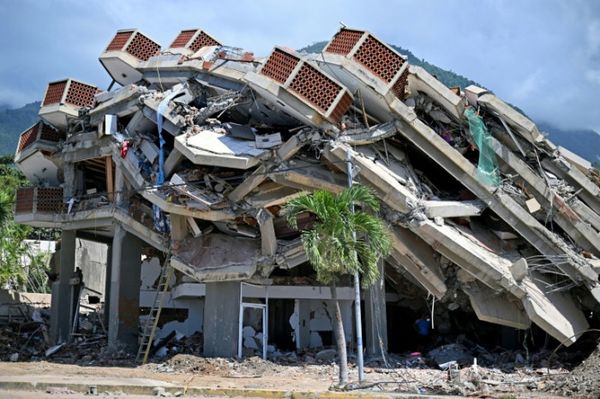
The second commitment is financial: government and opposition negotiators agreed to jointly press for the release of Venezuela's gold reserves held at the Bank of England, with any recovered funds directed in part toward rebuilding after June's twin earthquakes. The government's most recent tally, released by Rodríguez on August 10, puts the death toll at 6,301 — up 176 from the count just a week earlier — with roughly 18,000 people left homeless. Recovery officials say the number is still climbing as debris removal continues. Both delegations pledged to build "transparency, traceability and auditing" mechanisms around however the gold is eventually spent.
Nine Tries, One With Washington Actually at the Table
Wednesday's signing caps the ninth documented attempt at dialogue between chavismo and the opposition in recent years — but the first conducted with direct, active backing from the U.S. government. The current round traces back to an August 1 phone call between Rodríguez and Figuera, followed by an in-person opening session on August 6 at Caracas's La Carlota air base and six days of technical and plenary meetings that culminated in Wednesday's text.
Interim President Delcy Rodríguez, installed after the U.S. military operation that removed Maduro on January 3, welcomed the outcome online, saying she hoped it would "pave the way for better democratic coexistence" among Venezuela's political camps.
Where Machado Fits — And Doesn't
The opposition delegation at the negotiating table isn't the one most familiar to international audiences. It's led by Figuera, who heads the National Assembly elected back in 2015, rather than Nobel Peace Prize laureate María Corina Machado. Machado — who spent much of this year based in the Washington, D.C. area after a failed attempt in June to fly home via Curaçao was blocked — was not invited into the talks and has said she won't stand in the way of them. An opposition source told AFP the delegation nonetheless still regards her as "the voice that Venezuelans identify as their own."
The Piece That's Still Missing: A Vote
Conspicuously absent from Wednesday's signed text: any mention of Venezuela's National Electoral Council, the other institution the broader opposition wants overhauled before any presidential vote takes place. Figuera has floated an informal timeline elsewhere — a reseated Supreme Court by November, a renewed electoral council by December — but that schedule isn't part of what was actually signed, and no election date has been set.
Few U.S. communities track Caracas as closely as Doral, Florida, nicknamed "Doralzuela" for having the country's highest concentration of Venezuelan residents. The city erupted in spontaneous street celebration in January when Maduro's capture broke, with Mayor Christi Fraga telling reporters that many of her constituents "fled oppression, coming here to find safety, freedom." As of this writing, no Doral officials or community groups had issued a statement responding specifically to Wednesday's judicial agreement — though the January precedent suggests any visible movement toward transition tends to generate a strong echo in South Florida's Venezuelan enclaves.
What It Means (and Doesn't) for TPS Cases
For Venezuelans already living in the United States, this week's diplomatic movement in Caracas unfolds against a separate and unrelated legal timeline. Temporary Protected Status tied to Venezuela's 2023 designation is set to lapse October 2, 2026, but only for the narrow group of beneficiaries whose documentation carried that expiration date as of February 5, 2025, per USCIS guidance. The separate 2021 designation was already terminated effective November 7, 2025. Litigation in National TPS Alliance v. Noem remains active, and immigration attorneys generally advise Venezuelan TPS holders to check their individual documentation dates directly rather than assume that political developments in Caracas will shift U.S. domestic policy. No federal agency has publicly linked this week's talks to any change in TPS posture, though some advocates argue that improving conditions in Venezuela could eventually factor into future government reviews — a determination that hasn't been made and would likely take months even if the talks keep producing results.