A night at a bar is interrupted by a power outage, going to a baseball game is prohibitively expensive, and a trip to a nearby beach requires months of savings. But many Venezuelans have not given up on finding ways to smile.
Despite an economic crisis that has led to shortages of food and medicine and has prompted more than three million to emigrate, Venezuelans are seeking ways to have fun and spend time with family in the hope of easing their discomfort.
Still, the increased frequency of blackouts and a political showdown between the socialist government and the opposition has cast a cloud of uncertainty, leaving many Venezuelans bereft of simple pleasures.
Venezuela was plunged into darkness with two massive blackouts in March, generating water shortages and prompting the government to suspend work and school. Earlier this month the government launched a power rationing plan, and electricity remains intermittent in many parts of the country.
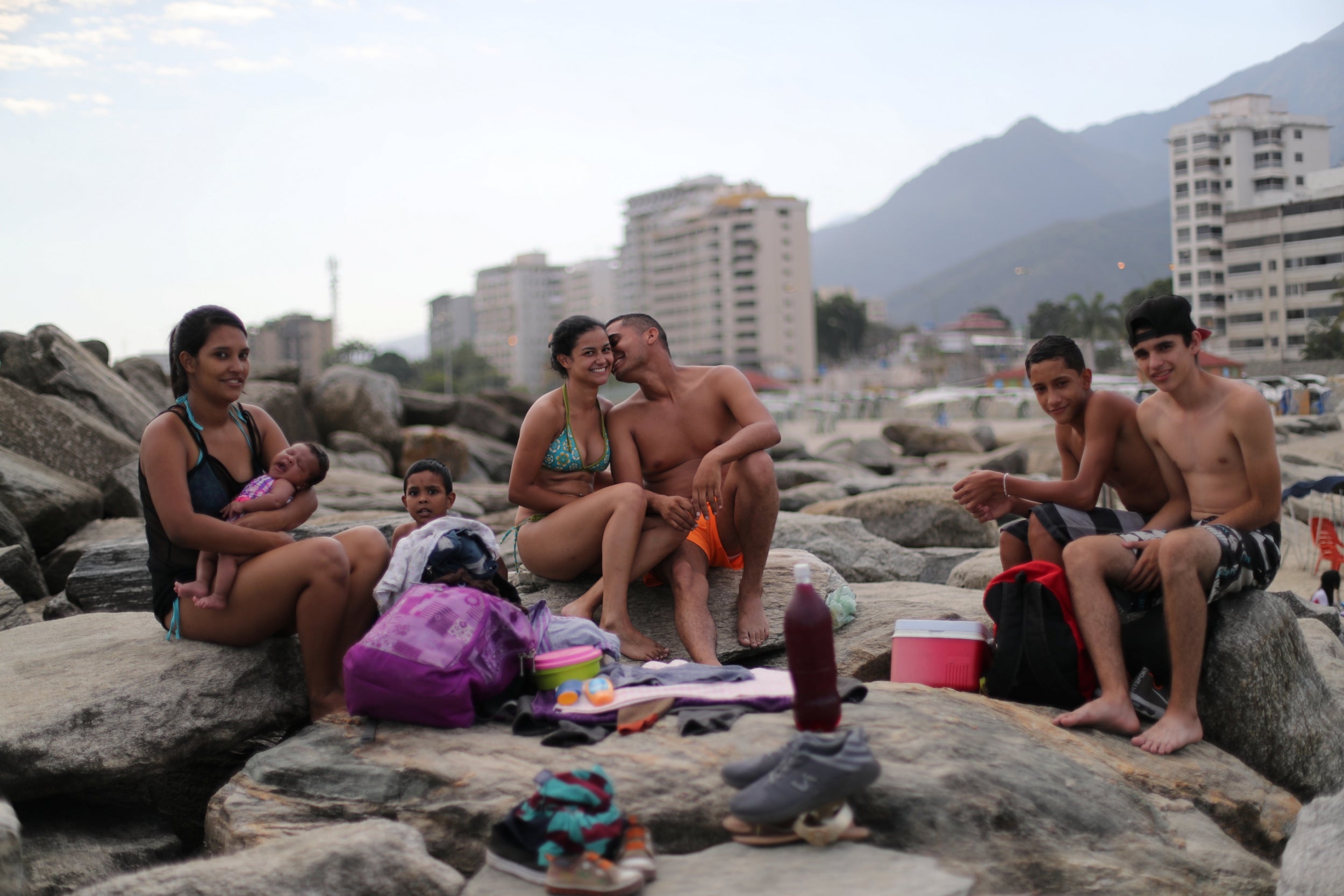
In search of distraction, Venezuelans from the country’s capital Caracas have long taken to the nearby seaside state of Vargas to spend weekends with family and friends on the shores of the Caribbean.
“You put your mind in another place,” says Leonel Martinez, a 26-year-old soldier, while relaxing on the sand with his girlfriend as her nephews play nearby. “It’s a way to think about something besides what is happening in the country.”
But in a country where the monthly minimum wage amounts to just $6 (£4.70) per month, the $15-$20 a day trip to the beach can require months of savings and advance planning. Martinez, who used to take the 40km (25 mile) trip to the beach frequently, says it is the first time he has gone in a year. “It’s not something you can do every day, because of the situation in the country,” says Martinez.
For Venezuelans, queueing for food is a daily ordeal. They are also used to trying multiple pharmacies and hospitals in search of the medicines they need, and more recently have grown accustomed to collecting water from streams.
But that has not stopped Joaquin Nino, a cash-strapped 35-year-old father of two, from taking his kids to an amusement park in southern Caracas. “We have to work miracles just to have some fun,” Nino says.
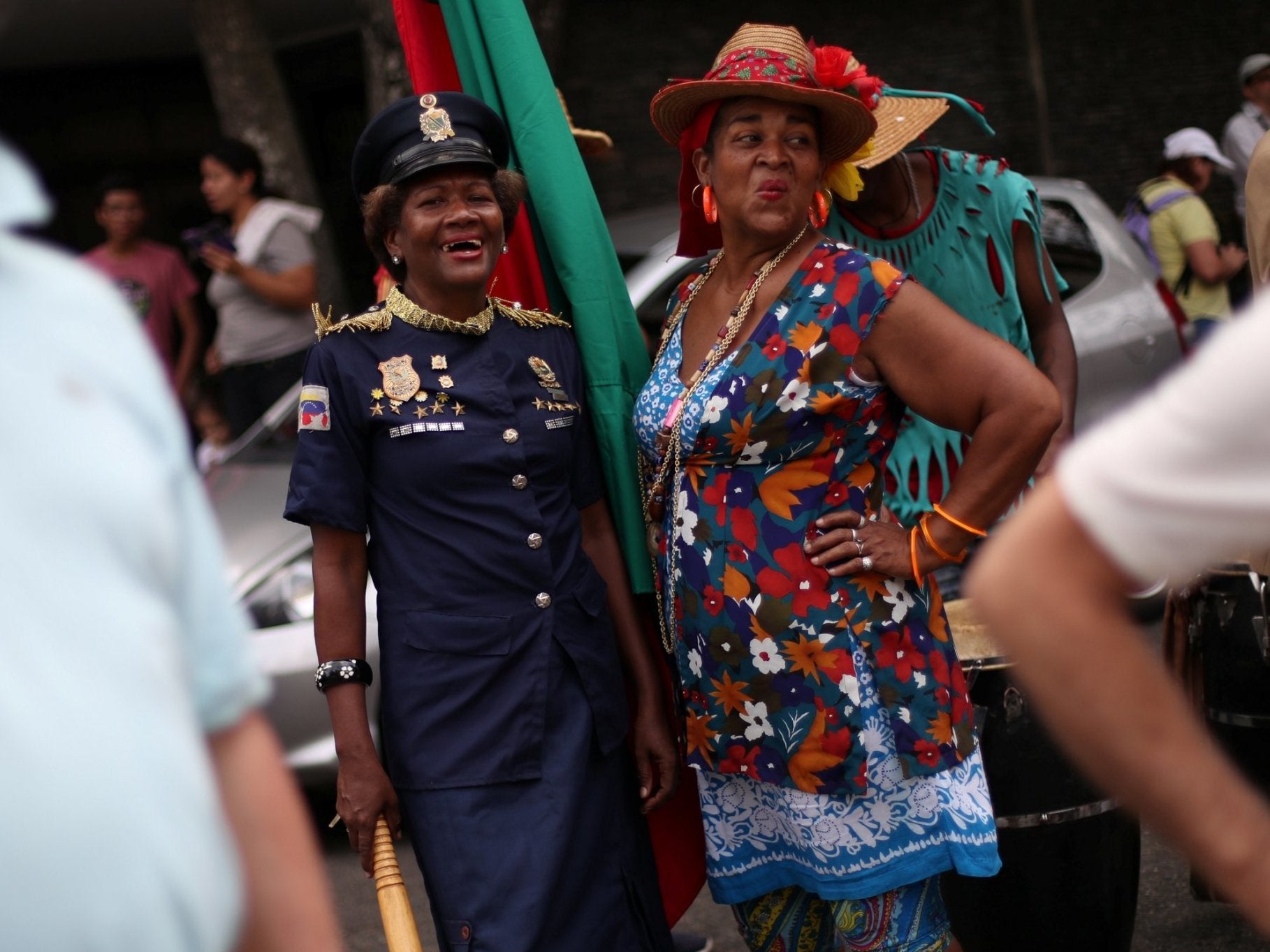
At a parade in eastern Caracas celebrating Holy Week, revellers dress in straw hats topped with flowers sing, bang drums and blow trumpets to tropical beats. With the sun beating down, one marcher, who gives his name as Carlos, remembers how in past years onlookers would douse those marching with water to cool them down. “Now, because of the problems with the water, that probably will not happen,” he says.
In central Caracas, a group of men of all ages meet every Sunday to play softball while a handful of their relatives watch. The wire fence that once surrounded the field was stolen long ago. The lights, which once allowed the group to play at night, have also been pilfered.
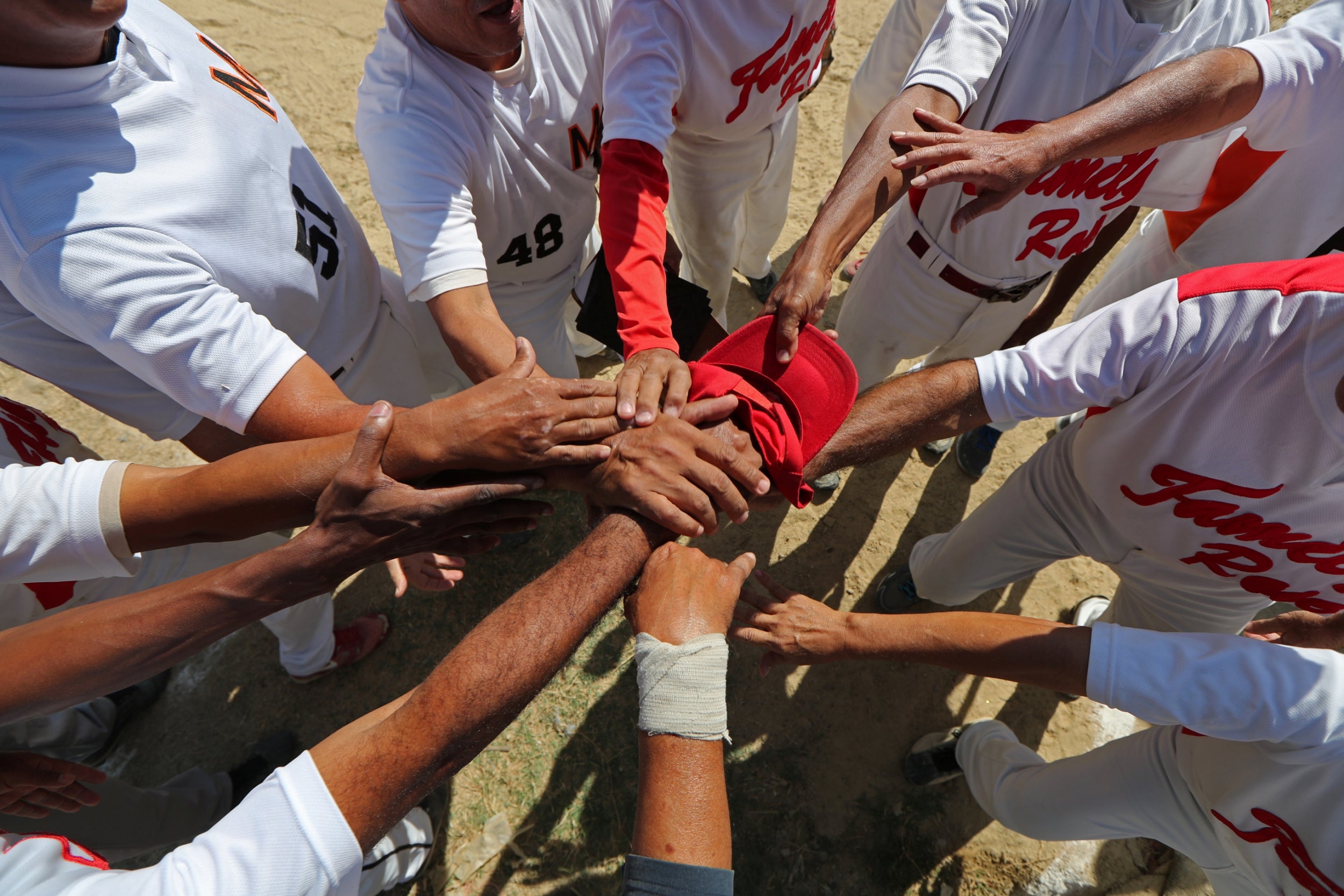
“I always come because my husband plays,” says Delia Jimenez, a 62-year-old industrial designer who jumps up from the stands whenever her husband comes up to bat. “We have fun and we shake off our stress.”
A few blocks away, groups of young people come together to breakdance, which they say is a way to disconnect. But some admit they have not been eating enough recently to be able to spend as much time dancing as they used to.
“When we’re out here dancing, we don’t think about the state of the country,” says Yeafersonth Manrique, a 24-year-old drenched in sweat after a long practice. “In this world there is no crisis.”
Reporting by Shaylim Valderrama, Reuters