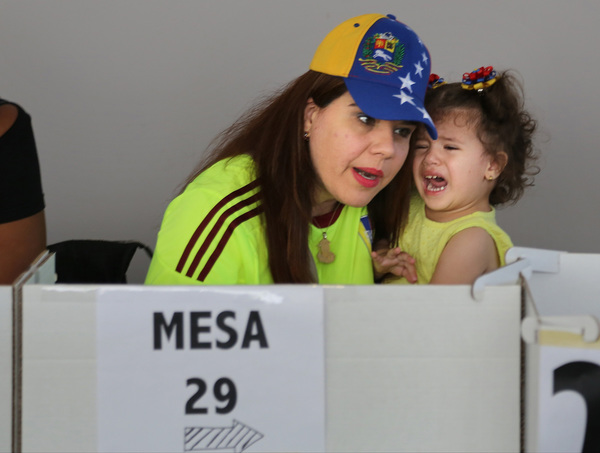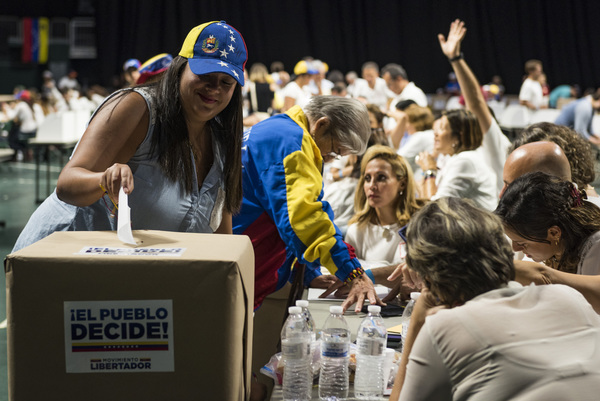
CARACAS, Venezuela _Venezuelans around the world turned out in large numbers Sunday to reject President Nicolas Maduro's plan to rewrite the constitution as the South American nation staggers under protests and violence.
Even as the opposition hailed the big turnout for the nonbinding referendum, the socialist administration seemed no closer to dropping its plans to convene a National Constituent Assembly that critics fear will be one more step toward totalitarian rule.
Voting was extended across parts of the country Sunday as the opposition said it had been overwhelmed by the crowds, and officials said they believed several million people had cast a ballot to reject the government's plans.
"If I was one Nicolas Maduro's advisers, I would tell him to look at what's happening all over the country (and) stop trying to impose this constituent on the people," said Henrique Capriles, the opposition governor of Miranda state. "What Maduro should do in the next hours is cancel the fraudulent constituent."
So far, that doesn't appear to be in the cards. On Sunday, Maduro downplayed the vote, saying the opposition was "demoralized." And election authorities reminded the country that the results were not legally binding.
Facing more than 100 days of protests in which more than 90 people died, thousands were injured and hundreds were detained, Maduro has said the National Constituent Assembly is the "only solution" to bring peace to the country.
But even as Maduro was preaching pace, there were new reports of intimidation and bloodshed. The MUD coalition of opposition parties said they had received reports of at least 236 "irregularities" during the referendum. In one of the most serious incidents, pro-government gunmen allegedly opened fire on voters in the Catia neighborhood of Caracas, leaving as many as two dead and four injured.
Even so, turnout was strong even in parts of the capital considered ruling-party strongholds.
In the municipality of Libertador, near downtown Caracas, voters had come out despite fears that they might face retaliation from pro-government groups.
"Yes I'm scared," said Yoviann Susrez, a student. "But if I live with fear, and don't take a risk, nothing will ever change here."
Reviewing pictures of long lines in different ruling-party hotbeds, some analysts said more than 8 million people might have voted in the plebiscite.
"Places that are emblematic for being pro-government are seeing the massive presence of voters," said Jesus Seguias of the DatinCorp polling firm.
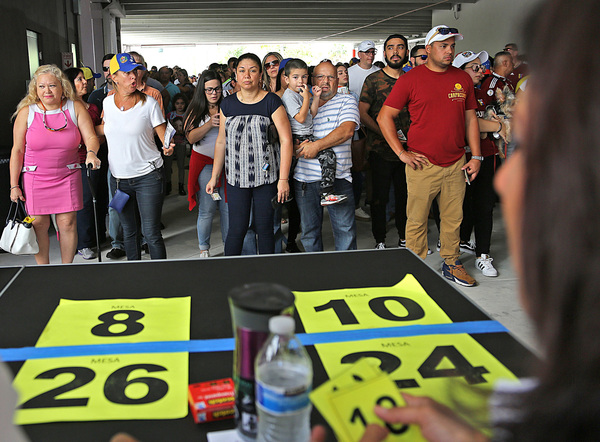
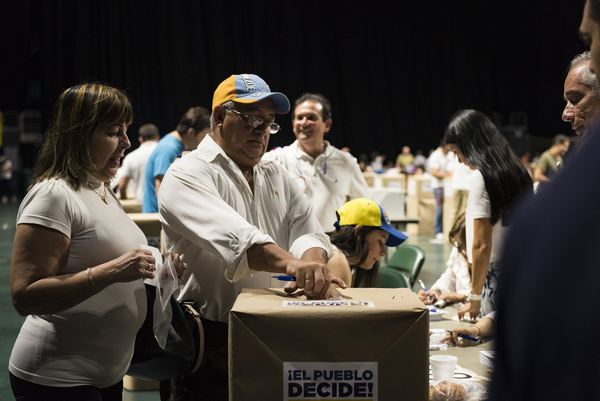
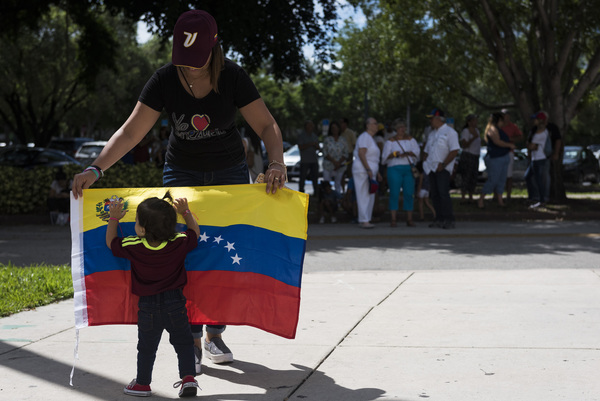
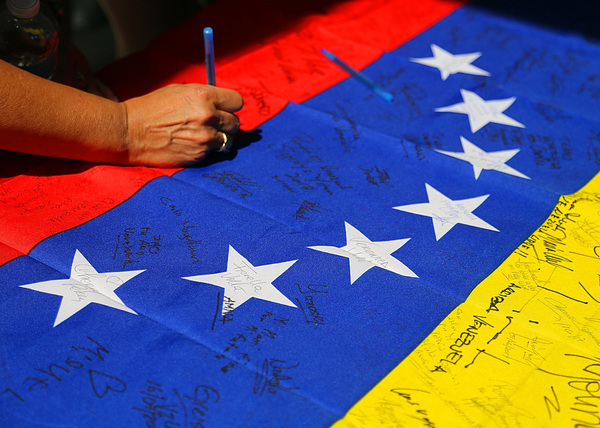
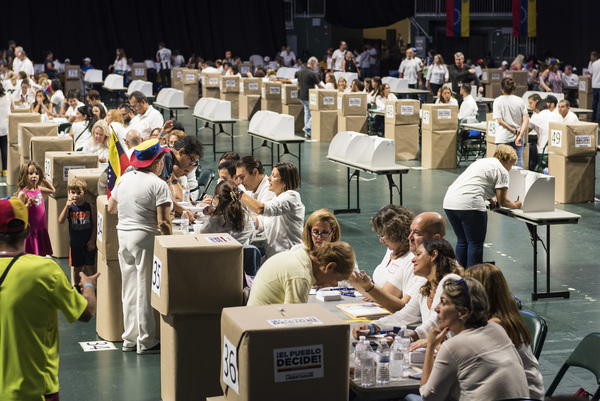
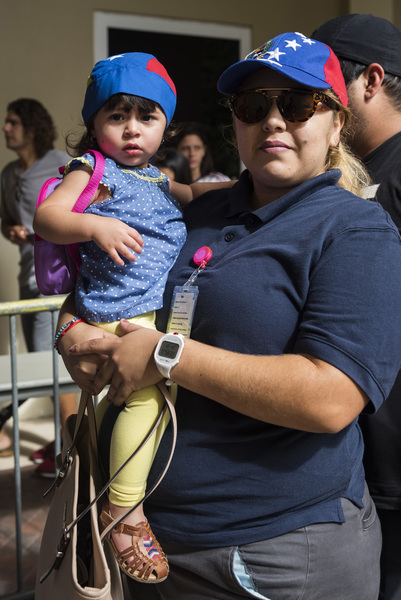
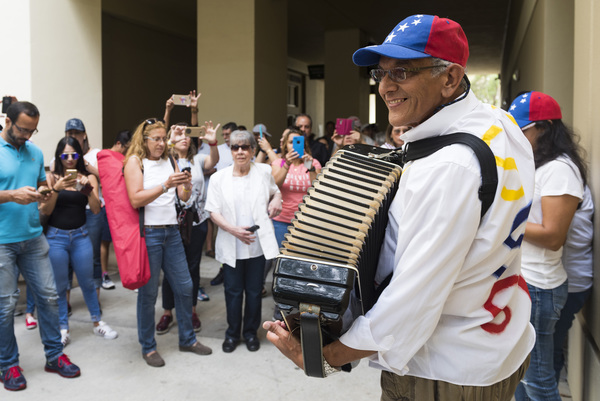
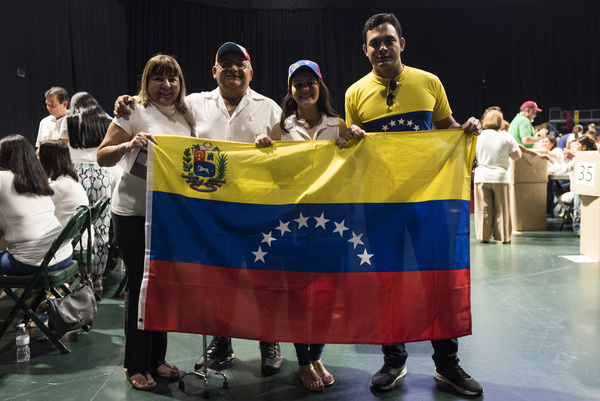
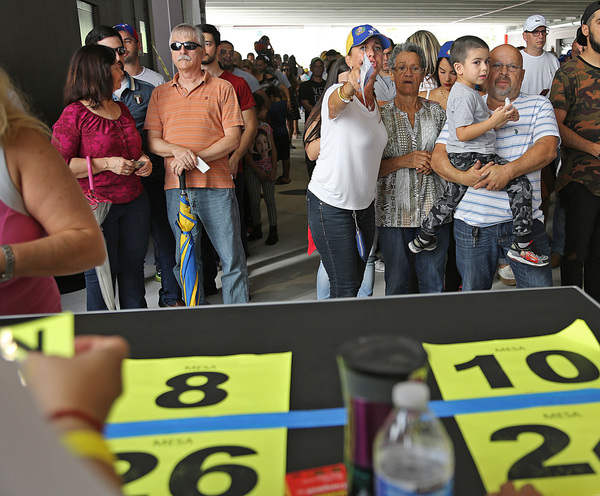
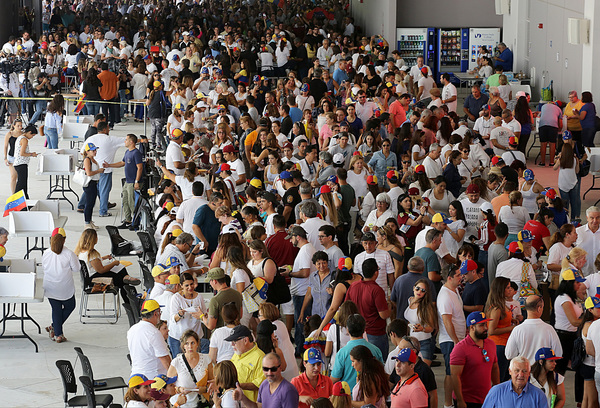
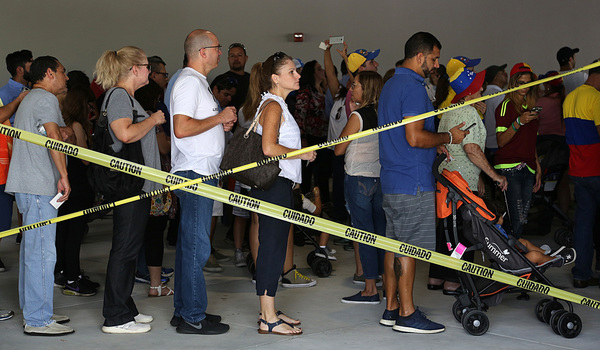
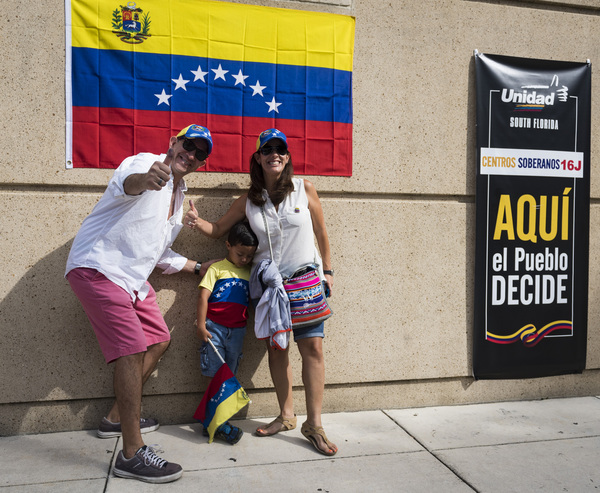
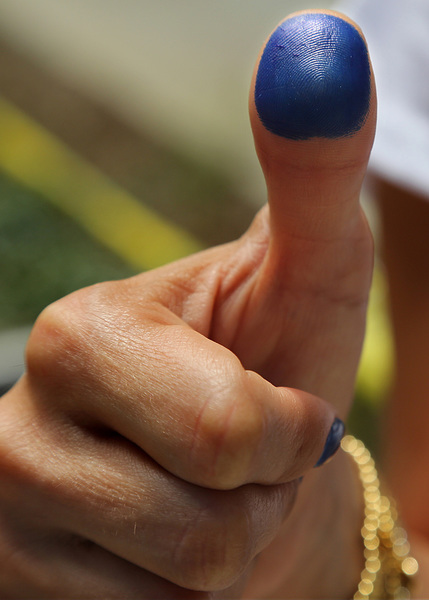
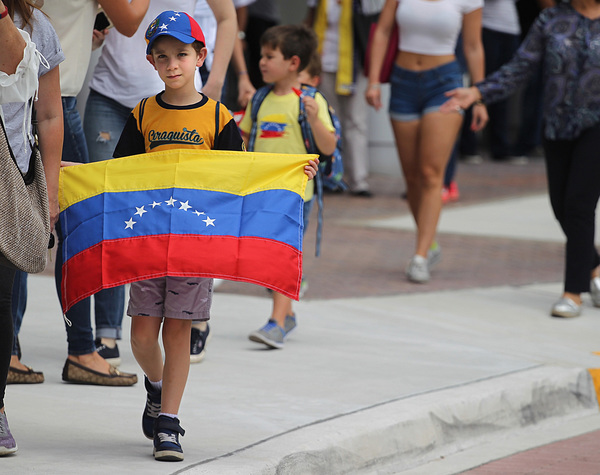
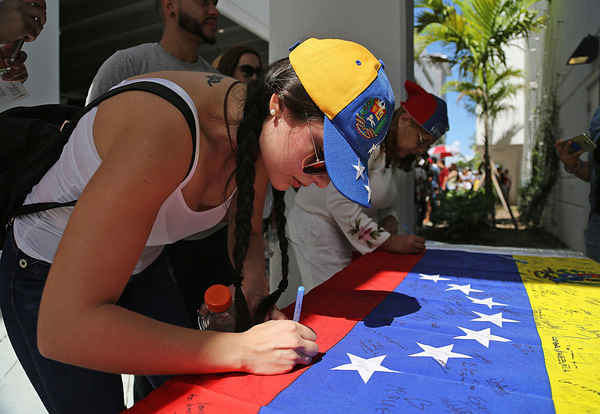
Not surprisingly, voting appeared to be particularly intense among Venezuela's expatriate community. In Florida, more than 100,000 Venezuelans were thought to have cast ballots.
Outside the Watsco Center at the University of Miami _ one of eight voting centers in South Florida _ the line snaked around the basketball arena and into the parking lot, with waits lasting 90 minutes in the early afternoon.
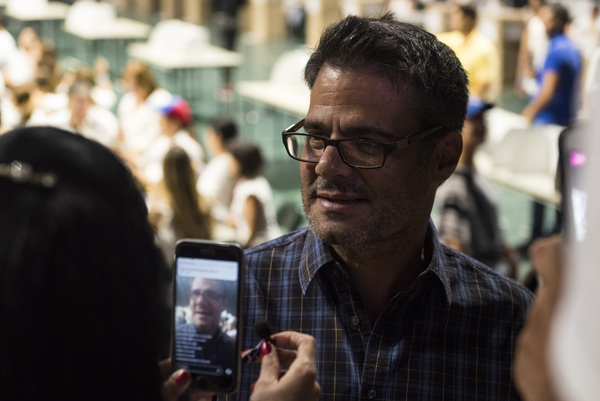
Cristina Pocaterra, the election-site coordinator, said the only problem they'd had was "too many volunteers."
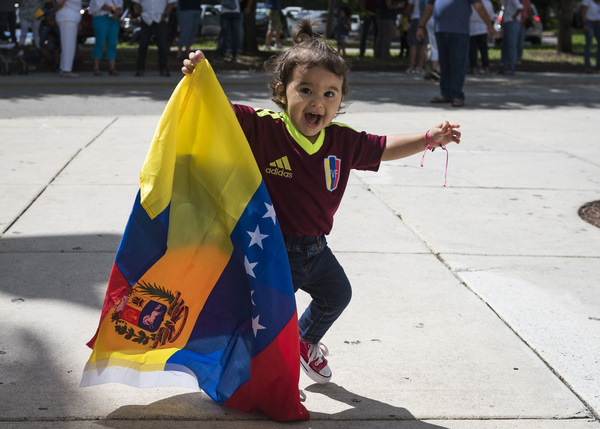
"For Venezuelans in Miami this is an opportunity to show the world that civil society is committed to liberty and democracy," she said.
There were also reports of long lines in Georgia and Washington, D.C.
Venezuelans in more than 75 countries were thought to have cast votes.
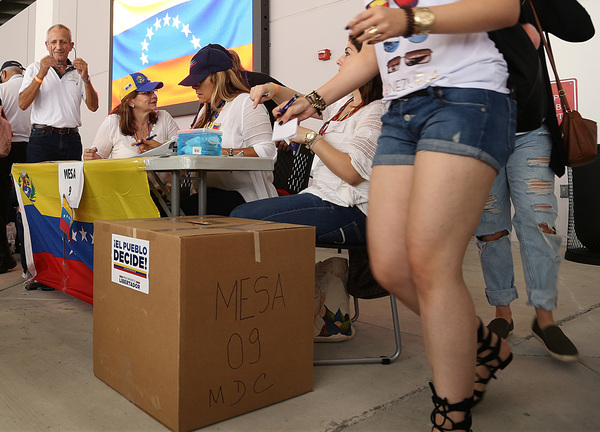
With almost 20 million registered voters, the opposition is hoping to break the 10 million mark to send a message to the government.
The administration, however, has actively been trying to silence the uproar. It held a competing election on Sunday: a "trial run" for the July 30 elections in which voters will be asked to choose more than 500 delegates for the new constituent assembly.
Cilia Flores, Maduro's wife and a candidate for the constituent assembly, said the strong government turnout was proof of the people's "love" for "President Nicolas Maduro and the revolution."
"The National Constituent Assembly is peace," she said. "Change is coming July 30th with the constituent, and it fills us with much more determination."
The opposition complains that the delegate system for the National Constituent Assembly is designed to stack the body with the ruling-party faithful. And they fear Maduro will use the new entity to snuff out the opposition-controlled National Assembly and further delay, or cancel, upcoming elections. In addition, critics say the government is acting illegally by not allowing voters to decide beforehand if the constitutional body should be convened.
Sunday's ballot gave voters a chance to vote "yes" or "no" on three issues. Along with accepting or rejecting the constituent assembly, voters were asked they wanted the armed forces and public officials to defend the 1999 constitution, and if they wanted general elections and the conformation of a "government of national unity to restore the constitutional order."
It's unclear what happens next. On Sunday, Maduro reiterated the need for a national dialogue, but the opposition has said that without concrete concessions, including general elections, there's nothing to talk about.
And some parties are advocating a national strike _ in addition to the almost daily protests _ to try to force the government's hand.
����
(El Nuevo Herald reporter Daniel Shoer-Roth and Miami Herald reporters Patricia Mazzei and Amy Driscoll contributed to this report.