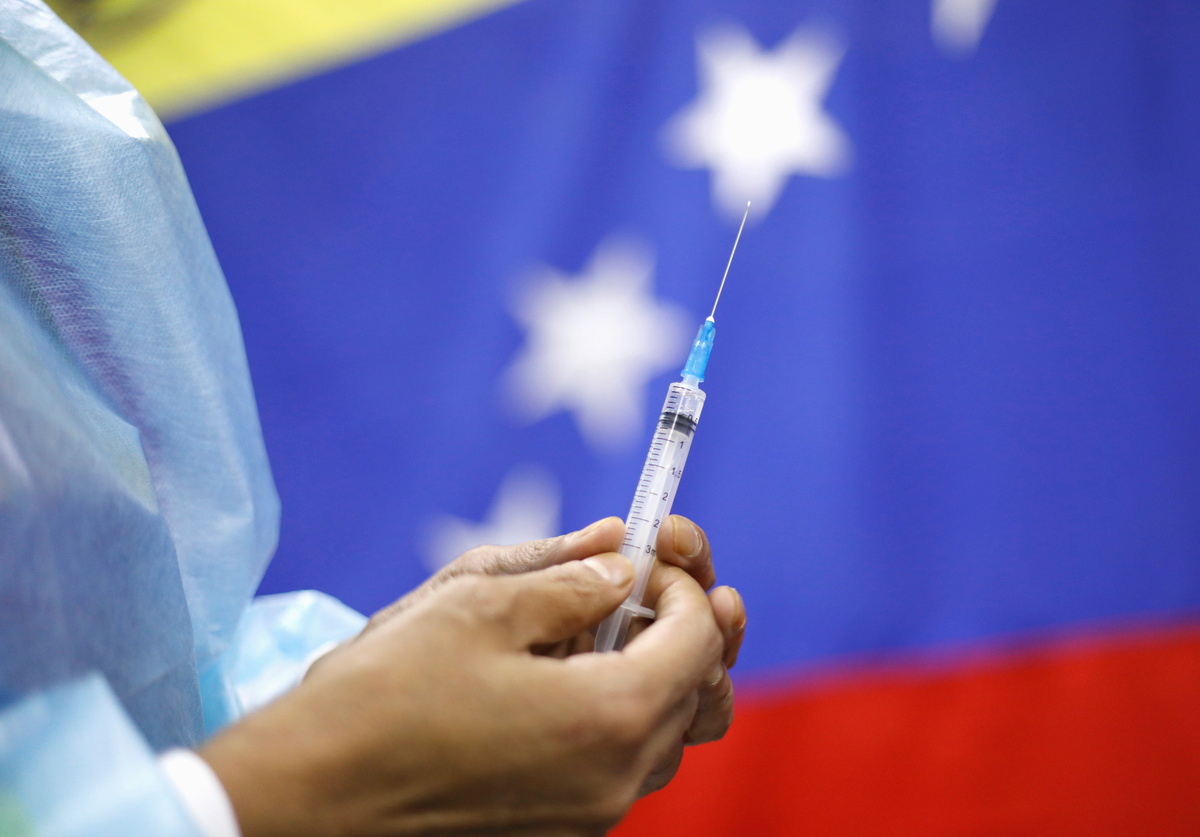
Russia has supplied Venezuela with doses of EpiVacCorona to be used as part of trials of the Russian coronavirus vaccine candidate, officials said on Tuesday.
Russia has said that more than 115,000 EpiVacCorona doses have been deployed in its national inoculation program, calling it "100% effective" in producing antibodies - though some trial volunteers have expressed concerns about its efficacy.
Venezuelan President Nicolas Maduro has said his government will receive 10 million doses of the Sputnik V COVID-19 vaccine, Russia's flagship inoculation, but so far has received only several hundred thousand doses.
"We provided 1,000 doses of the vaccine EpiVacCorona, which is a vaccine that has shown positive results," Russia's deputy prime minister, Yuri Borisov, said, via an interpreter, during a visit to Venezuela. "We could consider supplying that vaccine in addition to Sputnik V."
Venezuelan Science Minister Gabriela Jimenez earlier in the day tweeted that EpiVacCorona doses had arrived as part of trials that would take place in Venezuela.
The South American nation has received about 500,000 doses of the coronavirus vaccine manufactured by China's Sinopharm and about 250,000 from the Russian Sputnik V.
Venezuela, along with allies of opposition leader Juan Guaido, is in talks to buy vaccines from the COVAX program using funds frozen in the United States.
COVAX, the World Health Organization's program designed to secure COVID-19 vaccines for poor countries, has set aside up to 2.4 million doses of the AstraZeneca vaccine, pending a payment agreement.
But Maduro has said Venezuela will not accept AstraZeneca doses following concerns about side effects. The World Health Organization this month said the benefits of AstraZeneca's vaccine outweighed the risks.
(Reporting by Brian Ellsworth and Vivian Sequera; Editing by Leslie Adler)