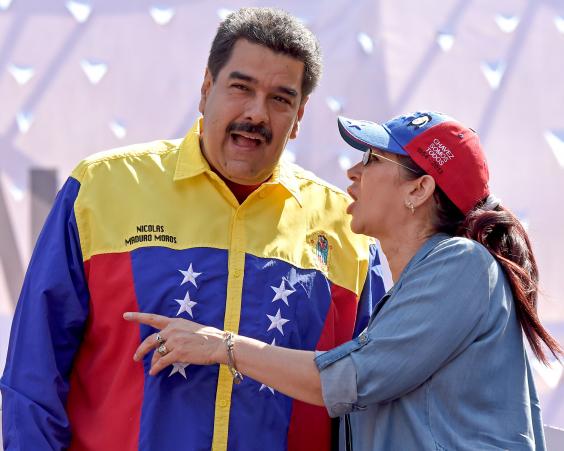
The city of Caracas is bracing itself as opponents of President Nicolas Maduro vow to fill the streets and press their demand for him to stand aside. At the same time, Mr Maduro is rallying his own supporters to counter his adversaries.
Opponents of Mr Maduro see the so-called "taking of Caracas" as a major test of their strength and believe it will pressure the electoral authorities to permit a recall referendum against him this year. It is also likely to be another measure of how the man who succeeded Hugo Chávez handles dissent.
The protests are taking place against a backdrop of mounting economic crisis. Stores in the country’s major cities often lack basic items and ordinary people are frequently forced to endure long queues. Reports suggest large numbers of people have already left the country for neighboring Colombia.
The Associated Press said that ahead of the protests, Mr Maduro’s government has jailed several prominent activists and deployed security forces across the city.
Last week, Daniel Ceballos of the opposition Popular Will party was returned to prison after having spent a year under house arrest awaiting trial on charges of rebellion. The Interior Ministry said he was planning to escape from house arrest and carry out acts of violence during Thursday’s rally.
Meanwhile, a number of foreign journalists have been blocked from attending the protests. NPR's John Otis said he was turned around at Caracas airport, along with Marie-Eve Detoeuf of Le Monde, and Cesar Moreno, a reporter for Colombia's Radio Caracol. He said a few days ago an Al-Jazeera TV crew was also turned back at the airport.
Mr Maduro has accused his opponents of plotting violence during the march to pave the way for a coup, such as the one that briefly toppled Mr Chavez in 2002. A number of the current opposition leaders backed that coup.
“If they're coming with coups, ambushes and political violence, the revolutionary [government] will provide an uncommon and overwhelming response,” Mr Maduro said on Tuesday.
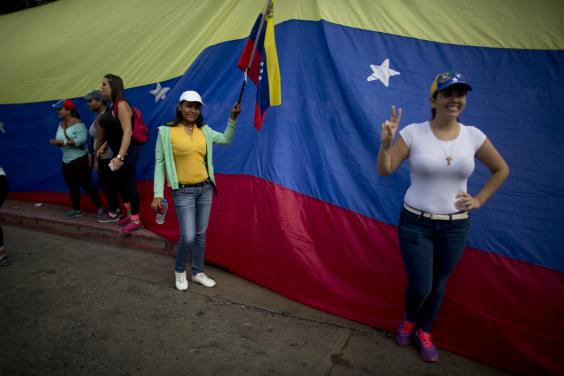
Shortly after dawn on Thursday, a few hundred people dressed in the yellow, red and blue colours of Venezuela’s flag began walking toward the three large avenues in eastern Caracas where demonstrators were to concentrate after midday.
Some held signs saying “I revoke”, a terse way of expressing support for the move to end Maduro's mandate as president, the AP said.
Among those taking part in the march, which organisers are hoping will draw 1 million people, are some 100 members of the Piaroa and Jiwi indigenous tribes. They arrived in Caracas on Wednesday for the protest after travelling more than 375 miles – by foot, canoe and bus – from the Amazon rainforest.
“We came to see if they'll free the political prisoners,” said Miguelina Caballero. She was referring to someone from her Piaroa tribe who had been jailed for alleged fraud during December’s congressional elections, a case the government used to disqualify three indigenous leaders from taking seats in the opposition-controlled legislature.
The opposition has staged a half-dozen or so marches this year, some of which ended in clouds of tear gas as hard-core activists clashed with riot police, but posed no major risk to Mr Maduro’s grip on power.
Even the anti-government protests in 2014 that were blamed for more than 40 deaths failed to rally the huge numbers now sought for Thursday’s march by the Democratic Unity alliance.
The opposition hopes to force electoral authorities to allow a recall vote this year. If Mr Maduro loses, new elections would be held and polls indicate the opposition would win.
But if a vote is delayed until after 10 January, and Mr Maduro loses, his vice-president would finish his term ending in 2019.
Reuters said that extra police and troops were positioned around Caracas, and there were roadblocks on most major routes, with buses being blocked and traffic crawling. Security forces fired tear gas on one highway where buses were stopped but people tried to continue on foot, pro-opposition broadcaster VivoPlay said.
“All they are interested in is staying in power,” said construction worker Luis Palacios, 59, from the poor Caracas neighborhood of Petare. “We want change, we are hungry.”