The American invasion of Venezuela — along with fresh threats to annex Greenland — provide the world with a unique opportunity to perform a post-mortem examination on what was once known as the international rules-based legal order.
This legal order was based on rules enshrined in the United Nations Charter of 1945. Its collapse creates uncertainty that requires careful consideration from all those interested in world peace.
Read more: Trump's intervention in Venezuela: the 3 warnings for the world
First, however, it’s important to understand what legal orders are and how they can collapse.
Social rules come in different forms — some might be religious, some moral. But complex political communities tend to be ruled by another set of rules, legal ones.
Legal rules tend to be organized in what are commonly called legal orders, and these orders guide the actions of members of the political communities in their everyday lives. One goal of most legal orders is, usually, co-ordination among those who are part of a social group.
When we think about legal orders, we usually focus on the ones that are closer to our political communities, such as those connected to our cities, provinces and states. But there’s one legal order that tends to be ignored more often than not — the international legal order.
International law
One defining feature of international legal orders is that they are far removed from people within their own political communities, so negotiations to establish shared rules are usually carried out by representatives of large states or other powerful political entities.
Even though the international legal order feels isolated from everyday rules — like city laws telling us which side of the road to drive on — it shares the same basic features that make any system of co-ordination work.
One key feature is meeting the expectations of the people within a political community. For a legal order to last over time, it must do this. In other words, because legal orders are systems of co-ordination, they tend to endure as long as their rules are expected and accepted, even if those rules are unjust.
Although some people believe that a law must be just to count as law, that view is hard to sustain when we look at the past few hundred years of human history. Many periods offer clear examples of both domestic and international legal systems that upheld deeply unjust and morally troubling positions.
Yet it would be difficult to argue that there was no legal order in places like the Ottoman Empire or Nazi Germany. In both cases, genocide — among the gravest moral failures imaginable — occurred within functioning legal systems. This suggests that legal orders can persist even while enabling repeated immoral actions.
History also shows, however, that legal orders do collapse, and often more quickly and more frequently than many might expect.
The Ottoman Empire and Nazi Germany, for example, ceased to exist a long time ago. From a broader historical perspective, the legal order of the Roman Republic in the second century BCE no longer exists and bears little resemblance to the system governing modern Rome within Italy today.
Like the other legal orders mentioned, the post–Second World War order increasingly looks like a relic rather than a binding reality — a fact we must clearly recognize if we hope to save some of its positive features.
Fundamental rights
After the Second World War, one of the main agreements among most political communities around the world was that the previously held right to wage wars against other countries was no longer acceptable. Sovereignty consequently became one of the cornerstones of the international legal order.
This was enshrined in Articles 1 and 2 of the United Nations Charter. The logic was simple: as the charter’s preamble notes, repeated wars had brought immense suffering to people entitled to fundamental rights based on their dignity, worth and equality. As a result, this new order abolished the right of political communities to wage war for any reason.
In practice, however, this order rested on a watered-down version of that ideal. Even when sovereignty and human rights were violated via military action, the appearance of an aim to protect them had to be maintained. Powerful states could breach these principles so long as they preserved the illusion that they were attempting to uphold and safeguard sovereignty and rights.
This unspoken rule — that power could override law if the façade remained intact — underpinned the international legal order from 1945 to 2023.
As the world watched the assault on Gaza unfold — deemed a genocide by the United Nations — many western political communities that had helped build the post-war legal order abandoned even the pretense that sustained it.
Once the illusion of respect for sovereignty and human rights collapsed, the system lost a key element that had kept it functioning. This is why I’ve argued previously that the rules-based international order went to Gaza to die at the hands of those who created it.
Annexation made easy
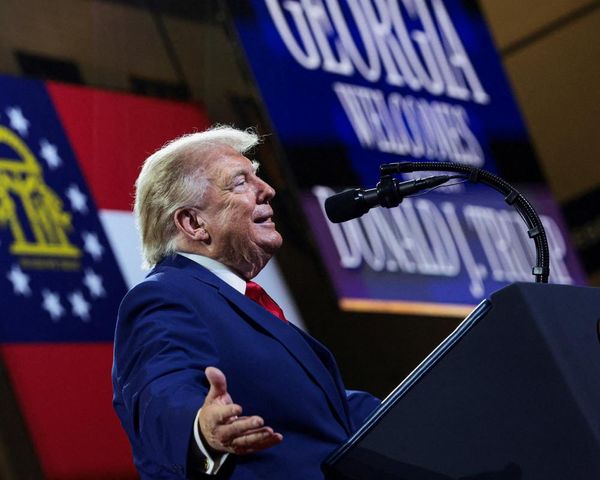
Unlike U.S. President George W. Bush’s war in Iraq, which was framed by American diplomats as defending human rights, Donald Trump’s invasion of Venezuela and the capture of Nicolás Maduro weren’t presented as respecting any lofty principles.
His actions were grounded on the views that the U.S. has a claim to Venezuela’s oil. The intervention was driven by economic interests and hearkened back to the the Monroe Doctrine, an 1823 U.S. policy that promoted American dominance of the Western Hemisphere.
The events in Venezuela suggest the post-1945 international legal order, which emphasized sovereignty and fundamental rights, has been replaced by one more like the pre-Second World War system, when nations could go to war for almost any reason.
Under the legal order now in place, Canada and Greenland could easily be the next targets of American annexation. Similarly, Taiwan could be annexed by China and Ukraine by Russia.
What the world is witnessing now is the international rules-based order being stripped of whatever value it once had. It is time to accept this reality if we are to build a better international order next time.

Jorge H. Sanchez-Perez receives funding from the Social Sciences and Humanities Research Council of Canada (SSHRC).
This article was originally published on The Conversation. Read the original article.