Scientists have discovered a reservoir containing approximately 6,000 cubic kilometres of magma buried deep beneath Tuscany – a volume comparable to the magma systems beneath some of the world's most powerful supervolcanoes.
The volume of magma is so large, it compares with that of Yellowstone in the United States and Lake Taupo in New Zealand.
The finding, published in the journal Nature, came as a surprise to researchers because the region shows almost none of the surface signs that typically betray the presence of large magma bodies underground – no major craters, no significant eruptions in hundreds of thousands of years, and no dramatic ground deformation.
The last volcanic eruption in the area, from Mount Amiata, occurred around 300,000 years ago and was relatively minor.
The reservoir was identified by a team from the University of Geneva, Italy's Institute of Geosciences and Earth Resources, and the National Institute of Geophysics and Volcanology, using a technique called ambient noise tomography.
The method works by recording the natural vibrations constantly passing through the ground – generated by ocean waves, wind and human activity – using a network of around 60 high-resolution seismic sensors deployed across the region.
When those vibrations travel unusually slowly through a particular zone, it indicates the presence of molten or partially molten material. The team used the recordings to build a three-dimensional image of the crust down to 15km depth.
"We knew that this region, which extends from north to south across Tuscany, is geothermally active, but we did not realise it contained such a large volume of magma, comparable to that of supervolcanic systems such as Yellowstone," said Matteo Lupi, associate professor in the Department of Earth Sciences at the University of Geneva, who led the study.
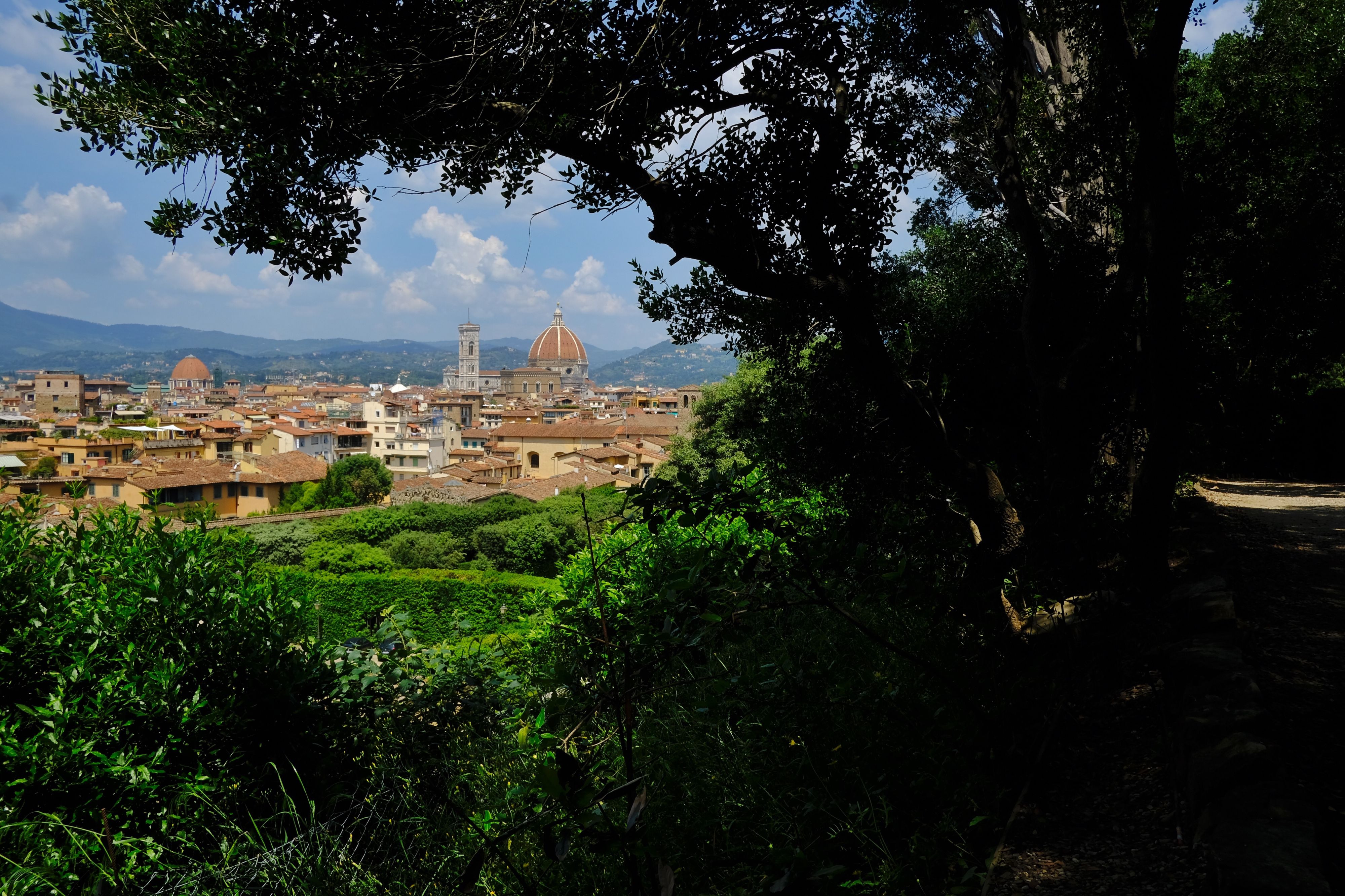
The magma sits between 8 and 15km below the surface and has a core of predominantly liquid melt surrounded by a larger shell of crystal-rich partially molten rock. The researchers estimate around 3,000 km³ of liquid melt at the centre, encased in roughly 5,000km³ of crystal mush. The region beneath Mount Amiata, at the southern edge of the study area, may hold even larger volumes, though the researchers said further analysis was needed to confirm that.
Despite its scale, the researchers say the magma poses no immediate volcanic threat.
The highly viscous nature of the magmas in the Tuscan region – formed through the melting of the surrounding crustal rocks rather than rising from the mantle – makes them far less likely to erupt than those found beneath conventional supervolcanoes. Their high viscosity causes them to accumulate slowly rather than ascend explosively.
"Such partial melts may help understand the long-term evolutionary processes taking place at volcanic systems that featured super-eruptions and in regional-scale high-enthalpy systems that have not yet erupted," the authors wrote.
The discovery does explain one longstanding puzzle about the region – why it has such extreme geothermal activity despite lacking an obvious volcanic source.
The Larderello area of Tuscany, once known as the Devil's Valley for its fumarolic activity, hosts one of the world's most productive geothermal energy systems, which has been generating electricity since the early twentieth century. The magma reservoir, the researchers found, is what powers it.
Beyond its scientific significance, Mr Lupi said the study demonstrated the practical potential of ambient noise tomography as a rapid and relatively cheap tool for subsurface exploration.
"These results are important both for fundamental research and for practical applications, such as locating geothermal reservoirs or deposits rich in lithium and rare earth elements," he said, noting that the formation of such deposits is closely linked to deep magmatic systems of the kind now identified beneath Tuscany.
Parasitic flies that eat human tissue are just 90 miles from US border
Kazakhstan sentences 19 for protest against repression in China's Xinjiang region
Australia boosts military spending as Iran war makes global impact
Ukraine’s army evolves under fire, with new units challenging Soviet legacy
Red hair becoming more common due to natural selection, study shows
The small change to your exercise routine that could lead to a longer life