The sports world has begun to take action by introducing elaborate measures to prevent the spread of the novel coronavirus in championships and other events.
Some federations of the sports that are set to be part of the Tokyo Olympics and Paralympics next summer have resumed championships after reviewing their equipment and rules.
Games of professional baseball clubs and the J.League professional soccer teams have gradually increased their number of spectators from zero, and grand sumo tournaments also resumed admitting spectators.
With about nine months left until the opening of the Tokyo Games, organizers of relevant sports events are adopting measures to prevent virus infections, learning what works and thus contributing to making the Tokyo Games successful.
-- Shouts behind shields
The Tokyo Organizing Committee of the Olympic and Paralympic Games plans to compile measures to prevent infections in each event. Federations of each sport are also trying their best to find ways to operate the competitions they are resuming.
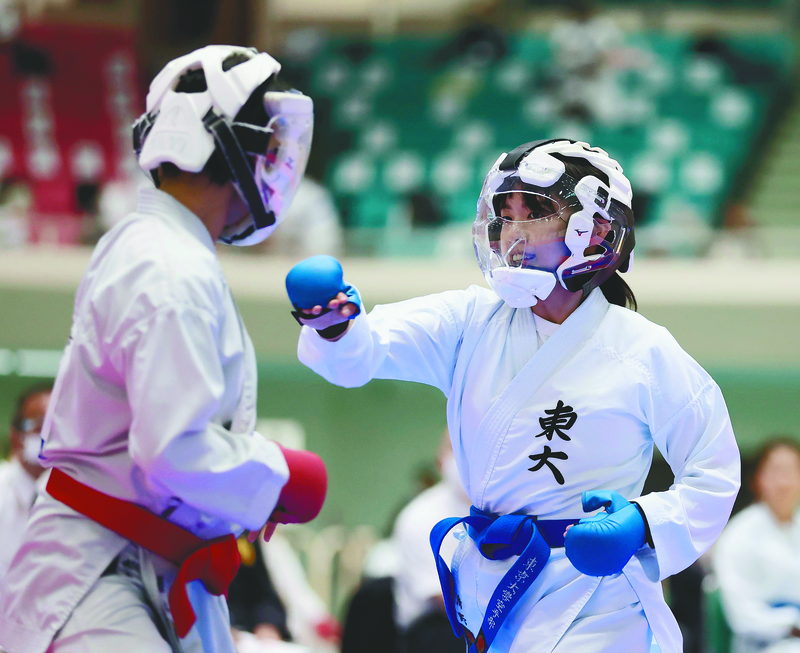
On Oct. 4, the Kanto region university karate championships was held at the Nippon Budokan. As the first sports event held at the venue after its renovation for the Games and also as a martial arts event in which players have intense contact, it drew much attention regarding what kind of preventive measures would be taken.
It became the first event where menho headgear was introduced to prevent the spread of airborne droplets between players in the kumite (sparring) competition.
The headgear, including a transparent shield that covers the mouth, can reduce airborne droplets by 98%, according to the Japan Karatedo Federation (JKF).
While making it mandatory to wear the headgear, the JKF also allows competitors to use kiai shouts in their bouts, which had been banned under the guidelines compiled this summer.
The introduction of the headgear was welcomed by many participants as they could shout loudly -- one of the features of karate bouts. "I was able to perform with my power at full [with the gear on]," said one competitor at the championships.
The JKF plans to report the results to the World Karate Federation and introduce the headgear at the Japan Cup Karatedo Championships slated for December, in which top athletes will compete.
A JKF official described the move as "a major step forward."
There have been some cases in which rules were changed.
At the All Japan Fencing Championships held in Tokyo in September, handshaking at the end of each match -- required by the rules of the International Fencing Federation -- was banned. It was a last resort taken for a sport that values courtesy to avoid contact as much as possible in the current situation.
"We regarded the championships as an event held under the new standard and welcomed it with a strong determination to move the sports world forward," said Japan Fencing Federation President Yuki Ota. "We were able to put all the technologies and ideas into the event."
In competitions that involve many competitors, thorough entrance screening needs to be introduced to prevent people in poor health from entering the venue.
At the Japan National Championships for track and field events held in Niigata in early October, organizers used a smartphone app to monitor the temperature and physical condition of participating athletes and staff members.
Also, at the entrances and exits of the venue, the organizers checked the temperatures of the participants as they walked past a special thermometer device, creating an environment in which athletes can concentrate on the competition.
There are also efforts to maintain social distance among participants.
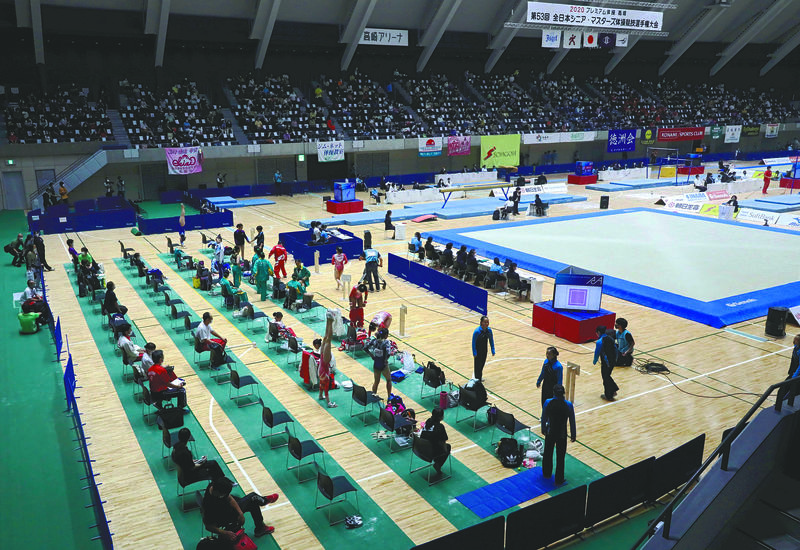
Organizers of the All-Japan gymnastics championships held in Gunma Prefecture in September prepared a waiting area with sufficient empty space around each chair.
In the past, players used to share a row of chairs to sit and wait for their turn, but this time the organizers spaced out chairs for each competitor to avoid creating a crowded environment and the risk of infection.
Measures are also being taken for events for Paralympic athletes.
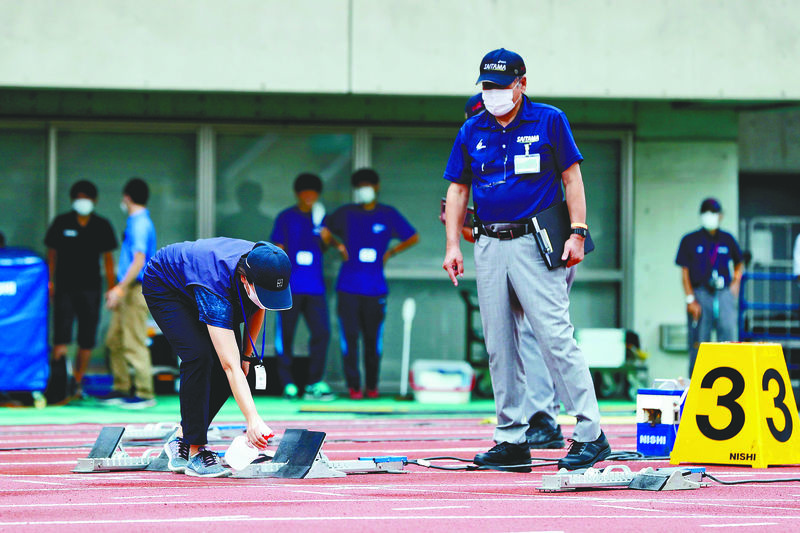
At September's Japan Para Athletics Championships in Saitama Prefecture, while athletes took extra care by doing thorough disinfection measures of their own, organizers also disinfected starting blocks and other equipment used at the venue.
As moves to resume championships are accelerating in Japan and abroad ahead of the Games, further efforts are being made to carry out events safely.
Read more from The Japan News at https://japannews.yomiuri.co.jp/