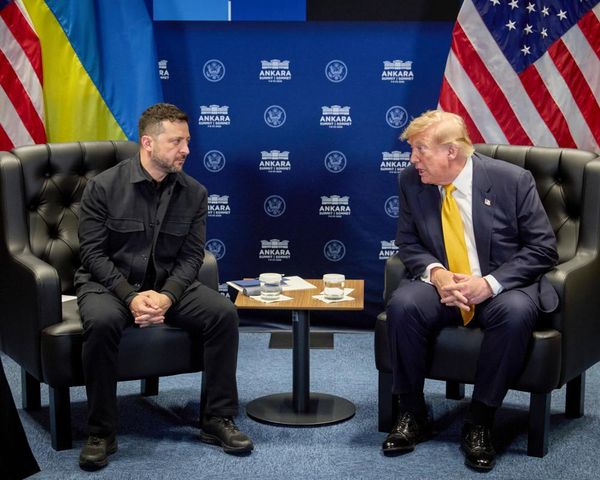
When President Trump turned to Marco Rubio and JD Vance for an update on the Iran war, the contrast was immediate and telling.
Rubio framed the conflict as necessary, even beneficial, calling it 'a favour' to both the US and the wider world. However, Vance took a different path and remarked on 'options' now available to Washington and reiterated that Iran must not acquire a nuclear weapon. Then, rather abruptly, he pivoted to wishing US troops a happy Easter.
Curt Mills, executive director of The American Conservative, put it plainly.
'It's very obvious from the way that Rubio talks about Iran and the way that Vance talks about Iran that they are of different casts of mind.' Vance, he suggested, seemed 'literally trying to talk about anything else other than the war'.
Two Visions Of Power
Rubio, as secretary of state, argued for a muscular American role abroad, one that embraces intervention when threats emerge. He described Trump's decision to act as 'a wise decision', insisting there 'absolutely was an imminent threat' and that the operation 'needed to happen'.
Vance's instincts run in the opposite direction. A veteran of the Iraq war, he has spent years questioning the wisdom of overseas entanglements. Experts say he is not rhetorical. It is rooted in experience, and it shows.
Trump himself hinted at this divergence, noting that Vance was 'philosophically a little bit different than me' at the outset of the conflict. 'I think he was maybe less enthusiastic about going, but he was quite enthusiastic,' the president added.
What many people noticed was not just what Vance says, but what he avoids. Asked repeatedly whether he had concerns about the war, he sidestepped, stressing the importance of private deliberations instead. On another occasion, he accused a reporter of trying to 'drive a wedge' between him and the president.
Party Fault Lines Begin To Show
The tension between Rubio and Vance mirrors a broader, more unsettled dynamic within the Republican Party itself.
A recent survey from The Associated Press-NORC Centre for Public Affairs Research suggests no clear consensus. Around half of Republicans say the military action against Iran has been 'about right'. About one-quarter believe it has gone too far, while a smaller share argues it has not gone far enough.
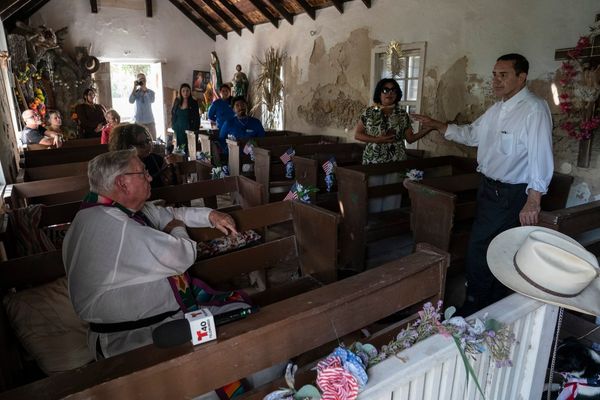
On the ground, among voters, the ambivalence is palpable. Alice Swanson, attending a Vance event in North Carolina, expressed support for both men but leaned towards the vice president.
'I think he fully believes and supports exactly what his convictions are,' she said, before conceding she could 'see both sides'.
Meanwhile, Joe Ropar, a retired military contractor from Texas, said Rubio's clarity had won him over. 'I'm not looking at JD Vance for president, and it's for stuff like that,' he said. 'I don't 100% trust him.'
The Long Shadow Of 2028
The 2028 race is still distant, at least formally. Yet early manoeuvring is already underway. Potential candidates are quietly reaching out in states like New Hampshire to test the waters. Former governor Chris Sununu expects a crowded field, with multiple high-profile Republicans entering the contest.
Strategists are already looking ahead. Jim Merrill, who advised Rubio during his 2016 campaign, believes Iran could become a defining issue. 'If for some reason things don't go as anticipated, there will be contrasts drawn,' he said.
Sununu, however, is less convinced that the divide will prove decisive. Both Rubio and Vance are, after all, senior figures in the same administration. 'They're tied together with the success or failure of Iran,' he noted. 'It doesn't really separate one versus the other.'