The narrow, muddy path leads alongside a small field. Through the tall, dark trees on the right, there’s a sheer drop of about 6 metres to the river bank below. I turn into the woods, and down the steep, timber-framed, leaf-lined steps of the “Jacob’s Ladder”.
I emerge from the trees. The sun is low – a large, bright disc, sinking towards the silhouette of Arundel castle, on the other side of the valley.
A large, brown female kestrel flies up to the top of a tall, bare tree and calls. In the field below, male pheasants posture and squawk at each other.
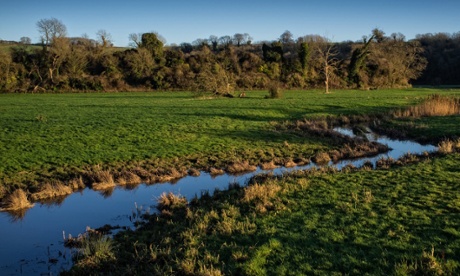
I walk along the large bank that follows the winding line of the Arun river south across the floodplain, the green fields scarred with drainage channels. Unseen ducks and moorhens call in alarm from behind the tall, brown, shimmering reed.
I turn and look back towards the tree-lined hillside I’ve just climbed down. Sticking out to the south of the village of Burpham, this natural promontory was fortified with earthworks by the Saxons as a hillfort or “burgh” – one of more than 30 named in the Anglo-Saxon Burghal Hidage – which gave its name to the village. It was probably built at the end of the ninth century on the orders of King Alfred to defend against marauding Danes.
The church clock in the village above chimes three o’clock. I retrace my steps, but instead of climbing back uphill, I turn west, and follow the river out across the floodplain in the opposite direction. I cross the railway line and stop. White shapes move in the fields on the other side of the widening river.
Among the mute swans are a group of a dozen smaller swans, with strong, straight necks. These are Bewick’s, which breed in Arctic Russia. Small numbers come to the Arun valley most winters.
I can just make out triangular flashes of yellow at the top of their grey bills in the failing light. Two of the swans are greyer – young, first-winter birds. The air is turning cold. I walk back towards the village.