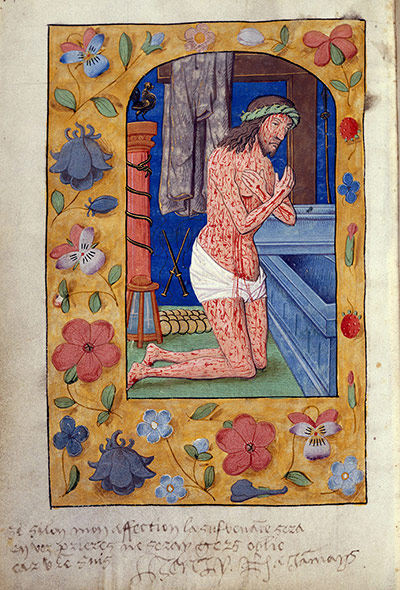
(1491-1547)
Love note in Anne Boleyn’s Book of Hours, c1528
While Henry was still married to Catherine of Aragon, some of the earliest and most evocative evidence for his love affair with Anne Boleyn can be found in his future queen’s sumptuously illustrated Book of Hours. Henry chose to write his note to Anne on a page depicting the man of sorrows, thereby intentionally presenting himself as the lovesick king. He wrote in French: “If you remember my love in your prayers as strongly as I adore you, I shall scarcely be forgotten, for I am yours. Henry Rex forever” Photograph: British Library Board
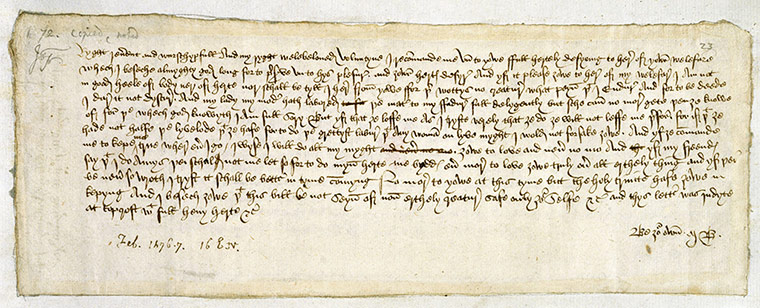
(? - 1495)
To John Paston III, February 1477
Margery Brews addressed her betrothed, John Paston III, as her “right well-beloved Valentine”, making her letter the oldest surviving Valentine in the English language. Revealing that she was worried about the bitter family dispute over the size of her dowry, she pleaded with him not to leave her: “If you love me, as I trust verily you do, you will not leave me therefore.” She promised him her undying love, declaring: “My heart bids me ever more to love you, truly over all earthly thing.” She added her initials in the shape of a heart Photograph: British Library Board
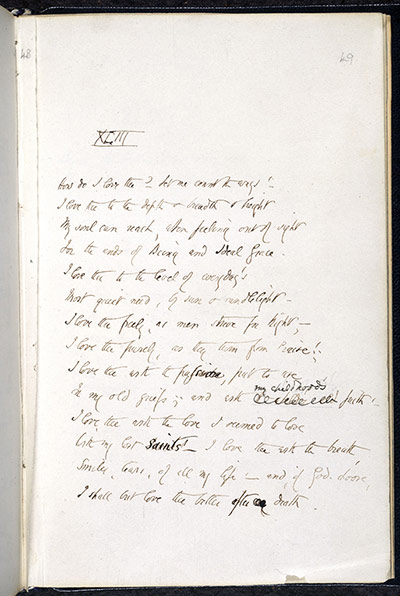
(1806-61)
Sonnet 43 from Sonnets From the Portuguese, c1846
In January 1845, Robert Browning wrote to the poet, “I love your verses with all my heart, dear Miss Barrett.” She replied, “I thank you, Mr Browning, from the bottom of my heart”. So began a correspondence that led to their first meeting and eventually to their marriage on 12 September 1846. It was only after the birth of their son in 1849 that Elizabeth showed her husband the sonnets she had secretly written during their courtship, including “How do I love thee? Let me count the ways” Photograph: British Library Board
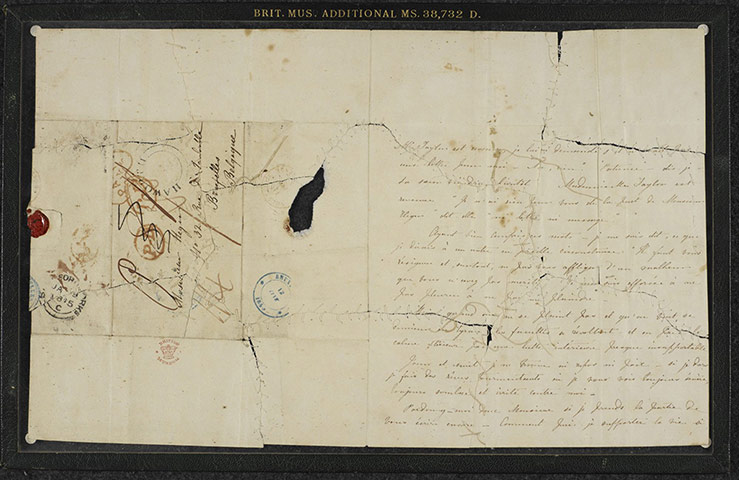
(1816-55)
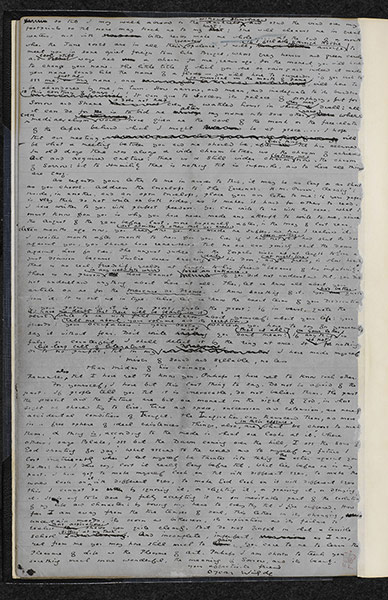
To Professor Constantin Héger, 18 November 1844
While studying languages in Brussels, Charlotte Brontë became infatuated with her Belgian professor. On her return to England, she wrote to him, revealing the extent of her feelings, and confessing: “Truly I find it difficult to be cheerful solong as I think I shall never see you more.” Her letters were torn up in shock by the professor who was married with children. Curiously, it is thanks to his wife, who retrieved them from the waste-paper basket, that we are privy to their contents today Photograph: British Library Board
(1911-68)
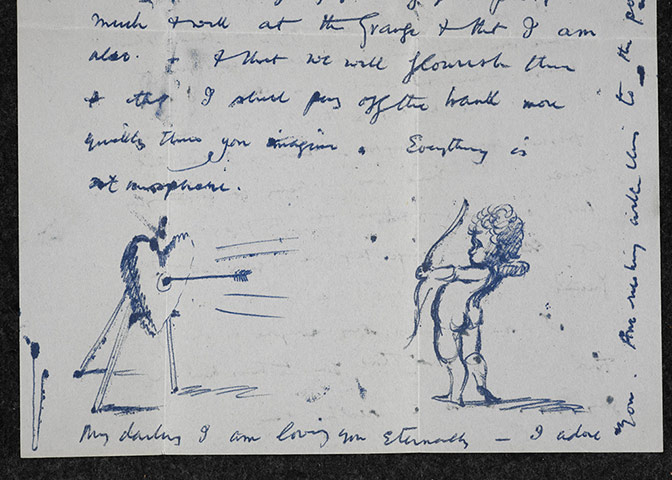
To his wife, Maeve Gilmore, early 1940s
In 1935, Mervyn Peake, who later wrote Gormenghast, was offered a teaching job at Westminster School of Art where he met his future wife, the artist Maeve Gilmore. Whenever he was away from home, Peake wrote regularly to Maeve, his “little plum-cake”, his “darling sweetheart and companion”, his “little daisy-chain” and his “darling little lover”. His letters were often charmingly illustrated, such as the one received by Maeve just before she was due to give birth, in which he simply declares: “Maevie. I am in love. Deeply. Un-endingly, for ever and ever” Photograph: Estate of Mervyn Peake
(1854-1900)
To Lord Alfred Douglas, “De Profundis”, January 1897 In 1891, Wilde fell in love with Lord Alfred Douglas, an affair that eventually led to Wilde’s imprisonment and public disgrace. While in Reading jail he wrote “De Profundis”, an eloquent 50,000 word letter, to his lover. Even though “our ill-fated and most lamentable friendship has ended in ruin and public infamy for me,” he says, “yet the memory of our ancient affection is often with me, and the thought that loathing, bitterness and contempt should for ever take that place in my heart held by love is very sad to me” Photograph: British Library Board
(1887-1915)
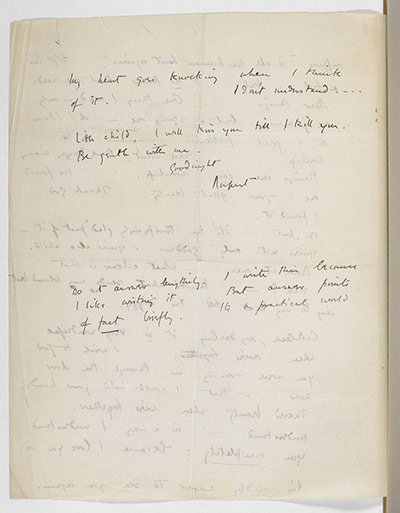
To Cathleen Nesbitt, 1913
Rupert Brooke’s letters to the English actress Cathleen Nesbitt are full of raw passion and provide a fascinating insight into their two-year romance, which began when the poet fell under her spell while watching her play Perdita in A Winter’s Tale at the Savoy theatre in London. Brooke – once referred to by WB Yeats as “the most handsome man in the country” – was captivated by Cathleen and worshipped “her great beauty”. In a letter dated early 1913, he tells her: “I’m madly eager to see you again. My heart goes knocking when I think of it… I will kiss you till I kill you” Photograph: Professor John Stallworthy
(1902-83)
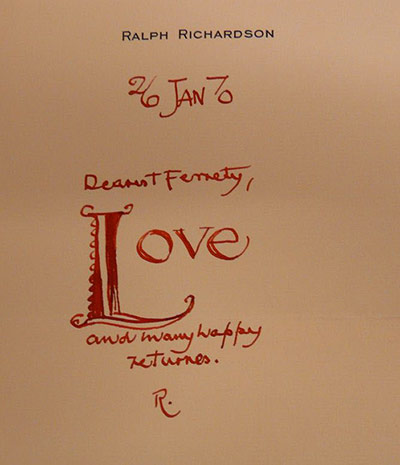
To his wife, Meriel Forbes, undated
After the tragic death of his first wife, the actress Muriel “Kit” Hewitt, stage and screen actor Richardson married Meriel “Mu” Forbes, a member of the theatrical Forbes-Robertson family, in 1944. Their son, Charles, was born the following year. In 2002 the British Library bought Sir Ralph’s papers, including many love letters and delightfully illustrated notes to his wife as “Ferret” or “Ferrety” Photograph: The Trustees of The Ralph and Meriel Richardson Foundation
(c1645-97)
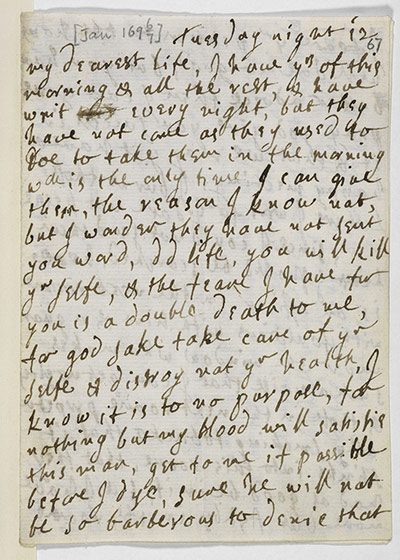
To his wife, Mary, January 1697
Tragedy and romance mingle in Sir John Fenwick’s last letter to his wife, sent from Newgate prison where the Jacobite conspirator was awaiting execution for treason against William III. He urged Mary: “D[earest] d[earest] life, you will kill yourself, and the fear I have for you is a double death to me. For God’s sake take care of yourself and destroy not your health.” Desperately he implored her: “Get to me, if possible, before I die… all my fear is I shall never see you.” Fenwick was executed on Tower Hill on 28 January 1697 Photograph: British Library Board
(1874-1948)
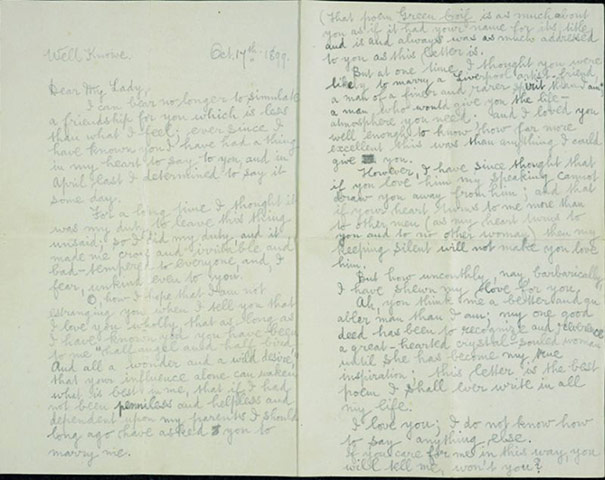
To Emily Burton, 17 October 1899
The Yorkshire poet and playwright Bottomley wrote to Burton, an artist: “O, how I hope that I am not estranging you even when I tell you that I love you wholly, that as long as I have known you, you have been to me ‘half angel and half bird and all a wonder and a wild desire’, that your influence alone can waken what is best in me.” The letter marks the beginning of a true love story; the pair married and remained inseparable. When Emily died in 1947, Gordon was lost without her devoted companionship and outlived her by less than a year Photograph: British Library Board