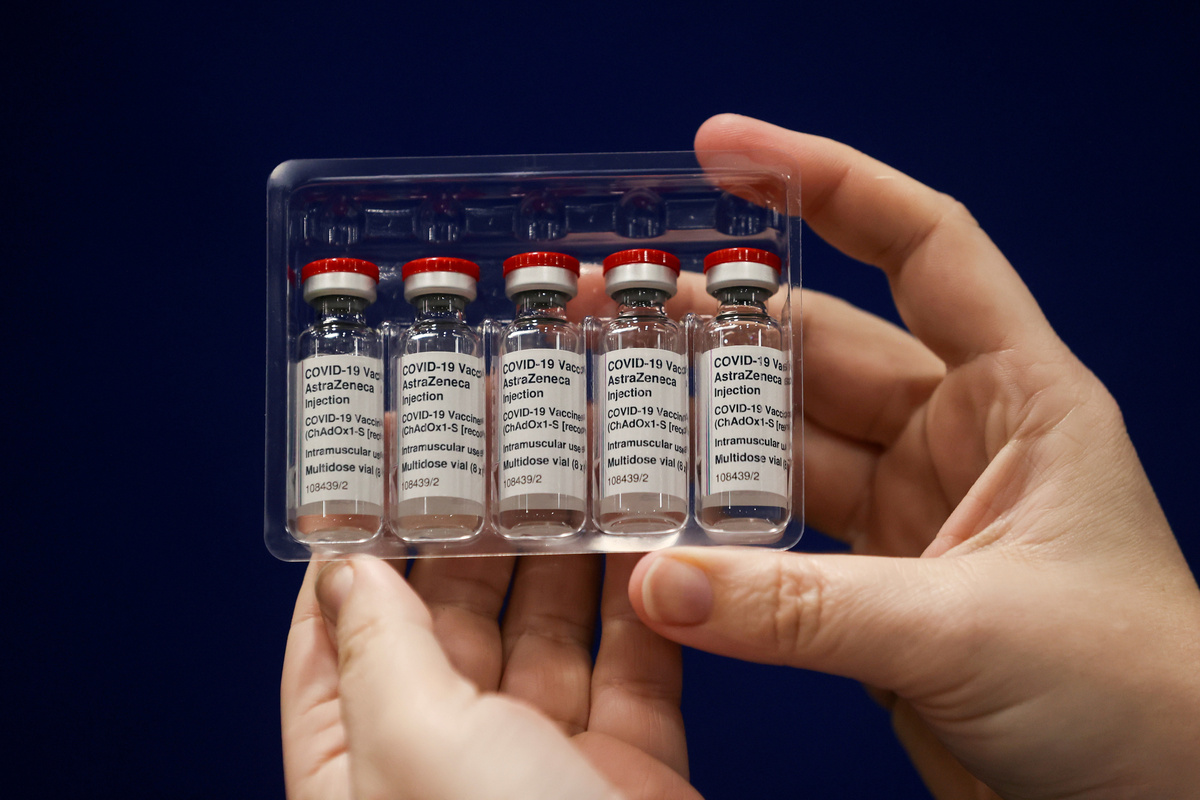
Governments and developers around the world are exploring the potential use of "vaccine passports" as a way of reopening the economy by identifying those protected against the coronavirus.
Those developing the technologies however, say such tools come with consequences such as potentially excluding whole groups from social participation, and are urging lawmakers to think seriously about how they are used.
The travel and entertainment industries, which have struggled to operate at a profit while imposing social distancing regulations, are particularly interested in a way of swiftly checking who has protection.
Among those developing passports are biometrics company iProov and cyber security firm Mvine which have built a vaccine pass now being tested within Britain's National Health Service after receiving UK government funding.
iProov founder and chief executive Andrew Bud believes such vaccine passports only really need to hold two pieces of information.
"One is, has this person been vaccinated? And the other is, what does this person look like?"
You need only match a face to a vaccination status, you don't need to know a person's identity, he added.
Confirmation of patrons' vaccination status could help the night-time economy, which employs some 420,000 people in the northern English city of Manchester, off its knees, experts say.
"We have to look at how to get back to normal," said Sacha Lord, an industry adviser and co-founder of the city's Parklife music festival.
While there have been experiments in socially distanced concerts and events over the last year, they weren't financially viable, he said.
"A gig isn't a gig or a festival isn't a festival unless you are stood shoulder to shoulder with your friends.
"I don't think we should be forcing people into the vaccine passports. It should be a choice. But on entry, if you don't have that passport, then we will give you another option," he added, suggesting the use of rapid result coronavirus tests.
Bud said vaccine certificates were being rolled out in some countries, and in the United Sates, some private sector health passes were being used to admit customers to sports events.
"I think vaccine certificates raise huge social and political issues. Our job is to provide the technology basis for making vaccine passports and certificates possible ... It is not our place to make judgments about whether they are a good idea or not," he said.
Potential issues could arise around discrimination, privilege and exclusion of the younger generation who would be last in line to be vaccinated, he said, adding he believed government was giving it careful consideration.
(Reporting by Natalie Thomas; Writing by Alexandra Hudson; Editing by Mike Collett-White)