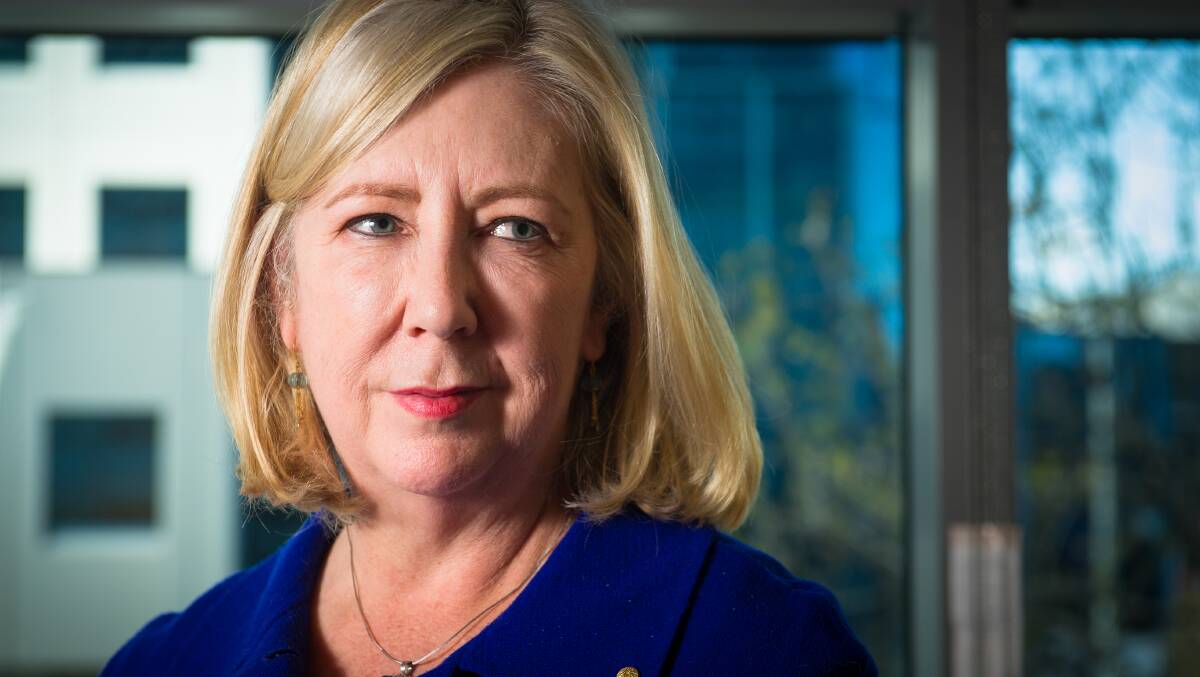
There needs to be purpose-built law if vaccine passports are introduced into the ACT, according to the territory's human rights commissioner.
Dr Helen Watchirs told a special committee of the Legislative Assembly that compelling people to provide proof of vaccination would need "primary law" in contrast to relying on decisions made away from the public eye by health officials.
The need for changed law, according to Dr Watchirs, was so that there could be "full scrutiny" of the legislation.
She was concerned that any use of vaccination certificates or passports "should not be left to the discretion of private sector entities to implement in arbitrary ways but must be expressly regulated by government by means of primary legislation to reduce the risks of unfairness and discrimination."
Without government regulation, there could be discrimination against the unvaccinated, Dr Watchirs felt.
Conscientious objectors to vaccination, for example, should be able to go through a formal and official process so they could get bona fide exemptions to present to employers.
Before the session, she had said: "Introducing vaccine passports may give some people significant freedoms and encourage greater public vaccine uptake.
"However, their use may also give rise to human rights and discrimination concerns, particularly in terms of accessing everyday goods and services; for privacy and autonomy; and for freedom of movement and freedom of association."
Her concerns came despite the ACT government having indicated that it didn't see vaccine passports as the way forward, particularly because the period when they would be most useful (between the times when 70 per cent and 80 per cent of the eligible population were vaccinated) was only a matter of days.
The commissioner was also concerned about the situation at the Alexander Maconochie Centre because of an outbreak of COVID at the prison.
At an earlier session of the committee, the ACT Council of Social Service expressed fears for the most vulnerable as Canberra came out of COVID.
"COVID has increased the vulnerability of some Canberrans who were already lacking basic incomes, decent housing, equality in access to services, transport disadvantage or are otherwise at risk such as Andrew Maconochie Centre detainees," the organisation's chief executive, Dr Emma Campbell, said.
She "strongly condemned" the removal of COVID Disaster Payments without increasing other support.
"We will see increasing of numbers of people without work forced to live below the poverty line on $44 a day."
Business leaders voiced concerns that tax-payer funded support for struggling companies would cease.
The chairman of the Canberra Business Chamber, Archie Tsirimokos, said some businesses were on "zero income". "They are borrowing. They are using credit cards to put food on the table."