In precision manufacturing and design-focused workshops, working with transparent and fragile materials presents a unique challenge. Engineers, designers, and operators often face the same issue: how to engrave materials like glass or ceramics without introducing cracks, burns, or surface distortion.
As product expectations shift toward higher detail and cleaner finishes, even minor defects become unacceptable. This is especially true in applications involving decorative glass, medical components, or high-end consumer products.
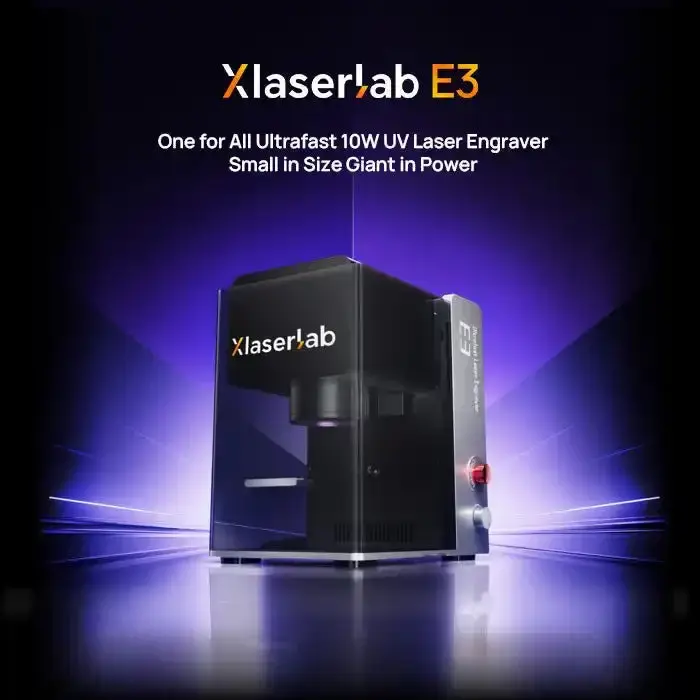
This is where uv laser engraving is changing the way industries approach marking and surface processing on delicate materials. Solutions such as the Xlaserlab E3 UV Laser Engraver are increasingly being adopted by teams that require precise, low-impact engraving without compromising material integrity.
Why Transparent Materials Are Difficult to Engrave
Glass, ceramics, and other transparent materials behave very differently from metals or plastics during processing. Their structure makes them highly sensitive to thermal stress.
Common challenges include:
- Micro-cracking caused by localized heat
- Uneven engraving depth due to material inconsistency
- Surface whitening or unwanted discoloration
In many workshops, operators notice a frustrating pattern: the machine performs correctly, but results vary from piece to piece. The real issue is often not the engraving system itself, but how energy interacts with the material.
The Limitations of Traditional Engraving Methods
Heat-Based Engraving and Material Stress
Traditional engraving methods rely on heat to remove or alter material surfaces. For transparent materials, this creates stress zones that can lead to cracks or structural weakness.
Even when visible damage is minimal, internal stress may remain—affecting durability over time.
Mechanical Methods and Loss of Precision
Mechanical engraving tools can work on glass and ceramics, but they introduce physical contact. This often results in:
- Chipping along edges
- Reduced detail in fine patterns
- Inconsistent results across batches
For high-precision applications, this lack of control becomes a limiting factor.
How UV Laser Engraving Solves These Challenges
Unlike conventional methods, uv laser engraving uses shorter wavelengths and a process often described as “cold marking.” Instead of relying on heat, it interacts with the material at a micro level.
Controlled Energy Without Thermal Damage
Because thermal impact is minimized, UV systems can:
- Reduce cracking and deformation
- Maintain structural integrity
- Deliver cleaner engraving results
For many operators, this is the most important shift. The real goal isn’t just marking the surface—it’s doing so without altering the material’s properties.
Higher Precision on Fragile Surfaces
UV systems are particularly effective on materials where detail matters. Fine patterns, small text, and intricate designs can be reproduced with greater accuracy.
This level of control is especially valuable in applications where visual quality directly affects product value.
Where UV Laser Engraving Is Used Today
Glass Products and Decorative Items
In glass engraving, consistency and clarity are critical. UV systems allow for:
- Clean logos and markings
- Decorative patterns without cracking
- Repeatable results across multiple pieces
This is widely used in premium packaging, custom gifts, and architectural glass elements.
Ceramic Components and Industrial Parts
Ceramics are commonly used in electronics, medical devices, and industrial components. UV engraving enables precise marking without affecting performance characteristics.
This is particularly important where traceability and identification are required.
Transparent Materials in Consumer Products
Many modern products use transparent plastics or coated materials. UV engraving provides a reliable way to mark these surfaces without damaging coatings or affecting aesthetics.
Why More Users Are Switching to UV Laser Systems
The shift toward UV systems is driven by real operational needs rather than trends.
Cleaner Results and Less Rework
One of the most noticeable benefits is reduced post-processing. Cleaner engraving means:
- Less polishing
- Fewer rejected parts
- Faster production cycles
For teams working at scale, this translates directly into efficiency gains.
Consistency Across Materials and Batches
Maintaining consistent results across different materials is often a challenge. UV systems help standardize this process, reducing variability between runs.
For operators, this reduces reliance on trial-and-error adjustments.
Lower Risk for High-Value Materials
When working with expensive or fragile materials, risk becomes a key factor. A uv laser engraver provides a more controlled approach, minimizing the chance of damaging parts during processing.
Choosing the Right UV Laser Engraver
What Many Users Overlook
A common mistake when selecting a UV laser engraver is focusing only on specifications.
In practice, many users only realize the importance of workflow and consistency after encountering failed results—when the system performs correctly, but outcomes remain unpredictable.
What matters more is:
- Stability across different materials
- Ease of operation
- Repeatability in real-world conditions
A Practical Example: Compact UV Laser Systems
Compact UV systems are becoming more common in workshops and production environments.
For example, systems like the Xlaserlab E3 are designed to balance precision, speed, and usability. With high-resolution capability and workflow-oriented design, they support both small-batch work and scalable production without excessive setup complexity.
This reflects a broader trend: engraving systems are no longer judged solely by output power, but by how well they integrate into real workflows.
The Role of UV Laser Engraving in Modern Production
As industries continue to move toward higher precision and customization, surface processing technologies are becoming more critical.
UV laser engraving is no longer just an alternative method—it is increasingly becoming a standard approach for working with sensitive materials.
By improving consistency, reducing defects, and enabling finer detail, it supports both production efficiency and product quality.
Conclusion
As engraving demands continue to evolve—from decorative applications to precision manufacturing—methods that offer both control and reliability are becoming essential.
Solutions like the Xlaserlab E3 UV Laser Engraver illustrate how UV laser technology is moving beyond basic marking, enabling clean, high-resolution results across glass, ceramics, and transparent materials. For workshops and production teams, this represents not just a different tool, but a more dependable way to achieve consistent results in challenging materials.