KANPUR: Three more people, all Indian Air Force personnel, tested positive for Zika virus in Kanpur on Saturday, raising the tally to four.
The first Zika case of the state was confirmed in a 57-year-old IAF personnel, a resident of Pardewanpurwa Pokharpur in the district on October 23. Subsequently, the authorities had sent 22 samples of the people who were in close contact with the infected person, for testing to KGMU lab in Lucknow. Those 22 samples, however, tested negative.
Two of the three newly infected IAF personnel — aged 30 and 31— are residents of Adarshnagar, while a 41-year-old is from Shyamanagar area of Chakeri.
The infection of Zika has now taken three localities of the Chakeri area into its grip, officials said.
After receiving the report of the three infected persons on Saturday, district magistrate Kanpur Nagar Vishak G Iyer and chief medical officer Dr Nepal Singh reached the Air Force station with a team of health department and KMC officers.
"With the three news cases, the tally now rose to four in the city. A total of 260 samples of IAF personnel, besides those of civilians, have been sent to KGMU lab in Lucknow in the past couple of days," the DM told TOI.
"The report which we received on Saturday confirmed three more IAF personnel positive for Zika virus. One of the three fresh cases detected today was found to be asymptomatic," the DM said and added, "The state’s first case of the virus was confirmed in IAF personnel on October 23. The condition of the first Zika patient is stable as per the doctors."
"However, the 22 persons including the family members, relatives and close contacts of the first case have tested negative for the virus," he said further.
A high alert has been sounded in the periphery of the hangers, including the hanger no. 7 & 8 of IAF, besides the adjoining civilian localities including Pardewanpurwa Pokharpur, Adarshnagar and Shyamnagar localities of Chakeri regarding the mosquito-borne virus.
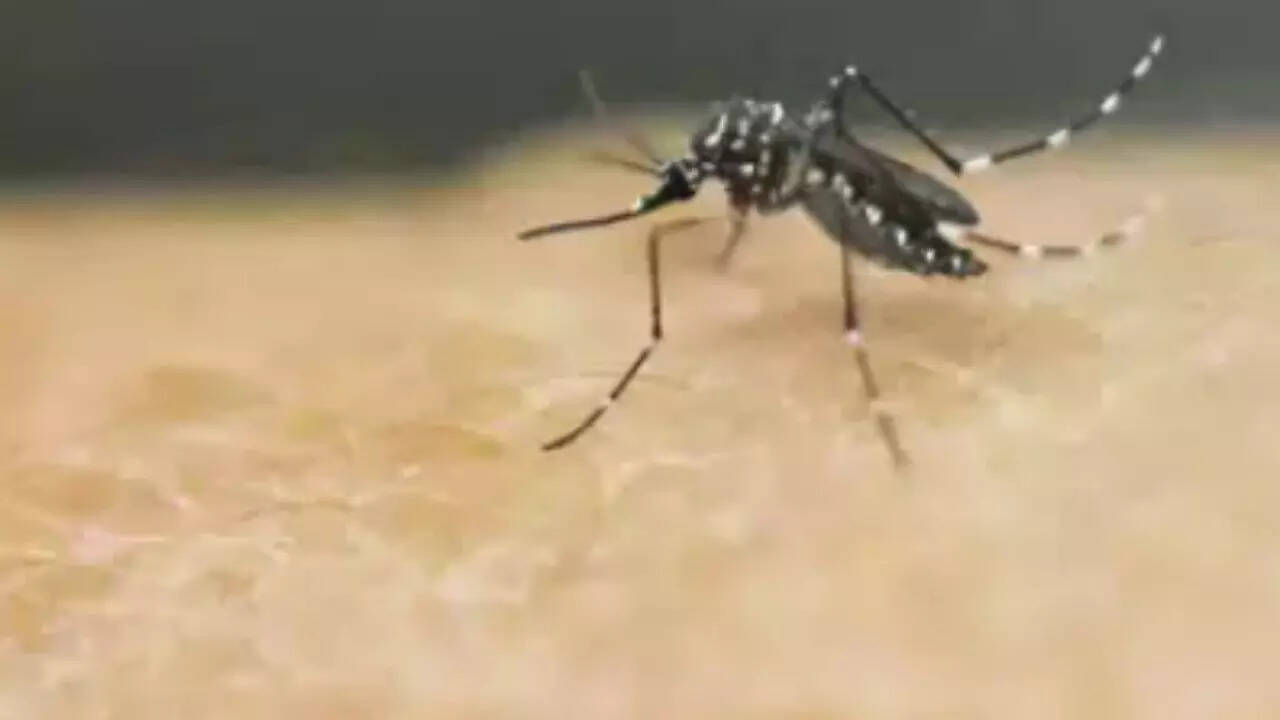
The DM further said that he has also directed Kanpur Municipal Corporation officials to conduct an intensive drive to stop the breeding of Aedes mosquitoes in and around the Air Force station, besides the civil pockets, particularly Pardewanpurwa Pokharpur, Adarshnagar and Shyamnagar areas of Chakeri.
He said all arrangements are in place for the treatment of the infected at Air Force Hospital and Lala Lajpat Rai hospital.
"I have also asked Air Force authorities to take samples and prepare a list of all pregnant women in the Air Force substation area, besides Adarshnagar and Shyamnagar. Along with this, urine and blood samples of Air Force personnel have been taken. Samples are also being taken of the relatives and acquaintances of the three infected IAF personnel," the DM said further.
The CMO said that after the detection of three more Zika cases on Saturday, screening is being done around the house of all the newly infected by declaring their respective pockets with nearly 400 houses as a containment zone. "Survey teams have so far sent 493 samples to the National Virology Center, Pune. On Saturday also 126 samples were taken which will be sent on Sunday," said CMO further and added, "Treatment of all three patients has started in isolation for 14 days at the Air Force hospital."
To check the spread and track the source of Zika virus, the 74 teams of the health department have been collecting samples of people, including pregnant women and Air Force personnel from across 55,000 households during a door-to-door survey underway in Pardevanpurwa Pokharpurwa under the supervision of experts from Delhi and Lucknow.
After the detection of the first case on October 23, a high-level multidisciplinary team comprising an entomologist, public health specialists and gynaecologist from the National Vector-Borne Disease Control Programme, National Centre for Disease Control and RML Hospital, New Delhi was sent by the Union Health ministry on October 25 in Pardevanpurwa area of Pokharpur in Kanpur.
According to the World Health Organization (WHO), protection against mosquito bites during the day and early evening is a key measure to prevent ZIKV infection. Special attention should be given to the prevention of mosquito bites among pregnant women, women of reproductive age, and young children.
Aedes mosquitoes breed in small collections of water around homes, schools, and workplaces. It is important to eliminate these mosquito breeding sites by appropriate methods, including: covering water storage containers, removing standing water in flower pots, and cleaning up trash and used tires.