The rainy season has set in while the coronavirus continues to spread. Heavy rainfall causes disasters in the nation almost every year. For example, the northern Kyushu region was devastated by heavy rains in 2017 and western Japan was in 2018.
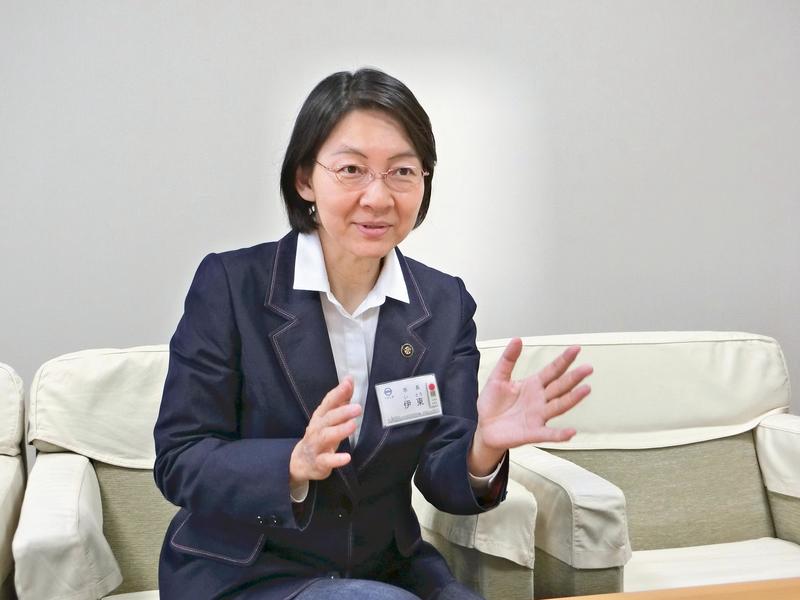
Kurashiki Mayor Kaori Ito, whose city was hit by the heavy rains in the western part of Japan, shared her thoughts with The Yomiuri Shimbun about how we should prepare for the possible risk of infection with the virus at evacuation centers. Such risk is believed to be high at evacuation centers, where the "three Cs" -- closed spaces, crowded places and close contact -- can readily occur.
Kaori Ito:
Use partitions to create hygienic environment in shelters
In the Mabicho district of Kurashiki, Okayama Prefecture, riverbanks along the Oda river and its tributary collapsed in eight locations due to the torrential rains that hit western Japan. About 1,200 hectares, or one-third of the district, was submerged. It claimed 51 precious lives, not including related deaths.
The flooding left about 5,700 households either completely destroyed or partially damaged. About 3,000 people still live in temporary housing, but thanks to the efforts of local residents and a great deal of support, housing reconstruction and the resumption of local businesses in the district are steadily progressing.
At that time, there were only three evacuation centers located on high ground and safe from flooding in the district. More than 2,000 people evacuated to an elementary school gymnasium that has a max capacity of about 200 people.
More than half of the residents evacuated to places other than their homes, but many were also rescued from the second floor of their homes and the like, according to a survey conducted by the Kurashiki city government. Based on lessons learned from the disaster, in which water burst from the riverbank as a result of the riverbank collapsing, the city government set up emergency sites for people to temporarily evacuate in the event of flooding when they do not have enough time to go to designated shelters. Sites are located at least one to each elementary school district, creating 57 spots in the city.
We strongly advise residents to keep in mind the lessons of two years ago so that they can evacuate to a safe place without any delay. At present, we have to deal with issues of coronavirus infections and need to come up with measures to prevent evacuation centers from becoming crowded. We must change the way evacuation shelters are.
Since April, the city government has been studying measures to deal with infectious diseases at evacuation centers. First, we will call on residents to evacuate to places such as the houses of their relatives and friends, as well as the second floor of their homes. Evacuation sites must be limited to places where safety is confirmed on hazard maps.
If they need to be evacuated only for a day, it is possible for residents to stay in a car on high ground. Evacuees will be asked about their health conditions and have their temperature taken at the entrance of each shelter, and those who are not feeling well are asked to go into a separate classroom. I would like to carefully explain these new initiatives to the residents.
There was no outbreak of infectious disease in the evacuation centers following the 2018 torrential rains. I believe swift actions to install cardboard beds and partition curtains to create a hygienic environment worked well. Public health nurses were also sent to shelters the day after the disaster and urged evacuees to wash their hands thoroughly, and that worked well to prevent any outbreak.
Lessons from this experience can be used in the event of future disasters. It is important for each and every one of us to be prepared for possible disasters on a daily basis, just as many people are diligently wearing masks and washing their hands as preventive measures against coronavirus. This leads to actions to protect yourself, your family and your loved ones' lives in times of disaster.
The interview was conducted by Yomiuri Shimbun Staff Writer Nobuyuki Hamanaka.
-- Kaori Ito, 54, mayor of Kurashiki, Okayama Prefecture is currently in her fourth term after assuming the post in May 2008. She was educated at the University of Tokyo's faculty of law and Harvard Law School before working for the Internal Affairs and Communications Ministry.
Read more from The Japan News at https://japannews.yomiuri.co.jp/