MUSCAT: US Defence Secretary Jim Mattis warned Syria on Sunday it would be "very unwise" for government forces to use weaponised gas, as he cited unconfirmed reports of chlorine attacks in eastern Ghouta and slammed Russian support for Damascus.
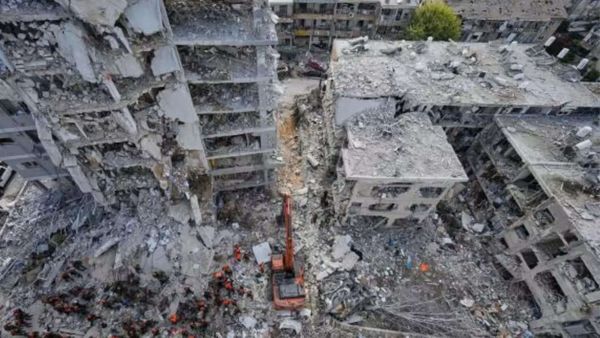
The Syrian army and rebel groups engaged in fierce battles early on Sunday on a critical front in eastern Ghouta where government advances have in effect splintered the insurgent enclave into three, a war monitor said.
More than 1,100 civilians have been killed in the onslaught on the biggest rebel stronghold near Damascus since it began three weeks ago with a withering bombardment, said the Syrian Observatory for Human Rights.
It said there was intense fighting on several fronts accompanied by a government artillery barrage, continuous air raids and attacks by helicopters.
State television on Saturday broadcast from the town of Mesraba after the army captured it, driving a wedge deep inside the insurgent territory that left the major towns of Douma and Harasta all but cut off.
But rebel groups in eastern Ghouta vow they will fight on. A statement issued by Free Syrian Army factions there late on Saturday said they had taken a decision not to accept a surrender and negotiated withdrawal.
The Observatory said army fire on the roads linking the three places in eastern Ghouta meant the enclave had been split.
Failaq al-Rahman and Jaish al-Islam, the two largest rebel groups in eastern Ghouta, have vowed to resist the army's offensive, but they have lost more than half the enclave's area in two weeks of ground fighting.
Syrian President Bashar al-Assad and his ally Russia see the rebels as terrorist groups, and say their offensive is needed to end the rebels' rule over eastern Ghouta's large population.
But the violence of their assault has prompted condemnation from Western countries and repeated calls by United Nations aid agencies for a humanitarian ceasefire.
Activists and fighters in eastern Ghouta in recent days have said the bombardment has included incendiary material that causes fires and burn injuries. Local doctors have also reported several incidents of bomb attacks followed by the smell of chlorine and choking symptoms.
The government denies using either incendiary weapons or chemical weapons, and said on Saturday it had information that the rebels were planning to stage a fake chemical attack to discredit the army.
(Video YouTube/Al Jazeera English)
Speaking in Muscat, Mattis stopped short of threatening to retaliate against Syrian forces if a chlorine attack were confirmed.
But he noted America's cruise missile strike on April 6, 2017, on a Syrian air base over a sarin gas attack and said President Donald Trump had "full political manoeuvre room" to take whatever decision he believed was appropriate.
"It would be very unwise for them to use weaponised gas. And I think President Trump made that very clear early in his administration," Mattis said, speaking with a small group of reporters before landing in Oman.
Mattis said he did not currently have clear evidence of any recent chlorine gas attacks but noted numerous media reports about chlorine use.
Rescue workers and opposition activists in eastern Ghouta have accused the government of using chlorine gas during the campaign.
The government firmly denies this. Damascus and Moscow have accused rebels of planning to orchestrate poison gas attacks in order to draw blame onto the Syrian government.
Syrian President Bashar al-Assad has vowed to continue the offensive in eastern Ghouta, one of the deadliest in the war.
With the conflict entering its eighth year, capturing eastern Ghouta would be a major victory for Assad, who has steadily regained control of rebel areas with Russian and Iranian support.
Mattis chided Moscow for partnering with Assad, suggesting it might even be a partner in the Syrian government's strikes on civilians.
"Either Russia is incompetent or in cahoots with Assad. There's an awful lot of reports about chlorine gas use or about symptoms that could be resulting from chlorine gas," Mattis said.
The United Nations High Commissioner for Human Rights said earlier this month that Syrian government air strikes on eastern Ghouta and shelling from the rebel-held zone into Damascus probably constitute war crimes.
The White House said last week Russian military aircraft took off from Humaymim Airfield in Syria and carried out at least 20 daily bombing missions in Damascus and eastern Ghouta between Feb 24 and Feb 28.
It did not say whether the jets dropped ordnance, which could be harder to determine than tracking the flight paths of Russian aircraft on US radar. But the United States directly accused Russia of killing civilians.
Mattis declined to elaborate on whether Russian jets directly carried out bombings, saying Moscow was involved either way.
"They are Assad's partner and whether the airplane dropping the bomb is a Russian airplane or a Syrian airplane, I'd prefer not to say right now," he said.
The multi-sided war has killed hundreds of thousands of people since 2011.