TOPEKA, Kan. _ Kansas will ask the U.S. Supreme Court to rule on a state law championed by former secretary of state Kris Kobach _ struck down by lower courts _ that requires residents to prove their citizenship when registering to vote.
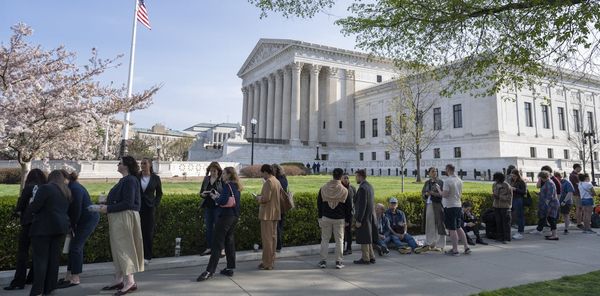
The request, announced Tuesday morning by Kansas Attorney General Derek Schmidt, sets up a potentially historic showdown over voting rights if the court takes the case, with the justices possibly deciding how far states can go in imposing requirements on would-be voters.
The case could hang over an election season in which the pandemic has elevated concerns over voting rights. In Kansas, it would draw fresh attention to Kobach's attempts to defend the law _ and accompanying courtroom losses _ as he runs in the Republican race for U.S. Senate.
Supreme Court review would mark the culmination of a yearslong legal battle over the law, which the Kansas Legislature passed in 2011 at Kobach's urging. Kobach, then the secretary of state, went on to personally defend the law during a federal civil trial in 2018 before Schmidt took over the case.
The law required prospective voters to provide a birth certificate, passport or other the documents proving their citizenship before they could become registered to vote. The requirement caused thousands of Kansas voters to go into a suspended registration status before the law was struck down in 2018.
In announcing the appeal, Schmidt said he had found "a reasonable basis for appeal" after consulting with the current secretary of state, Scott Schwab.
"Voting is only for citizens, and this Kansas law is designed to confirm the citizenship of those registering to vote," Schmidt said in a statement, adding that "as long as the Legislature and the Governor leave this law on the books, we remain committed to giving it a full and robust legal defense."
Past attempts to repeal the law have stalled. Gov. Laura Kelly, who voted for the bill as a state legislator but now opposes it, would likely sign legislation eliminating the requirement and had called on Schmidt and Schwab to not appeal.
Dale Ho, lead attorney for the American Civil Liberties Union in the case, said he was confident that the plaintiffs would prevail at the Supreme Court _ as they had at the district court and appeals level.
"It stopped more than 30,000 Kansans from exercising their right to vote. Kansas' law has been found to violate federal law multiple times, as well as the United States Constitution," Ho said.
"It's sad that the secretary of state and the attorney general of Kansas would seek to resuscitate Kris Kobach's sorry legacy of voter suppression," Ho said in a phone call.
Kobach has continued to champion the law, which was struck down in 2018 and has not fully been enforced since 2016 as a result of the lawsuit. He applauded the decision to appeal the case after the 10th U.S. Circuit Court of Appeals sided with the ACLU in April.
"This is a really important appeal. It has consequences for the entire country, so I'm hopeful the Supreme Court will take the case and if they do take the case I am confident they will overturn the 10th Circuit," Kobach said in a phone call Tuesday.
Kobach said it's unlikely that the court would rule on the issue ahead of Kansas' August primary or November general election when the state elects a new senator.
Rick Hasen, an election law professor at the University of California, Irvine School of Law, said he was surprised by Kansas' decision to seek a Supreme Court review of the case.
"The Supreme Court's rules require it to defer to the factual findings of the trial court, and the trial court found as a matter of fact that Kobach utterly failed to prove his case that noncitizen voter fraud was a real problem in Kansas. He called it the 'tip of the iceberg' but the trial court found it to be an 'icicle' made up mostly of administrative error," Hasen said in a message.
Schwab said judicial review is needed "to provide clarity" on the issue.
Mark Johnson, a Kansas City attorney who represented one of the plaintiffs in the case, said he was disappointed but not surprised by Schmidt and Schwab's decision to petition the Supreme Court. He said it delays the state having to pay the plaintiffs' attorneys fees.
"I told the secretary's office that we would be willing to sit down at any time with them to resolve this and there has been no response. None," said Johnson, a partner at the Dentons law firm in Kansas City.
"If you look at the impact of this statute on the number of people who have been denied the right to vote against the speculation that some noncitizens have been allowed to vote, there's simply no comparison," Johnson said. "So I'm confident we're going to win."