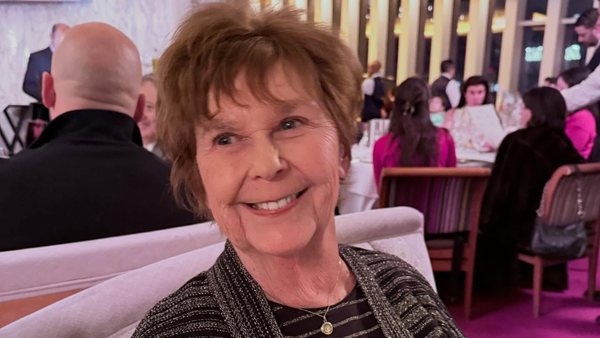
WASHINGTON _ Veronica De Negri remembers how good Fidel Castro made her feel after she brought him a cup of coffee during a visit with the Chilean government in 1972.
The Chilean urban planner who migrated to the United States in 1977 said she felt so small next to the tall leader, but that he made her feel comfortable.
De Negri wrote about the brief meeting in the Cuban Embassy's book of condolences, where admirers of Castro's legacy could record their tributes to the revolutionary leader.
De Negri, 71, defended Castro against accusations of human rights abuses and asked why more Americans aren't mad about the prison at Guantanamo Bay and the U.S. embargo against Cuba, which she said is the greatest human rights abuse against the people of Cuba.
"In this country everything is privatized, over there you have an amazing medicine and it's open to everyone who needs it," De Negri said.
Outside the gates of the embassy, on Washington's 16th Street nearly two miles north of the White House, a makeshift memorial has grown since Castro's death late Friday. Candles, flowers and cards, left by admirers, now adorn the gates. One sign read: "The poor and oppressed people of the world will never forget you." Another: "History absolved you already."
It's a very different scene from the one in Miami where thousands of Cuban-Americans danced, sang and honked car horns to celebrate the death of the man who jailed their family members and forced them into exile.
Castro lived through 10 U.S. presidents who sought to overthrow him and countless assassination attempts. His death has set off both mourning and celebration worldwide.
For many in Miami, Castro's death was the passing of a painful chapter for Cuban-Americans throughout the world "who were personally affected by his cruel and brutal dictatorship," said Carlos Gimenez, mayor of Miami-Dade County.
But there was no banging of pots and pans outside the Cuban Embassy, no fireworks. The mood was somber, the flag at half-staff.
On Monday afternoon, embassy workers brought in a life-size painting of the revolutionary leader and flowers as it marked its portion of the island nation's nine days of national morning. Castro's ashes are to be interred Dec. 4 in Santiago De Cuba.
Cristiam Manrique, 26, a magazine photographer visiting from Ecuador, knelt outside the gates and touched one of the flowers. He looked closely at the pictures of Castro with Nelson Mandela and Pope Francis on the gate. He said it was important that Americans know more about Castro's history. Many don't understand how he lifted the poor and vulnerable.
"In Cuba, you don't see one single child in the street," Manrique said. "A child who needs medicine gets it. It's amazing."
Marta Ines Gonzalez, 76, who fled Chile following the military coup in 1973 that deposed leftist President Salvador Allende and imposed Gen. Augusto Pinochet as the country's dictator, described Castro as a hero and criticized those celebrating his death in Miami. She said it was important for Americans to know that those in Miami don't represent the rest of the world.
"He set an example for us all to follow," she said.