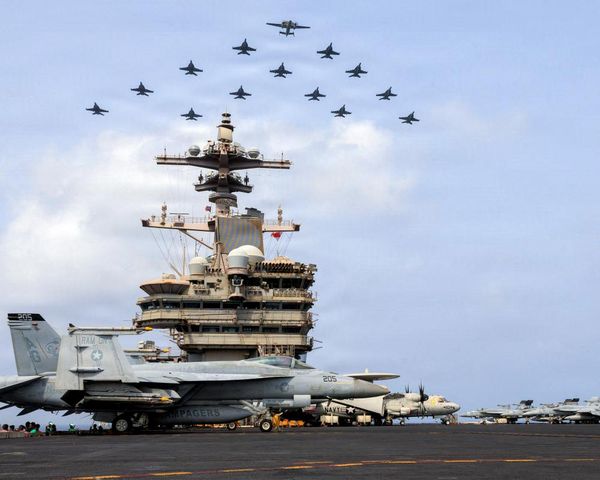
The U.S. has carried out airstrikes against Islamic State-linked militants in northwest Nigeria, marking a rare direct military intervention as the country grapples with renewed extremist attacks and growing international scrutiny over its security crisis.
US Africa Command (AFRICOM) said the strikes were conducted on Dec. 25 in Sokoto state, close to Nigeria's border with Niger, targeting what it described as Islamic State camps. President Donald Trump announced the operation on Christmas Day, saying the action followed months of warnings over escalating violence in Nigeria.
AFRICOM said its initial assessment showed "multiple ISIS terrorists" were killed. No civilian casualties were reported, though details remain limited.
Nigeria's foreign ministry confirmed that the strikes were carried out in coordination with Abuja, stressing continued security cooperation between both countries. A senior Nigerian presidential adviser said the two governments were "aligned in the fight against terrorism."
The operation comes amid heightened diplomatic tensions after Trump earlier threatened to suspend US assistance to Nigeria, accusing its authorities of failing to protect Christian communities from attacks.
Violence Escalates Despite Counter-Terror Efforts
The US strike coincided with fresh violence on the ground. On Wednesday evening, a bomb exploded inside a mosque in Maiduguri, the capital of Nigeria's northeastern Borno state, killing at least five worshippers and injuring more than 30 others, according to police and emergency officials.
Authorities suspect the blast was a suicide attack. No group has claimed responsibility, but Boko Haram and its splinter faction, the Islamic State West Africa Province (ISWAP), have a long history of targeting civilian and religious sites in the region.
The attack underscores ongoing insecurity in both northern and northeastern Nigeria, where extremist groups, criminal bandits and armed militias operate across vast rural areas.
Mixed Picture of Religious Violence
While US officials have framed the latest military action partly as a response to attacks on Christians, Nigerian analysts and rights groups say violence in the country cuts across religious lines.
Both Christian and Muslim communities have been targeted by jihadist groups and criminal gangs, particularly in northern states. Mosques, churches, markets and schools have all been attacked in recent years.
Data from conflict monitoring groups indicate that thousands of civilians have been killed since 2020, with most attacks occurring in Muslim-majority regions. In many cases, the religious identity of victims is not recorded, complicating claims of targeted persecution.
Security experts say the northwest, where the US strike occurred, has become a hotspot for armed groups combining extremist ideology with large-scale banditry, including kidnappings for ransom and raids on rural villages.
Government Defends Record
Nigeria was designated last month by Washington as a "Country of Particular Concern" under the US International Religious Freedom Act, a move Abuja strongly rejected.
President Bola Tinubu has repeatedly said Nigeria is not a religiously intolerant country and that the violence reflects broader security and socio-economic challenges. In a Christmas message released hours before the US strike was announced, Tinubu pledged to protect "Christians, Muslims and all Nigerians" from violence.
The presidency has not yet commented directly on the US operation.
What Comes Next
Analysts say the airstrikes may disrupt militant operations in the short term but are unlikely to alter Nigeria's security landscape without sustained action by local forces.
Nigeria faces multiple overlapping threats, from jihadist insurgencies in the northeast, to bandit groups in the northwest, and communal clashes in central states, stretching its military and police resources.
As of Friday morning, security agencies remain on alert nationwide, with officials warning that further attacks cannot be ruled out despite increased counter-terror operations.