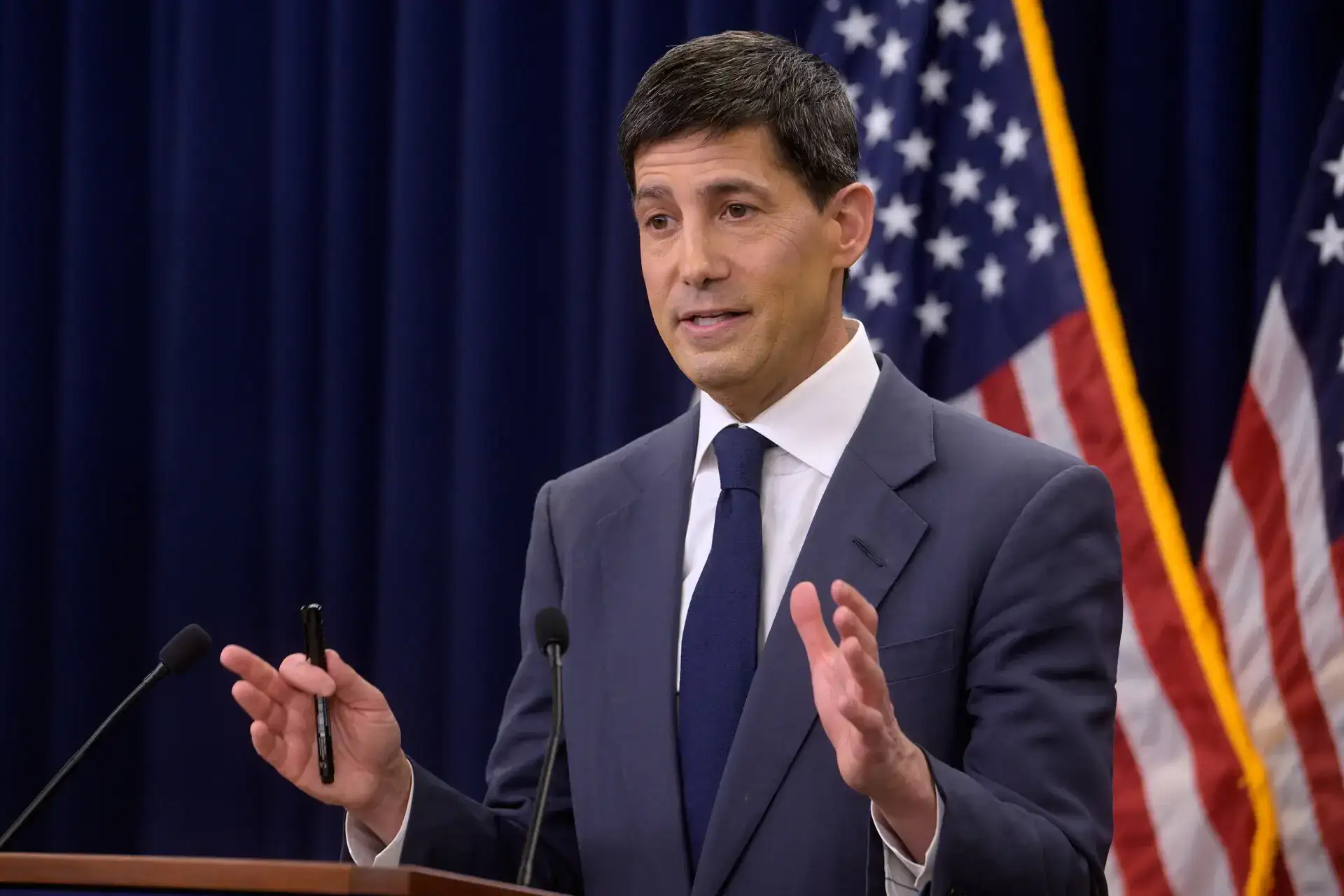
US Federal Reserve Chair Kevin Warsh has marked the beginning of his tenure with a sharp shift in how the central bank communicates, reviving a minimalist style reminiscent of the 1990s and signalling a narrower focus on price stability.
According to Reuters, Warsh's first policy meeting as Fed chief reflected a deliberate move away from the expansive communication strategy adopted by the central bank over the past two decades, during which the Fed became a central player in managing economic crises and regularly guided financial markets through detailed policy signals.
While the Federal Open Market Committee (FOMC) left interest rates unchanged at 3.50%-3.75%, Warsh's emphasis on inflation during his inaugural press conference, coupled with limited discussion of conditions that could influence future policy decisions, prompted investors to strengthen expectations of an interest-rate increase. Bond yields climbed as markets interpreted the Fed's messaging as more hawkish than anticipated, Reuters reported.
Market analysts said the absence of detailed guidance on the Fed's policy framework and reaction function amplified investor uncertainty. Reuters reported that economists viewed transparent communication about how policymakers respond to evolving economic conditions as an important feature of modern central banking.
Return to simpler policy statements
The policy statement issued after the meeting was notably shorter than those released under former Fed Chair Jerome Powell and resembled the concise statements common during Alan Greenspan's tenure. Reuters noted that while previous Fed leadership steadily expanded communication with markets—including publishing policymakers' interest-rate projections—Warsh appeared determined to reduce the central bank's reliance on extensive forward guidance.
Even so, the Fed's quarterly "dot plot" continued to show that many policymakers expect additional rate increases this year, despite Warsh choosing not to elaborate on those projections during his press conference.
Changes in language reflect new priorities
Reuters reported that the first policy statement under Warsh also introduced subtle but significant changes in language.
Rather than simply stating that inflation remains elevated, the statement described inflation as being above the Fed's 2% target, wording that some economists interpreted as allowing greater flexibility around inflation levels close to that objective.
The assessment of employment also shifted. Instead of describing job growth in absolute terms, the statement said employment gains had kept pace with workforce growth, reflecting changes in labour market dynamics as immigration trends evolve.
On economic growth, the statement highlighted productivity improvements and business investment, while omitting detailed discussion of consumer spending, trade, fiscal policy and other components that featured more prominently in previous Fed communications.
Reuters also noted that the statement removed the long-standing assessment balancing risks to inflation and employment, replacing it with a more direct commitment to achieving price stability.
Economists said the revised statement reflected Warsh's priorities while also securing unanimous support from the FOMC, marking the committee's first unanimous policy vote in a year.
Reform agenda extends beyond communication
Beyond policy messaging, Warsh announced five task forces aimed at reviewing various aspects of the Federal Reserve's operations. Reuters reported that these groups will examine areas including communications, the central bank's balance sheet, the inflation framework, productivity and the use of alternative real-time data in policymaking.
Analysts said it remains unclear whether the initiatives will lead to significant institutional changes or simply revisit debates that previous Fed leadership had already explored.
Warsh has long been critical of several policies adopted after the 2007-09 global financial crisis, particularly the Fed's large-scale bond-buying programmes. Reuters noted that the new review of the balance sheet and communication framework reflects many of the concerns he raised after leaving the Fed in 2011.
Balancing simplicity with modern market expectations
Reuters reported that the durability of Warsh's simplified communication strategy will largely depend on how financial markets respond over time and whether future economic conditions require more active guidance from the central bank.
The Federal Reserve's role expanded dramatically during both the global financial crisis and the COVID-19 pandemic, when it deployed unprecedented stimulus measures and frequently communicated directly with businesses, households and investors to reassure markets.
While Warsh appears intent on scaling back that expanded role, Reuters reported that his focus on productivity improvements and greater use of alternative economic data aligns with ongoing research within the Federal Reserve system. Policymakers continue to explore how newer data sources can complement traditional economic indicators while ensuring they remain reliable for long-term decision-making.