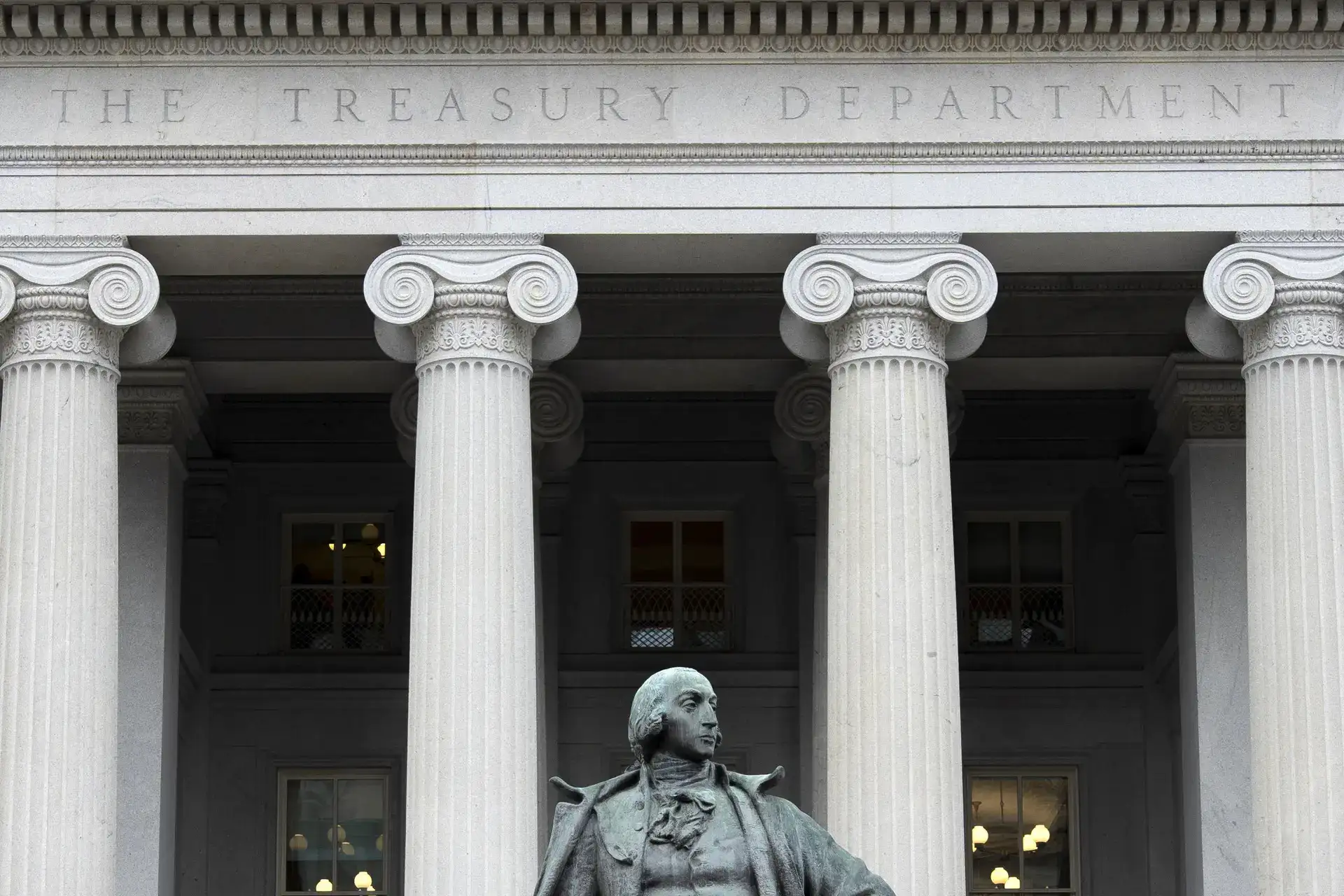
Surging U.S. Treasury yields have triggered a wave of mortgage-related hedging activity, intensifying volatility in the bond market and contributing to the sharpest jump in interest rates in over a year. According to Reuters, investors holding mortgage-backed securities (MBS) have been forced to sell government debt and Treasury futures to manage growing risks tied to rising rates and slowing mortgage refinancing activity.
The selloff in Treasuries accelerated after stronger-than-expected April inflation data led markets to reassess expectations for Federal Reserve policy. Investors who had earlier anticipated rate cuts are now increasingly pricing in the possibility of another Fed hike this year. The benchmark 10-year Treasury yield climbed 23 basis points in a week and has risen more than 60 basis points since the start of the U.S.-Israel-Iran conflict, reflecting heightened inflation and geopolitical concerns.
The rapid rise in yields has increased “convexity hedging” activity among MBS investors such as insurance companies, mortgage REITs, and asset managers. Convexity hedging refers to efforts by investors to offset the changing duration risk of mortgage-backed securities as interest rates rise.
Mortgage-backed securities are highly sensitive to refinancing trends. When rates increase, homeowners are less likely to refinance their mortgages, slowing prepayments on home loans. This extends the effective maturity, or duration, of mortgage-backed securities, making them behave more like longer-dated bonds that are more vulnerable to additional rate increases.
Unlike traditional bonds, which generally display positive convexity, mortgage-backed securities exhibit negative convexity. MBS prices tend to decline more sharply when yields rise because the underlying mortgages remain outstanding for longer periods. This forces investors to rebalance portfolios by selling Treasury futures or other government debt instruments to reduce duration exposure.
The impact of these hedging flows became particularly visible earlier this week. Market participants and CME Group data show unusually large block trades in Treasury futures, especially in five- and 10-year maturities, where convexity effects are most concentrated. One transaction in five-year note futures reportedly involved 33,000 contracts, significantly above normal trading sizes.
Analysts believe the Federal Reserve’s quantitative tightening (QT) program is also amplifying the effect. Under QT, the Fed allows up to $35 billion in mortgage-backed securities to mature monthly while reinvesting proceeds into Treasury bills instead of purchasing new MBS. This effectively shifts mortgage-related convexity risk from the Fed’s balance sheet back into private markets, increasing pressure on investors to hedge duration exposure themselves.
According to market experts, today’s convexity hedging flows are becoming a larger driver of Treasury market volatility than in previous years. The growing share of higher-coupon mortgages — now exceeding $2 trillion in the MBS market — has made mortgage portfolios more sensitive to interest-rate swings. As older low-rate loans mature and are replaced with higher-rate mortgages, duration risk becomes less predictable, resulting in heavier and more destabilizing hedging activity when yields rise rapidly.
The spike in Treasury yields has broader implications for financial markets. Rising yields generally tighten financial conditions, increase borrowing costs, and pressure equity valuations, particularly for growth-oriented sectors such as technology and real estate. Higher mortgage rates can also slow housing demand, impacting homebuilders, banks, and consumer spending trends.
For investors, the recent move underscores how technical market dynamics — not just economic fundamentals — can amplify volatility in fixed-income markets.Analysts expect convexity-related flows to remain an important factor as long as inflation concerns and elevated interest rates persist.
( Disclaimer : Recommendations, suggestions, views and opinions given by the experts are their own. These do not represent the views of The Economic Times)