A number of climate scientists have fled the US for Norway’s research institutes since Donald Trump started pushing through his anti-science and anti-climate crisis agenda, Norway’s minister for research has said.
In the first year of Trump’s second term, the US government cut thousands of jobs at federal science agencies, slashed grant money for universities and effectively ended government-backed research into the climate crisis, notably with the announcement last December that the Colorado-based National Center for Atmospheric Research would close.
More than 10,000 doctorate-level experts in science and other fields have now left federal government employment, according to one analysis, leading to fears of a scientific brain drain from the US.
Research minister Sigrun Gjerløw Aasland told The Independent that several American scientists had joined research institutes in her country over the past year, many of which are prioritising pioneering climate research in the Arctic.
Last summer, the centre-left Norwegian government announced a 100m kroner (£7.8m) programme to attract international researchers. So far, 27 scientists have come to Norway under the programme, including 23 from the US.
“We are a small country that will not be able to solve climate change on our own, so we are keen to attract international students and researchers to boost our research output,” said Ms Aasland.
The research programmes include one monitoring and assessing polar ice sheets, another looking at biodiversity and wind energy, and others researching the circular economy, battery systems, climate resilience and the relationship between the carbon cycle and fresh water.
Scientists are attracted to Norway, Ms Aasland said, because of the oil-rich country’s well-funded institutions, high quality of life and its position on the “front line” of the climate crisis, with around 35 per cent of its landmass lying north of the Arctic Circle.

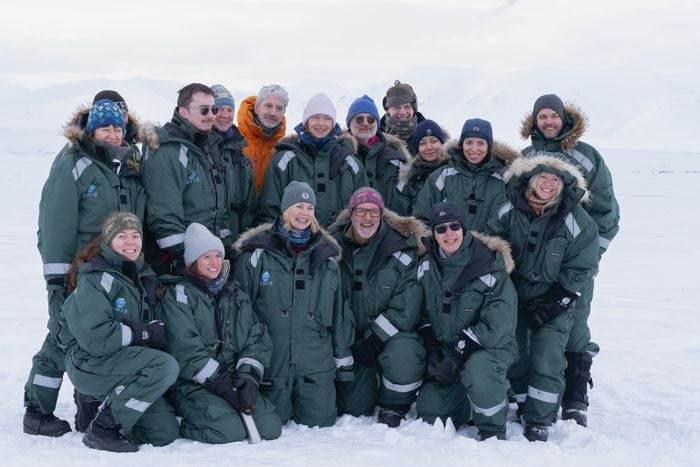
In recent months Donald Trump’s stance on Arctic regions included repeated threats of a possible invasion of the Danish territory of Greenland. Norway, however, is keen to ensure that climate research continues to be prioritised in the Arctic, a region that is warming four times as fast as the global average.
“The Arctic is an area where security and climate really intertwine, and Norway has a clear ambition to deepen our understanding in this part of the world so that we can act as the world's eyes and ears in the north,” Ms Aasland said.
Areas of priority for Arctic research, she added, include looking into how climate change is affecting polar nature and natural resources; how melting polar ice might have an impact on international relations and security; and how we might expect global warming to affect the rest of the world in the future, given that the Arctic is warming so much faster.
While some nations increasingly seem to see melting ice as an opportunity, Ms Aasland is unequivocal that climate change is a major threat to humanity, and one that must be better understood to boost humanity’s long-term chance of survival. “Climate change is an enormous threat to life and well-being,” she said. “Therefore, we need to better understand it so that we can mitigate it as effectively as possible.”
US states fighting back
In recent weeks there has been a reprieve of sorts in the US for the scientific community, with Congress pushing back against the Trump administration’s requests to slash funding for the National Institutes of Health, National Science Foundation and Nasa in its 2026 spending bill.
Moreover, while support for climate projects might have been eliminated on the federal level, there remains the possibility for individual states to support climate science and innovation. The New Mexico Innovation Hub, for example, is a new initiative that maintains a 64-acre campus in the state capital, Santa Fe. It supports startups across sectors including nuclear fusion energy, solar and wind power, and battery technology innovation.
“Here in New Mexico, we have fantastic wind, solar and geothermal resources, and forward-sighted leadership that is continuing to see the benefits of climate action,” says David Perez, CEO of the hub. “When the Trump administration came in and started denying climate and cutting all these programmes, we doubled down.”
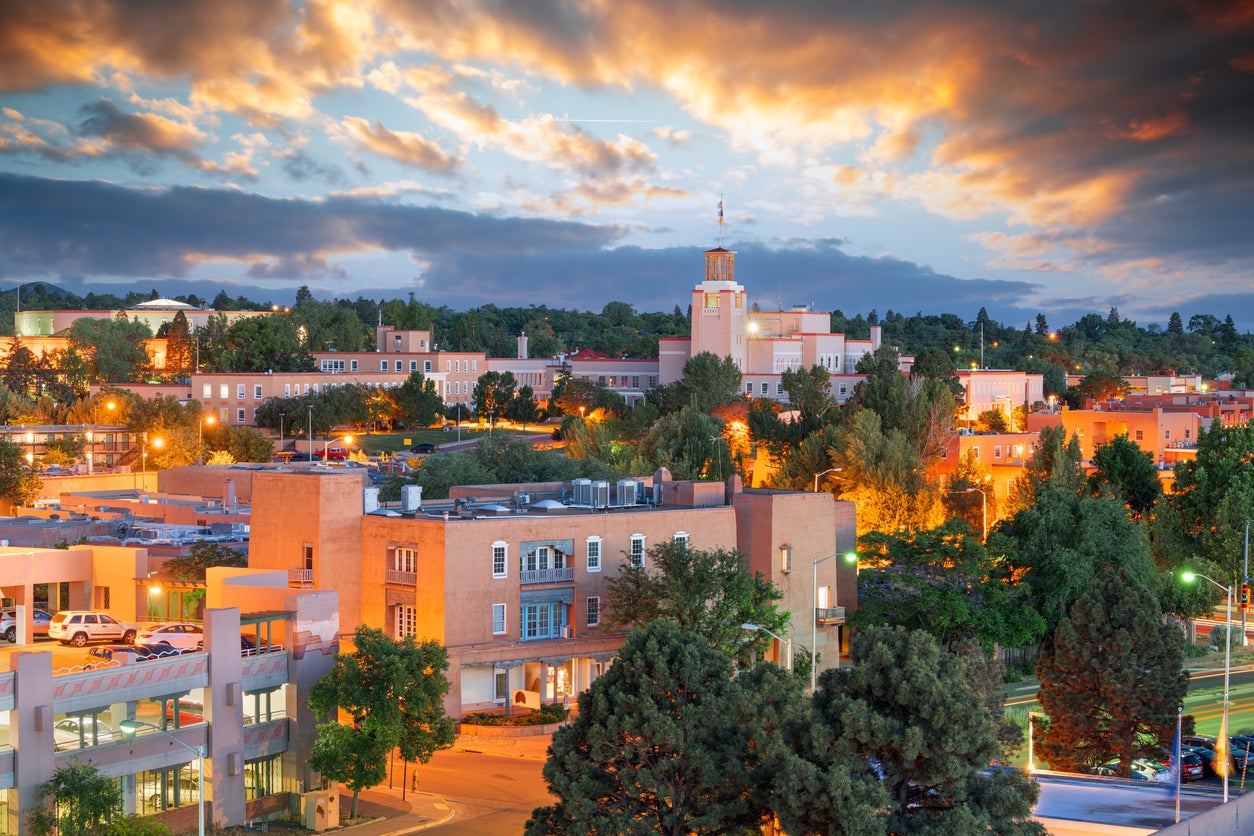
The state plans to decarbonise its energy system by 2040, and in February the state legislature approved a $1.1bn (£830m) economic development plan that includes significant funding for renewable energy and climate-related investments.
Despite remaining bullish when it comes to his state’s climate prospects, Mr Perez is clear about just how devastating federal actions have been for national climate progress in the US. “The impacts of what Trump is going to continue being seen for many years to come,” he said, adding that the news that the US is losing climate scientists to countries like Norway is “really problematic. Unfortunately, you can chop down a hundred-year-old tree in just half an hour,” Mr Perez said. “In the same way, it’s going to take us a long time to rebuild from actions like the destruction of the Environment Protection Agency and other cuts to climate support.”
This article has been produced as part of The Independent’s Rethinking Global Aid project
UK climate minister: We need to remake the case for net zero
UK climate aid cuts ‘short-sighted’ and leave ‘fossil fuel profits untouched’
Data centers create ‘heat islands,’ warming local land by up to 16 degrees
Orkney stoat eradication project boosts rare voles, hen harriers and owls
Labour MPs call for ‘level playing field’ for farmers
Garden designed with King for RHS flower show inspired by patterns in nature