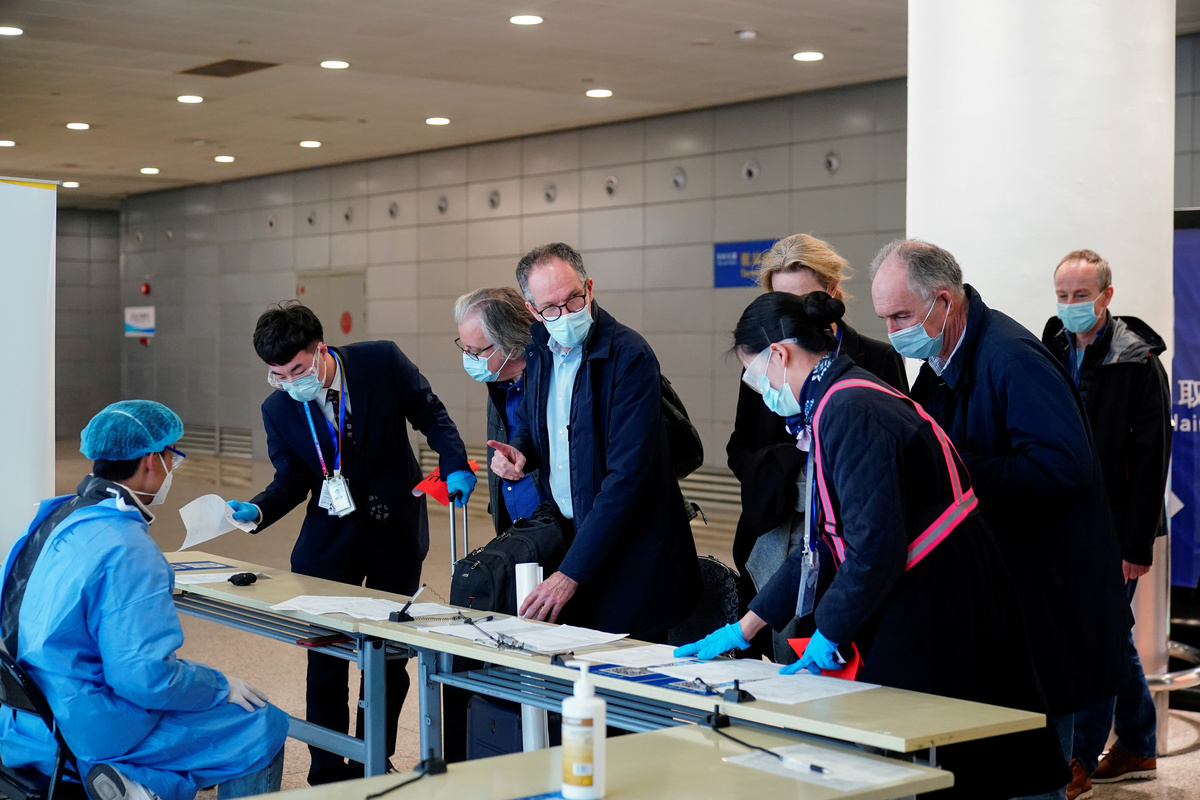
The United States expects the World Health Organization (WHO) investigation into the origins of the novel coronavirus pandemic to require further study, perhaps including a return visit to China, a senior U.S. official said on Wednesday.
Marc Cassayre, charge d'affaires at the U.S. mission to the U.N. in Geneva, also voiced hope that the WHO-led mission to the central city of Wuhan in Jan.-Feb. had access to the raw data and to the people required to make an independent assessment.
The lengthy report by the team - composed of international experts and their Chinese counterparts - is expected to be issued this week, the WHO says.
"We are hopeful that it will be based on science and be a real step forward for the world understanding the origins of the virus so we can better prepare for future pandemics," Cassayre told a news briefing.
U.S. officials expected further work would be needed to identify the source of the SARS-CoV-2 virus, he said. "That would probably require, as we would presume, further studies of the team, maybe travel to China or further discussions."
The probe was plagued by delays, concern over access and bickering between Beijing and Washington, which under former U.S. President Donald Trump's administration accused China of hiding the extent of the initial outbreak.
Some team members have said China was reluctant to share vital data that could show the virus was circulating months earlier than first recognised in late 2019.
Ben Embarek, a WHO official leading the mission, said at a press briefing marking the end of the visit that the virus probably originated in bats, although it was not certain how it reached humans. He also effectively ruled out a lab leak.
WHO director-general Tedros Adhanom Ghebreyesus later said that "all hypotheses remain open" and pledged full transparency.
(Reporting by Stephanie Nebehay; Editing by Hugh Lawson)