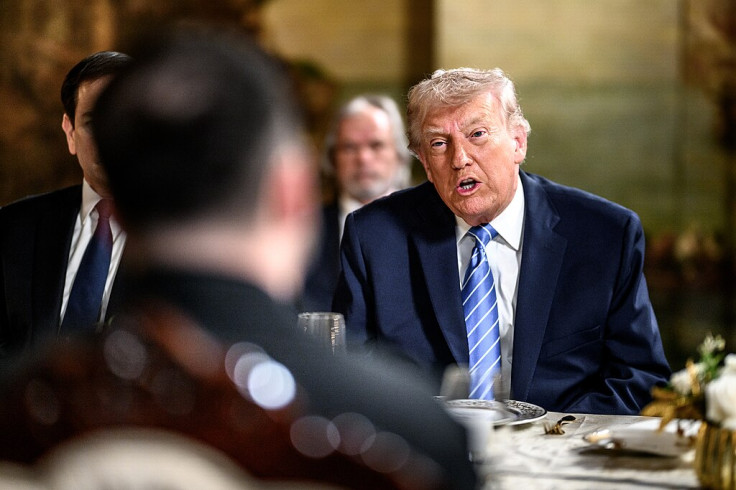
US President Donald Trump said the U.S. is not at war with Venezuela, even as his administration defended the legality of the arrest and removal of Venezuelan President Nicolás Maduro, who has now been produced before a US federal judge.
Trump made the remarks in an exclusive interview with NBC News, saying US actions were directed at criminal networks rather than the Venezuelan state. "No, we're not," he said when asked if the US was at war with Venezuela. He said Washington was targeting drug traffickers and groups he accused of contributing to illegal migration into the U.S.
Maduro was brought before a court in New York on charges including narco-terrorism conspiracy and cocaine importation conspiracy. His wife, Cilia Flores, faces similar charges along with weapons-related offences. Both pleaded not guilty and said they would contest the case.
US authorities said Maduro was detained during an early-morning operation in Caracas involving US special forces and law enforcement agencies before being flown to the U.S.
In a separate interview on NBC News NOW's ''Top Story with Tom Llamas,'' Deputy Attorney General Todd Blanche rejected claims that the arrest violated international law. He said the Trump administration acted within legal limits and did not breach the UN Charter.
"The United States didn't do anything that violates international law," Blanche said in an interview, rejecting claims that the operation breached the UN Charter. "Absolutely, positively not."
Blanche said the US has the legal authority to arrest individuals charged with serious crimes and argued that the case against Maduro is strong. He said prosecutors believe the evidence will show Maduro helped run an international network responsible for large-scale cocaine trafficking into the U.S..
"The government doesn't bring charges that we don't believe we can get a conviction on," Blanche said, adding that Maduro and Flores would receive due process and a fair trial.
In his interview, Trump also said Venezuela would not hold elections in the immediate future, arguing that the country's current conditions would not allow for a credible vote. He said stabilisation would need to come first.
Trump said the US may support American oil companies in rebuilding Venezuela's energy infrastructure, suggesting the process could take up to 18 months, with companies later recovering costs through reimbursement or oil revenues.
Following Maduro's removal, Vice President Delcy Rodríguez was sworn in. Trump said she has been cooperating with US officials but denied that there was any prior coordination before the arrest.
Trump also said a group of senior US officials, including Secretary of State Marco Rubio and Defence Secretary Pete Hegseth, would oversee US involvement in Venezuela, though he said final authority rests with him.
The administration has not sought fresh congressional authorisation for the operation. Trump said lawmakers were aware of US actions but declined to provide details.
Venezuela has faced prolonged political and economic crisis amid sanctions and internal instability. Maduro's arrest and court appearance mark a major escalation in US-Venezuela relations, with legal and diplomatic challenges expected to follow.